The death of even a single Asiatic lion is enough to draw attention in Gujarat, the only home of the world’s last wild population of these majestic big cats. So when reports emerged in late May 2026 that multiple lion cubs had died across the Gir landscape, concern quickly spread among conservationists, wildlife enthusiasts and local communities alike.
Within days, rumours of a possible epidemic began circulating. Questions were raised about whether Gir was facing another major wildlife health crisis similar to previous outbreaks linked to Babesia infections. The situation gained further attention as reports of tiger deaths linked to Canine Distemper Virus (CDV) surfaced from Madhya Pradesh’s Kanha Tiger Reserve.
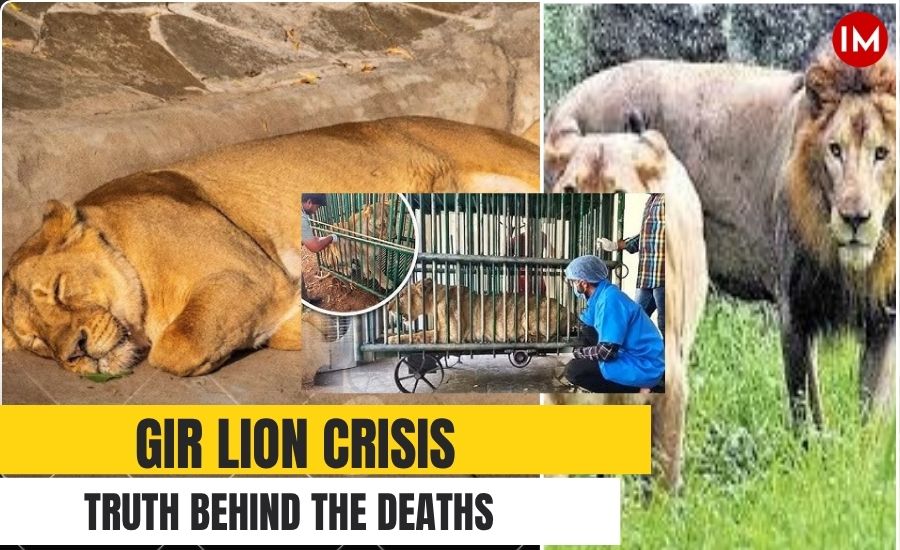
At the centre of the concern was a grim statistic: eight Asiatic lion cubs had died within a short span of time in the Gir Somnath and Amreli districts. As panic mounted, the Gujarat Forest Department launched an intensive surveillance and rescue operation across the Gir landscape.
What followed was one of the largest wildlife health monitoring exercises undertaken in recent years, involving veterinarians, frontline forest staff, wildlife officers and rescue teams working around the clock to ensure the safety of hundreds of lions spread across protected forests and human-dominated landscapes.
Today, officials say the crisis has been brought under control.
Laboratory investigations have ruled out any major viral epidemic, rehabilitation efforts have succeeded, and most of the lions placed under observation have returned safely to the wild.
To understand the situation on the ground and the measures taken to contain it, Indian Masterminds spoke with senior forest officials leading the response across the Gir landscape, including 2011-batch IFS officer Ram Ratan Nala, Conservator of Forests, Junagadh Wildlife Circle; 2021-batch IFS officer Vikas Yadav, Deputy Conservator of Forests (DCF), Gir East Division, Amreli; and 2019-batch IFS officer Prashant Tomar, DCF, Gir West Division.
The Deaths That Sparked Alarm
The issue first came into focus after the deaths of 12 lions across eastern and western Gir forests were reported over a span of roughly two weeks. Among these, the deaths of several cubs raised particular concern.
Initially, there were suspicions that Babesiosis—a tick-borne parasitic disease that had previously affected Gir lions—might be responsible. The possibility of a wider outbreak prompted the Forest Department to begin immediate surveillance and testing operations.
Forest and Environment Minister Arjunbhai Modhwadia personally reviewed the situation and visited the Jasadhar Animal Care Centre along with senior officials.
As investigations progressed, laboratory findings painted a different picture.
According to the minister, the deaths of eight cubs were not caused by Babesia or any viral epidemic. Instead, the primary factors were extreme summer heat, dehydration, physiological stress and low immunity among vulnerable cubs.
“Eight lion cubs died due to the scorching heat and the resulting weakness. The cubs that died had low immunity. The Babesia parasite was not the cause,” the minister stated.
Officials clarified that while a few isolated cases of Babesiosis were detected in some lions, there was no widespread outbreak or epidemic-like situation in Gir.
A Landscape Under Watch
The moment concerns emerged, the Forest Department shifted into emergency response mode.
Across the Gir landscape, lions showing any signs of weakness, unusual behaviour or illness were identified and isolated for examination.
More than 30 lions were brought to rescue and animal care centres for observation and treatment as a precautionary measure. Veterinary teams collected blood samples, conducted health assessments and monitored the animals continuously.
Of the 17 lions that were placed under intensive observation, 12 recovered completely and were released back into their natural habitat. The remaining lions also showed normal health parameters and continued to be monitored as a precaution.
The operation involved constant field surveillance, medical interventions and extensive monitoring across both eastern and western Gir divisions.
‘It Was an Isolated Incident, Not an Epidemic’
Speaking to Indian Masterminds, IFS officer Ram Ratan Nala sought to dispel fears of a large-scale disease outbreak.
According to him, the deaths occurred against the backdrop of unusually intense heat and humidity across the region.
“There was nothing of that sort. It was just an isolated incident. This year there was intense heat and high humidity. The animals were affected just as humans were. Everyone was looking for relief from the heat.”
He explained that once the incident came to light, the Forest Department immediately expanded its monitoring network around the affected area.
“We monitored all the lions in the vicinity under veterinary supervision. First we covered a two-kilometre radius, then five kilometres, then ten kilometres. We monitored every animal in the surrounding area. Everything is under control now.”
Lions showing signs of dehydration or weakness were shifted to treatment facilities.
“For those that appeared dehydrated or weakened by the heat, we brought them to the hospital. We conducted all necessary tests and administered treatment, including IV fluids and supportive care.”
Addressing concerns about disease transmission, Nala emphasized that the situation never resembled a widespread outbreak.
“There is nothing like a virus spreading. If that were the case, the huge lion population we have here would have been affected.”
He also highlighted a biological reality often overlooked during such incidents: cub mortality is a natural part of population dynamics.
“Among young animals, some mortality is inevitable. The reasons can vary—weakness, frailty or other natural causes. Population dynamics are always at play.”
The Massive Screening Operation Across Gir
One of the most intensive field responses was undertaken in Gir East Division, which includes parts of Amreli and Gir Somnath districts and supports one of the largest lion populations in the region.
Explaining the operation, IFS officer Vikas Yadav said that the department moved swiftly after noticing signs of weakness among some lions.
“Recently, we observed some signs of weakness in the lions. Upon investigation, we suspected the presence of Babesia, a tick-borne parasitic disease. High Temperatures also contribute to such situations.”
Babesia is transmitted through ticks commonly found on cattle and other animals.
As a precautionary measure, affected lions were isolated immediately.
“When we noticed this weakness or behavioural changes, we isolated the affected lions. Following isolation, we administered preventive doses and conducted mass screening across the entire landscape.”
The scale of the operation was unprecedented.
“We scanned over 350 lions. Necessary deworming and de-ticking procedures were carried out, and preventive medication was administered.”
The department also established an extensive surveillance network.
“We set up a 24/7 monitoring and patrolling system. Staff stayed awake all night. Wherever necessary, rescue cages were installed and animals were captured safely and brought to isolation centres.”
Blood samples were collected and tested to eliminate the possibility of other diseases.
The rescue and rehabilitation exercise was particularly challenging because a large proportion of Gujarat’s lion population today lives outside protected forests.
“The last lion census recorded a population of 891 lions, and a significant number of them live outside the protected sanctuary in revenue areas. Tracking movements and avoiding human-wildlife conflict is a massive challenge.”
The Emotional Return to the Wild
Among the most rewarding moments during the operation came when rehabilitated lions were released back into their natural habitats.
IFS Yadav recalled one particularly memorable release. “There was a mother and a cub. When the cub was released back into the forest, it successfully reunited with its mother. Since lions live in prides, identifying the correct pride and reuniting animals with their groups becomes extremely important.”
The successful reunions reflected the effectiveness of the department’s monitoring systems and the dedication of field staff working under challenging conditions.
According to IFS Yadav, only a handful of lions remain under observation. “We have released almost all of them. Only a lioness and her two small cubs remain under observation. Once their blood reports are received and they are declared healthy, they too will be released.”
Separating Facts from Fear
During the height of public concern, comparisons were frequently drawn between the situation in Gir and the deaths of tigers reported from Madhya Pradesh’s Kanha Tiger Reserve, where Canine Distemper Virus had emerged as a concern.
However, officials insist the two situations are entirely different.
“It would not be accurate to call this a virus outbreak,” said Vikas Yadav. “Babesiosis is a tick-borne disease. We have largely brought it under control through deworming, de-ticking and spraying operations.”
He added, “The situation in Madhya Pradesh is different. It cannot be linked to what happened here.”
100 Percent Monitoring: Gir West’s Strategy
While eastern Gir handled large-scale screening and rescue efforts, teams in western Gir adopted an equally rigorous surveillance strategy.
Speaking to Indian Masterminds, 2019-batch IFS officer Prashant Tomar confirmed that the situation has stabilized. “The situation is now under control. No new deaths have been reported.”
Tomar explained that the department’s approach centred on continuous field observation.
“Our strategy was to observe 100 percent every day—to scan and check continuously. If there was any doubt, we rescued the animal and provided treatment. Otherwise, every day we checked, scanned and observed regularly. That was the strategy.”
This proactive approach enabled officers to detect problems early and intervene before conditions deteriorated.
How the Forest Department Contained the Crisis
The successful management of the situation was the result of multiple coordinated interventions:
Intensive Surveillance
Forest teams expanded monitoring zones around affected areas and conducted regular health assessments.
Mass Screening
More than 350 lions were examined across the Gir landscape.
Rescue and Rehabilitation
Weak, dehydrated or potentially infected lions were safely rescued and shifted to care centres.
Veterinary Intervention
Animals received fluid therapy, preventive medication, deworming and de-ticking treatments.
Round-the-Clock Patrolling
Teams maintained 24-hour surveillance, often working through the night.
Scientific Testing
Blood samples were collected and analysed to rule out major infectious diseases.
Safe Release Protocols
Recovered lions were released only after medical clearance and careful identification of their original prides.
A Conservation Success Story Amid a Difficult Episode
The deaths of lion cubs were undoubtedly a setback and a reminder of the challenges wildlife faces in an era of rising temperatures and changing environmental conditions.
Yet the larger story that emerged from Gir is also one of preparedness, scientific management and rapid response.
From veterinarians administering emergency treatment to frontline staff conducting night-long patrols, hundreds of personnel worked to ensure that an isolated health concern did not escalate into a larger conservation crisis.
The results are evident today.
No new lion deaths have been reported. Most rescued lions have returned to the wild. The remaining animals under observation are healthy and expected to be released soon.
For a landscape that supports the world’s only wild population of Asiatic lions, every life matters. And in this instance, the coordinated efforts of Gujarat’s forest officials, veterinarians and field staff helped transform a moment of alarm into a story of resilience, recovery and hope.
As Gir’s lions once again roam their forests and grasslands, the episode stands as a powerful reminder that conservation is not only about protecting wildlife from external threats—it is also about responding swiftly, scientifically and compassionately when nature itself presents new challenges.
Read Also: The IPS Officer Who Turned a Tiger’s Tragedy into a Conservation Mission