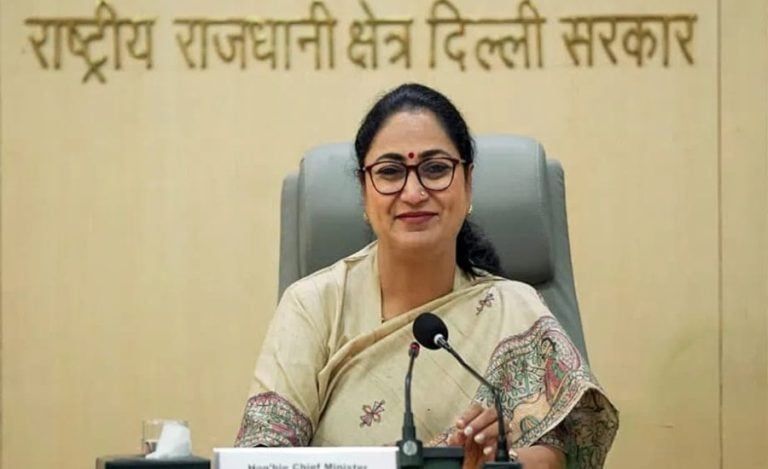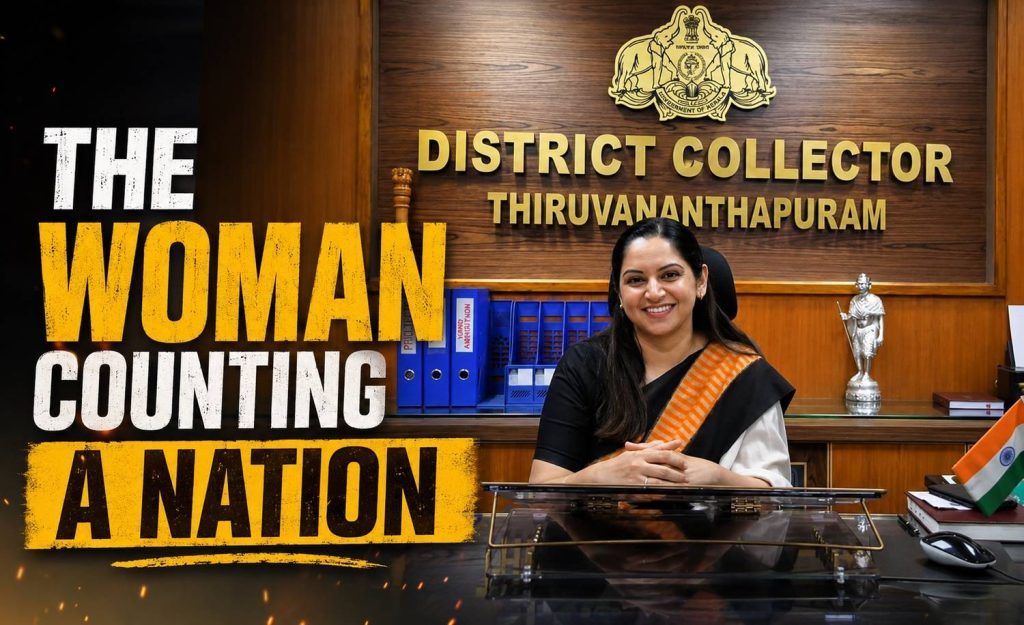
Before Dr. Navjot Kaur Khosa became an IAS officer, she was preparing to become a dentist. A native of Bathinda, Punjab, born on June 13, 1983, Khosa completed her Bachelor of Dental Surgery from Government Medical College, Amritsar. She was a university topper and secured a gold medal every year during her BDS course.
But treating individual patients eventually made her look beyond the clinic.
During her internship, she began thinking about how she could contribute to society on a much larger scale. Her father, Jagtar Singh Khosa, had long dreamt of seeing his daughter enter the civil services. The dream gradually became hers too.
She cleared the Rajasthan Administrative Services examination in 2010 and was undergoing training as an SDM in Jaipur when another goal came within reach. In her third attempt, she cleared the UPSC Civil Services Examination 2011 with All India Rank 95. She had chosen Punjabi Literature and Geography as her optional subjects.
On September 3, 2012, she joined the IAS and was allotted the Kerala cadre.
The Administrator Who Carried a Medical Mind Into Government
Her early years in Kerala took her through the grassroots of administration, beginning as Assistant Collector in Thrissur and later serving as Sub-Collector in Thalassery. Then came a series of assignments that made her medical background particularly relevant.
Khosa worked in health administration, including the Food Safety Commissioner, Deputy Secretary in the Health and Family Welfare Department, and Managing Director of the Kerala Medical Services Corporation. She also took on responsibilities connected with the National Health Mission and AYUSH.
Read Also: IAS Gargi Jain’s ‘Collector in Classroom’ Is Transforming Tribal Girls’ Education in Gujarat
Her career was increasingly moving towards a distinctive intersection: medicine, management and public administration. Then came the assignment that would place all three to the test.
Thiruvananthapuram: When the Collector Took Charge Amid COVID
In June 2020, Khosa became District Collector and District Magistrate of Thiruvananthapuram. It was hardly an ordinary Collector’s posting.
The pandemic was raging, people were returning to Kerala, and the district also had to prepare for monsoon-related emergencies, flooding, dengue, and leptospirosis.
Khosa’s response combined public health with practical administration. A war room at the Collectorate brought together contact tracing, reporting and data analysis. Mobile swab-collection units were introduced to expand testing.
When people could not safely isolate at home, the administration established Thiruvananthapuram’s first domiciliary COVID care centre at Cordova Public School in Ambalathara.
During the second wave, local bodies were categorised according to test positivity rates, allowing restrictions to be calibrated according to the severity of the situation instead of applying the same formula everywhere.
And then came an idea that was both simple and striking.
The Collector Who Put Vaccination on Wheels
In August 2021, Thiruvananthapuram launched Kerala’s first drive-in COVID vaccination camp. People could receive their vaccine while remaining inside their vehicles, avoiding long queues and making the process more convenient.
Within its first ten days, around 8,000 people had received doses — 4,800 first doses and 3,200 second doses.
But COVID was not the only challenge on her desk. During her tenure, the district administration worked on Jal Jeevan Mission, water-resource management and major infrastructure projects, including land acquisition for the Kazhakoottam-Kadampattukonam section of NH-66.
Thiruvananthapuram also secured first place in the Best District – South Zone category of the 3rd National Water Awards for 2020.
Khosa herself was recognised as one of Kerala’s Best District Collectors.
Governance That Looked Inside the Government Too
Her administrative approach also extended to the people working within government.
In 2021, her initiative ‘Koode’ sought to make the Thiruvananthapuram Collectorate more women-friendly through a women’s cell, welfare support and legal assistance.
As pandemic-era disruptions left files pending, the Collectorate even opened its doors on a Sunday in July 2022. That single day saw the revenue department clear 2,049 pending files, alongside efforts such as file adalats to dispose of long-pending cases.
By then, Khosa’s roughly two-year stint as Collector had encompassed pandemic management, elections, healthcare, welfare, water, infrastructure and the everyday machinery of administration.
From Managing a District to Counting a Nation
In July 2022, she became Kerala’s Labour Commissioner. But a few months later, her career took her back to Punjab. On December 19, 2022, Khosa moved to central deputation as Director of Census Operations and Director of Citizen Registration for Punjab and Chandigarh.
It is a striking return to her home state — and an assignment with national significance. She is now helping oversee Census 2027, India’s first digital Census, including the new self-enumeration system.
In 2026, she has been at the forefront of explaining the exercise to citizens — stressing that the Census is free, warning people never to share OTPs, and explaining that enumerators will carry identification and that citizens will not be asked to hand over Aadhaar or other documents.
Her central-deputation tenure has been extended until December 31, 2027, keeping her at the centre of this enormous exercise.
From Treating Patients to Understanding Populations
There is an almost poetic symmetry to Khosa’s career. She began by studying the health of individuals. Then she moved into systems that serve communities — health, food safety, public welfare and district administration. She managed a district through a once-in-a-generation public health crisis.
And today, she is working with the data that will help the government understand India’s households, amenities, population and changing needs.
From a dental chair in Amritsar to the Collectorate in Thiruvananthapuram, and now to the Census machinery in Punjab, Dr. Navjot Kaur Khosa’s journey has been about one thing: making public systems work for the people they are meant to serve.
Read Also: “Saree Is India’s Timeless, Sustainable and Inclusive Garment”