“Success is the sum of small efforts, repeated day in and day out.” — Robert Collier
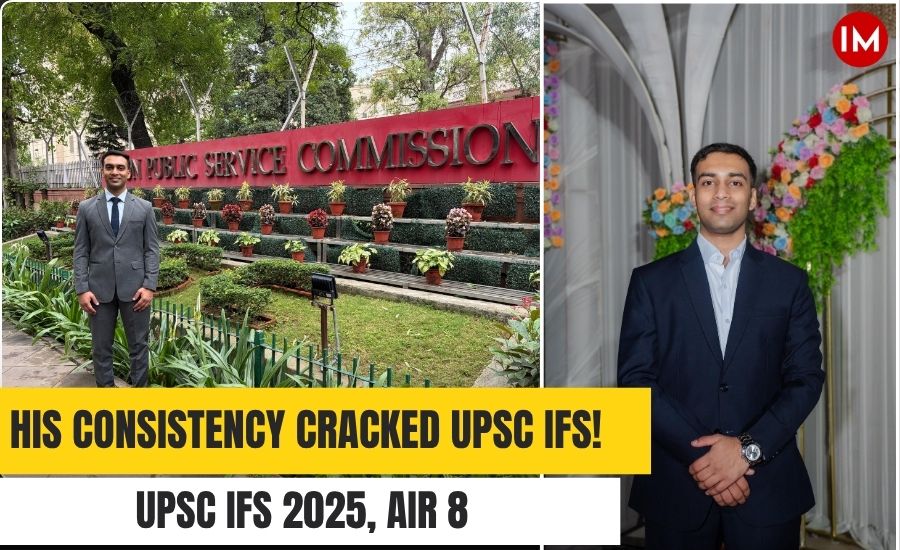
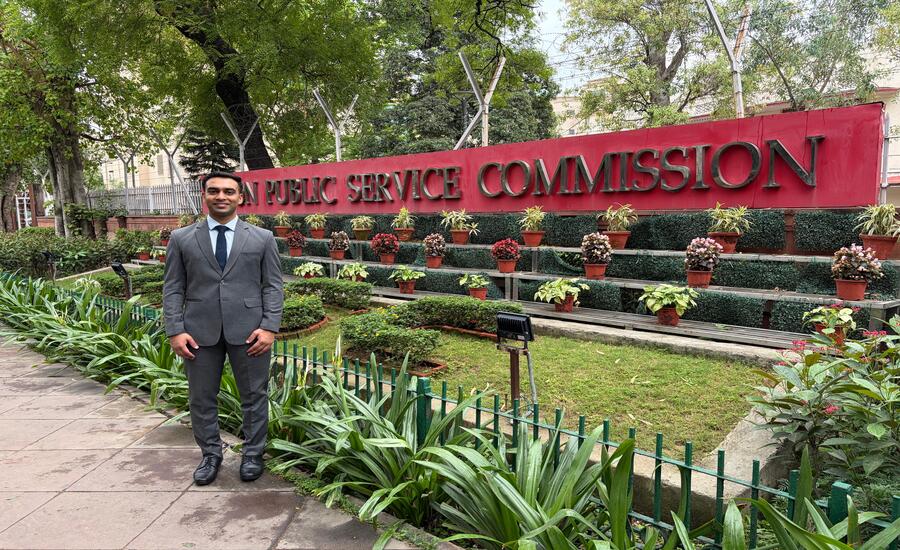
In a world where most aspirants spend years battling uncertainty, failures, and self-doubt before tasting success, there are a few extraordinary individuals who redefine what focused dedication can achieve. One such name is Sankalp Dixit, who cracked the UPSC Indian Forest Service (IFS) Examination 2025 with an outstanding All India Rank 8 in just his third attempt.
What makes Sankalp’s journey truly inspiring is not merely the rank he secured, but the discipline, clarity, and consistency with which he pursued his dream. Coming from an engineering background with little exposure to humanities or biological sciences, he dared to step into one of India’s toughest examinations and emerged victorious through relentless self-study, curiosity-driven learning, and unwavering determination.
From being a Gold Medalist at NIT Trichy to becoming an Indian Forest Service officer, Sankalp’s story is a powerful reminder that success does not always belong to the loudest or the most privileged—it belongs to those who continue showing up every single day, even on the days they don’t feel like it.
Indian Masterminds spoke with Mr. Sankalp to learn more about his inspiring journey and how he cracked one of the toughest examinations in the world. “Consistency is the most important thing. Even if it is just 2 hours a day, you must never break the flow,” he shared.
Journey So Far: From Engineering Graduate to IFS Officer
Sankalp completed his graduation in Chemical Engineering from NIT Trichy in 2023. While many students around him were preparing for lucrative campus placements and corporate careers, he had already made up his mind. He wanted to serve the nation through the Civil Services.
Read Also: From 3 Interview Failures to AIR 9 in UPSC IFS 2025: The Inspiring Journey of Ravi Laxmipriya
Without wasting time, he immediately began his preparation after graduation.
Interestingly, Sankalp had appeared for the UPSC examination once earlier in 2023 while he was still in college. However, that attempt was merely experimental. He appeared without preparation just to understand the nature of the examination and gain familiarity with the process.
His first serious and properly prepared attempt came in 2024.
In that attempt, he secured a position in the Indian Railway Management Service (IRMS – Traffic). Simultaneously, he also cleared the preliminary cutoff for the Indian Forest Service Examination. However, since his focus at that time was primarily on Civil Services Examination preparation, he appeared for the IFS Mains without serious preparation.
But he was not someone who would settle early.
He continued improving himself, refining his strategy, and preparing with greater precision. His hard work finally paid off in the UPSC IFS-2025 examination, where he secured an exceptional All India Rank 8 and earned the opportunity to become an Indian Forest Service Officer. “Every attempt taught me something new. I never considered any attempt a failure,” he said.
His Background: Roots Grounded in Simplicity and Sacrifice
He belongs to Bhopal, Madhya Pradesh, where he completed his entire schooling and spent most of his life. Behind every successful candidate stands a family whose sacrifices often remain invisible to the world. Sankalp’s story is no different.
His father runs a mobile shop, while his mother, who was once an Assistant Professor, left her professional career to dedicate herself to raising Sankalp and his brother.
Academically, he had always been brilliant.
- He secured a perfect 10 CGPA in Class 10
- Scored an impressive 96.4% in Class 12
- Graduated from NIT Trichy with a stellar 9.46 CGPA
- Became the Gold Medalist of his department
During his college years, Sankalp also completed prestigious internships at IIT Madras and in Germany through the highly reputed DAAD Scholarship in 2022.
For three months during his summer break, he stayed in Germany and worked as an intern, gaining international academic exposure. Yet despite having an exceptional profile and excellent placement opportunities, he consciously chose not to sit for campus placements in 2023 because his vision was already clear – Civil Services was his destination.
The Biggest Struggle: Transitioning from Engineering to Humanities
One of the biggest challenges Sankalp faced was his engineering background, which had little exposure to humanities subjects like history, polity, and geography, making UPSC preparation initially unfamiliar and difficult.
Adding to this, he prepared entirely from his hometown without moving to any coaching hub, relying fully on online resources and self-study without peer support or classroom guidance.
He believes the toughest part of the journey was maintaining consistency over long periods, as sustained discipline matters more than short bursts of intense study.
Preparation Strategy: “Never Let a Day Become a Zero Day”
When asked about the core secret behind his success, Sankalp repeatedly emphasized one thing—consistency.
According to him, aspirants often make the mistake of believing that success comes from studying 10–12 hours every single day. But real preparation, he believes, is about continuity.
Even on days when he did not feel like studying, he made sure he studied something—whether for two hours, one hour, or even just by reading the newspaper.
His philosophy was simple – “Never let a single day become a zero day.”
He believes momentum is everything in UPSC preparation. Once a student disconnects completely from studies for several days, getting back into rhythm becomes extremely difficult.
His Newspaper Strategy: Curiosity Over Completion
One of the most fascinating aspects of Sankalp’s preparation strategy was his approach toward current affairs and newspaper reading.
Most aspirants try to finish newspapers quickly—often targeting completion within 30–40 minutes. But Sankalp adopted an entirely different approach.
Whenever he encountered a new concept, term, or news item, he would immediately research it in detail.
For example, if he came across a term like “Offer for Sale (OFS)” in the newspaper, he would not simply read and move ahead. Instead, he would pause and understand:
- What exactly is an OFS?
- Which regulatory body governs it?
- How does the process work?
- Why is it in the news?
He would then make short notes mentioning that the topic had appeared in current affairs.
This habit of curiosity-driven learning significantly strengthened his conceptual understanding and helped him perform exceptionally well in the Prelims examination, where he cleared the IFoS cutoff by a margin of nearly 15–17 marks.
Mains Strategy: Precision and Technical Clarity
Sankalp explained that the Indian Forest Service Mains examination is highly technical in nature. Therefore, writing vague or generalized answers is not enough.
For technical subjects like Forestry, proper scholarly definitions and standard terminologies matter immensely.
He ensured that every answer reflected technical precision.
One of the biggest strengths of his answer writing was the use of diagrams.
According to him:
- Diagrams improve presentation
- They help explain concepts using fewer words
- They demonstrate conceptual clarity to the examiner
This strategy proved tremendously successful.
In fact, Sankalp secured the highest marks in India in Forestry Optional with an outstanding 259 out of 400.
Breaking the Myth Around Forestry Optional
Sankalp also addressed a common misconception among engineering students regarding the Forestry optional subject.
Since he came from a PCM background, he initially believed Forestry would require extensive knowledge of Biology. However, after studying the subject, he realized that only basic biological concepts—mostly of Class 9 level—were sufficient.
He clarified that aspirants should not fear Forestry assuming it demands advanced biological expertise.
This insight can be incredibly encouraging for engineering and science-background aspirants considering Forestry as an optional subject.
Interview Experience: From Tigers to the Bermuda Triangle
Sankalp’s UPSC IFS interview was chaired by Anuradha Ma’am and took place during the morning session on the 7th. Knowing that interviews often revolve around recent developments, he entered the boardroom after thoroughly reading the morning newspaper.
At that time, tiger deaths in Madhya Pradesh had become major news, and he anticipated questions related to wildlife conservation.
The interview began with questions about his hobbies. Since Sankalp mentioned Formula 1 racing as an interest, the Chairperson asked an interesting question:
“F1 causes pollution. As someone aspiring to join the Indian Forest Service, don’t your interests contradict your career choice?”
He calmly explained how Formula 1 itself is actively evolving toward sustainability and reducing emissions.
The board then moved toward:
- Tiger conservation
- Tiger census
- Wildlife issues in Madhya Pradesh
- Sports and hobbies
- Books and biographies he had read
One board member deeply questioned him about sports biographies:
- Which books had he read?
- Which chapter was his favorite?
- What did that chapter discuss?
Then came completely unexpected questions like:
- Why does the Bermuda Triangle exist?
How is it formed? - Despite the unpredictability of the interview, Sankalp maintained composure and honesty throughout the process.
He eventually secured an impressive 212 marks in the interview, reflecting his balanced personality and clarity of thought.
How Planet Geology Helped Him
Sankalp openly admitted that he had absolutely no prior background in Geology before starting preparation for the IFS Mains.
After the Civil Services Mains examination ended in August, he had only September and October available to prepare for Forest Services-specific subjects.
At that stage, he enrolled in an online crash course and prelims test series through Planet Geology.
According to him, the biggest strength of the course was its precision.
He appreciated that:
- The content was concise yet sufficient
- The teaching was exam-oriented
- The material was not unnecessarily overwhelming
- The faculty remained available for doubt-solving
Sankalp particularly valued the quick resolution of doubts, which helped him gain conceptual clarity in an entirely new subject.
His performance reflected the effectiveness of this preparation strategy, as he secured an excellent 230 marks in Geology.
The Power of Self-Study
One of the most remarkable aspects of Sankalp’s journey is that almost his entire preparation was based on self-study.
He did not relocate to coaching hubs.
He did not rely heavily on offline classes.
He prepared from Bhopal itself.
Apart from selective online support, everything else was built through discipline, consistency, and independent effort.
His journey strongly proves that in today’s digital era, clarity, dedication, and smart preparation matter far more than location.
Message for Aspirants: Discipline is Greater Than Motivation
When asked what message he would like to give aspirants, Sankalp’s answer was deeply practical and realistic. He emphasized that nobody can remain highly motivated every single day of the year.
There will be days when:
- You feel exhausted
- You don’t feel like studying
- You want to take a break
- You feel disconnected from preparation
But even on those days, he believes aspirants should maintain minimal continuity. Even reading the newspaper for one hour is enough. The key is to never completely disconnect from preparation.
Because once momentum breaks, rebuilding it becomes extremely difficult.
His message can be summarized in one powerful line – “Consistency and discipline matter far more than temporary bursts of motivation.”
A Journey That Inspires Thousands
Sankalp Dixit’s story is not merely about securing AIR 8 in UPSC IFS 2025.
It is a story about clarity of purpose.
It is a story about disciplined effort.
It is a story about trusting consistency over shortcuts.
At a time when many aspirants struggle with distractions, uncertainty, and inconsistency, Sankalp’s journey teaches one timeless lesson:
Success is not created in one extraordinary day.
It is built quietly, patiently, and consistently – every single day.
Read Also: From Missing Cut-Offs to AIR 11: The Inspiring Journey of Aakash Singhal in UPSC IFS 2025