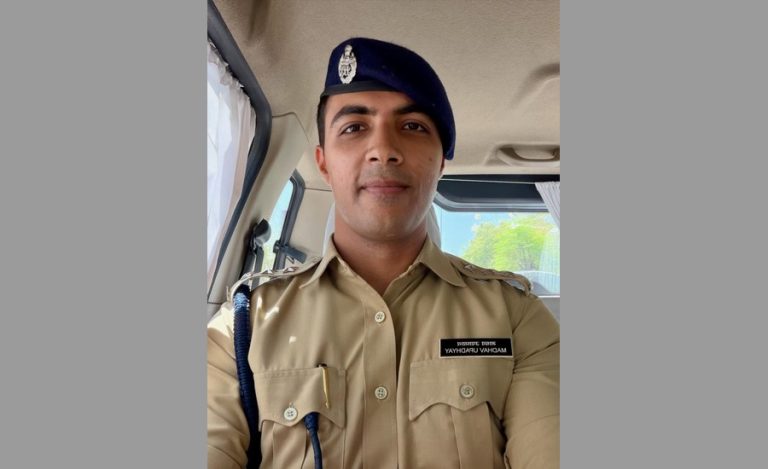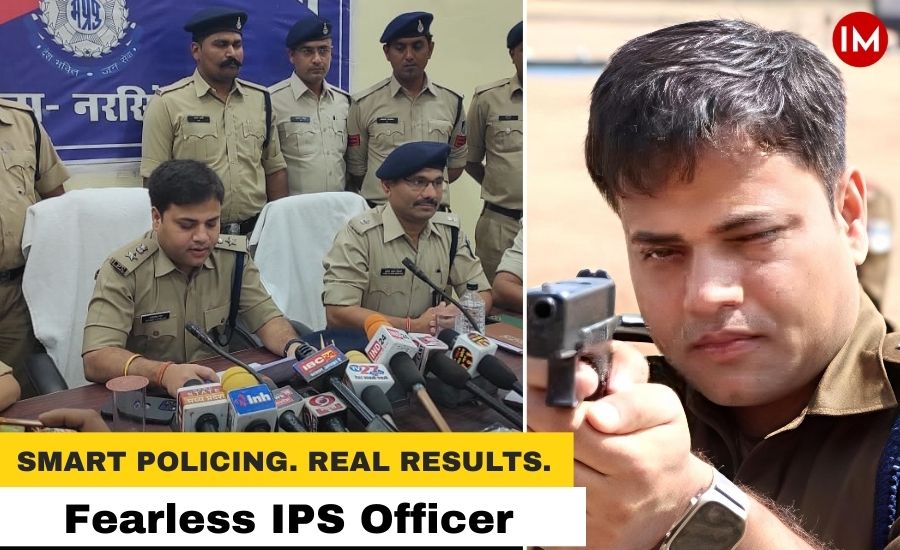
In a time when crime statistics often blur into numbers, IPS Avijeet Kumar Ranjan stands out as an officer who turned figures into lives reclaimed and futures restored. In less than a year as Superintendent of Police (SP) of Katni district, Madhya Pradesh, the 2014-batch IPS officer led operations that resulted in the recovery of more than 1,000 missing women and girls – a feat unprecedented in the district’s history – while simultaneously launching one of the most aggressive crackdowns on narcotics the region has ever witnessed.
Fearless, methodical, and deeply people-centric, Ranjan’s policing was driven by a clear mission. As he put it himself, “These two are our priority sectors – women and narcotics.”
Under his leadership, Katni Police didn’t just enforce the law; it restored public faith in the system.
Indian Masterminds interacted with IPS Ranjan, now serving at PTRI, Bhopal, to understand his initiatives, the strategy behind their implementation, and their impact on policing in Katni.
An Officer with a Clear Vision
Mr Ranjan, a Madhya Pradesh cadre officer of the 2014 batch, served as SP of Katni during a period when crimes against women and drug trafficking posed serious challenges. Known for his hands-on supervision and sharp operational clarity, he believed policing had to be proactive, not reactive.
His vision was unambiguous: make Katni safe for women and free from drug abuse.
“Police leadership,” he believes, “is not about sitting in offices – it’s about continuous supervision, feedback, and guiding your team at every step.”
Bringing the Missing Back Home: A Mission to Safeguard Women
Before tackling the narcotics network, he placed women’s safety at the heart of his policing strategy – particularly the alarming number of missing girls and women.
Two Categories, One Priority
Explaining the approach, Mr Ranjan said that missing cases were handled in two structured categories –
- Girls and boys below 18 years of age, where FIRs are mandatorily registered under Section 363 of the IPC
- Adults above 18 years, where missing person reports are registered and tracked with equal seriousness
“We took missing person reports very seriously,” he emphasized.
Each case was monitored at multiple levels – from the police station to the Additional SP, SP himself, and even higher authorities like the IG and Police Headquarters.
Systematic Monitoring and Data-Driven Policing
One of IPS Ranjan’s key interventions was introducing systematic monitoring checks.
“Regular attendance checks are carried,” he explained. “This helps in early identification and enables prompt action.”
Old cases were reopened, re-investigated from scratch, and examined through meticulous data collection. Police teams spoke again to friends, relatives, and neighbors to identify last-seen details, behavioral patterns, and possible associations.
“You cannot track someone in a scattered manner,” he said. “Data collection is very important.”
Tracking Patterns, Not Just People
The investigation methods went beyond routine policing. Officers analyzed –
- Digital and telephonic data
- Possible romantic relationships
- Simultaneous disappearances from the same locality
- Skill-based employment patterns (carpenters, factory workers, laborers)
- Job placement rackets targeting tribal children under false promises
He explained, “Wherever that person goes, what kind of work will they do? Their skills give us clues.”
Special attention was given to networks that trafficked children and women under the guise of employment, and informant systems were strengthened to identify suspicious outsiders in villages and towns.
A Remarkable Outcome
The result of this relentless, layered approach was historic. More than 1,000 missing women and girls were recovered in approximately one year.
In the history of Katni district, no previous tenure had seen recoveries on this scale.
Breaking the Backbone of Drug Trafficking
Once systems for women’s safety were firmly in place, he intensified operations against narcotics – a menace he described as deeply networked and interstate in nature.
Identifying the Route
Police intelligence revealed that marijuana was being smuggled primarily from Odisha, passing through Chhattisgarh, and entering Madhya Pradesh via Katni and Jabalpur, before moving further toward Rewa and Uttar Pradesh.
“We identified the route through which marijuana was being smuggled from other states,” he said.
Intelligence, Surveillance, and Digital Evidence
Rather than relying only on mobile tracking – which smugglers often avoided by using internet calls – the police used:
- Intelligence networks and informers
- Digital evidence collection
- Toll booth CCTV footage
- Vehicle movement analysis
“We tracked their movements,” IPS Ranjan explained. “If we found the suspect in footage, we would crack down on him.”
Both large-scale smuggling operations involving quintals of marijuana and local-level peddling of powders and substances were targeted.
Following the Chain: From Consumer to Supplier
One of the most effective strategies was tracking drug consumers to identify suppliers.
“If you identify who is consuming it, you will find out who is supplying it,” he said. “It’s a chain.”
By keeping surveillance on addicts and questioning apprehended individuals, police were able to move up the supply ladder – arresting peddlers, suppliers, and long-absconding criminals who had earlier evaded law enforcement.
Leadership That Delivers Results
He credits his success to continuous supervision and structured task allocation.
“When you continuously give tasks to your staff, supervise them, take feedback, and listen to their problems, you will get results,” he said.
Much like corporate project management, tasks were divided into stages with timelines, ensuring accountability at every level.
A Visible Impact on Crime
Though exact arrest figures were not disclosed, IPS Ranjan confirmed that drug trafficking saw a significant decline.
“If we arrest criminals and seize the marijuana, their supply chain gets disrupted,” he noted.
In fact, the highest number of actions against narcotics-related crimes in Katni’s history were recorded during the last two years of such focused policing.
About IPS Avijeet Kumar Ranjan
Mr Ranjan is a 2014-batch IPS officer of the Madhya Pradesh cadre. He is currently serving in PTRI, Bhopal, after completing his tenure as SP, Katni.
Public Recognition: He also gained attention on social media for his exceptional marksmanship during an annual firing range event, accurately hitting targets with a pistol, INSAS, and SLR.
Early Life & Education: Ranjan completed his early education in Darjeeling and Patna, graduated from Delhi University, and later joined the Indian Police Service.
A Model of Modern Policing
Through intelligence-led operations, empathetic leadership, and relentless supervision, IPS Avijeet Kumar Ranjan demonstrated how policing, when done with purpose and precision, can change lives. His tenure in Katni stands as a model of modern, people-first policing—where every recovered girl and every disrupted drug chain tells a story of justice delivered.