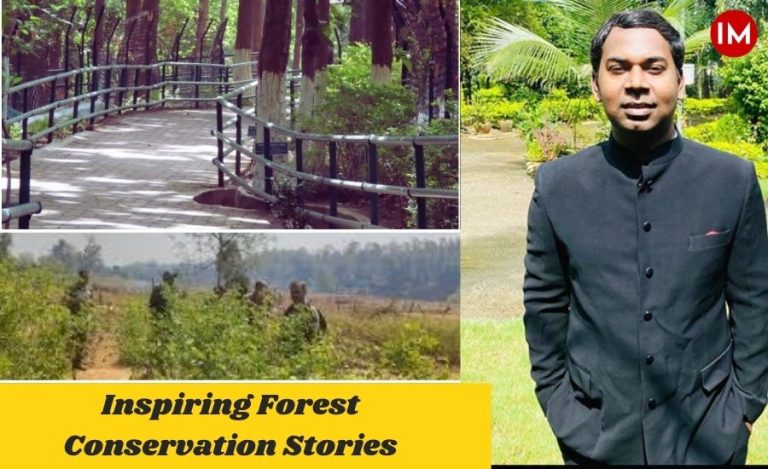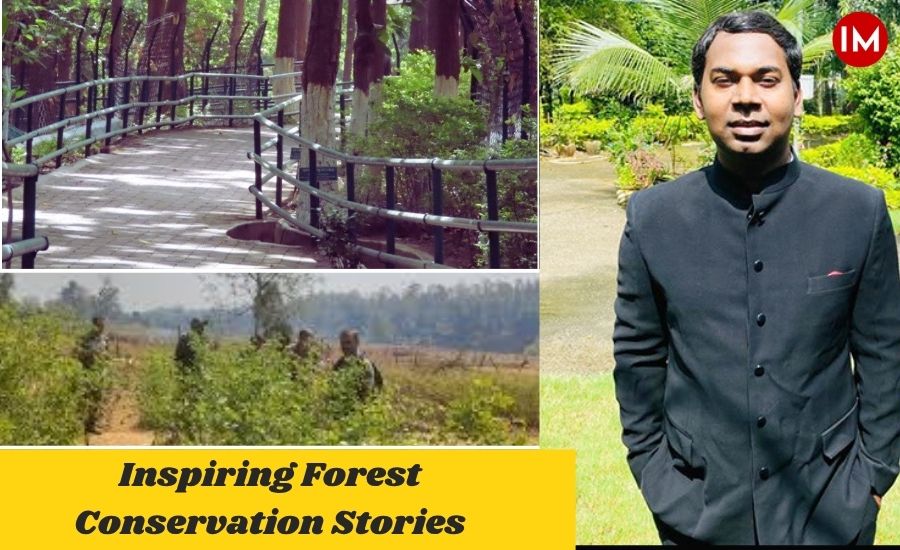
In the bustling capital of Jharkhand, a quiet revolution in urban greening, forest management, and wildlife conservation is underway. Leading this charge is IFS Srikant Verma, a 2015 batch officer of the Jharkhand cadre, currently serving as the Divisional Forest Officer (DFO) of Ranchi. His work is not just about restoring forests or upgrading infrastructure – it is about creating spaces where people, nature, and wildlife coexist harmoniously.
“Look – let me explain,” IFS Verma shared in an exclusive conversation with Indian Masterminds. “It’s not just about planting trees or rescuing animals. It’s about building systems, restoring heritage, and giving communities the spaces they can connect with.”
Through a series of visionary interventions, Verma has transformed neglected landscapes into vibrant urban forests, modernized centuries-old infrastructure, and implemented innovative wildlife management practices – all while fostering community participation and alternative funding mechanisms.
Reviving Forest Infrastructure: Heritage Meets Modern Utility
One of Verma’s first priorities was upgrading Jharkhand’s aging forest rest houses and inspection bungalows, many dating back to the British era. Once poorly maintained, these structures are now modernized to serve both official purposes and eco-tourism.
“We upgraded these facilities so that visitors to eco-tourism sites, waterfalls, and deep forests can feel comfortable,” he explained.
By preserving heritage while improving functionality, these facilities now support tourism, official visits, and environmental education, ensuring that Jharkhand’s forest infrastructure matches the importance of its capital city.
Urban Forests on Hillocks: From Vulnerable Land to Community Green Spaces
Another landmark initiative has been the creation of urban forests – or Nagar Van – on hillocks within Ranchi city. Areas once vulnerable to encroachment and illegal activities were secured and transformed into safe, green spaces.
“When we reviewed the sites in 2022, we found greenery but felt that organized area development could be integrated,” Verma said. “Thus, we started working on the concept of Nagar Van or Urban Forest, through convergence of funds from multiple agencies.”
Today, these urban forests feature walking tracks, solar lighting, water harvesting systems, and recreational spaces, attracting students, families, and senior citizens. What was once an underutilized patch of land is now a thriving community hub.
Tackling Environmental Funding Challenges
Verma’s experience in Gumla offered crucial insights into alternative funding mechanisms. He recounted:
“A company like Hindalco was operating within our jurisdiction but not depositing funds required for environmental restoration. By presenting the matter before the appropriate forum, they committed to a development plan worth ₹45 crore over ten years for Ranchi and Lohardaga divisions.”
By tapping into external sources and compelling environmental violators to comply with legal mandates, Verma ensured that funds flowed into projects that would otherwise have faced significant delays if relying solely on state government allocations.
Revitalizing Eco-Tourism and Community Livelihoods
One striking example of Verma’s work is Anjan Dham in Gumla, a site combining religious significance and eco-tourism. After securing approvals from the Government of India, Verma and his team revitalized the area, providing employment to 40 people directly and another 100 indirectly.
“This site has become immensely popular, fostering a deep sense of attachment among the local community,” he said.
Similarly, in Ranchi, he spearheaded projects under the “Greening of Hills” and Nagar Van schemes, enhancing green zones, constructing open-air gyms, water conservation measures, and bird interpretation centers. The Smriti Vaninitiative allows families to plant trees in memory of loved ones, combining environmental stewardship with emotional remembrance.
Innovative Wildlife Conservation Practices
Verma has also pioneered wildlife conservation initiatives. In June 2025, Ranchi saw its first-ever tiger rescue operation successfully executed under his supervision. He also prioritized securing elephant migration corridors to reduce human-wildlife conflict.
“One day, we observed an elephant that had fallen into a well. Instead of a prolonged operation, we filled the well with water, allowing the elephant to rise and walk away safely within half an hour,” he recalled.
By addressing human-animal conflict through local solutions and timely interventions, Verma has set a model for wildlife management across Jharkhand.
Enhancing Urban Biodiversity and Public Spaces
Under his guidance, Ranchi has seen the transformation of several urban areas –
- Biodiversity Park – Restored water levels, borewells, watchtowers, and information kiosks for visitors. New bicycles and golf carts enhance accessibility.
- Legislative Assembly & High Court precincts – Greening drives reduce urban heat and improve the surrounding microclimate.
- Deer Rescue Center – Expanded from six to over 35 deer, now compliant with animal welfare norms.
“Our philosophy is simple,” Verma said. “Wherever the Forest Department establishes a presence, there should never be a scarcity of water or amenities. Visitors and wildlife deserve nothing less.”
Overcoming Challenges: Limited Resources, Big Vision
Verma’s achievements are all the more remarkable given the constraints he faces. With only two Range Officers under his command in Ranchi and a shortage of office staff, he relies on retraining retired personnel, mobilizing local teams, and prioritizing efficient project execution.
“While monetary resources are generally available, our primary resource—boots on the ground—is limited. Yet the public expects results, and we deliver,” he noted.
Inspiring Community Engagement
Projects like the Smriti Van, open gyms, and bird interpretation centers actively involve local residents, creating environmental awareness and pride. Families plant trees with engraved plaques, while children and students engage with biodiversity education.
“People in Jharkhand do apply their minds creatively,” Mr Verma said. “We have shown that progressive, sustainable development is possible here—just like in other forward-thinking states.”
The Road Ahead
Over the last three years, IFS Srikant Verma has demonstrated that careful planning, innovative funding strategies, community participation, and strong administrative leadership can transform neglected urban and forest spaces into vibrant, sustainable, and educational environments.
His work reflects a philosophy that blends ecological restoration, urban development, and wildlife conservation, leaving a lasting legacy for Jharkhand and setting a benchmark for forest management across India.