Flashing knives on Instagram. Speeding superbikes roaring through narrow roads. Teenagers barely out of school projecting themselves as local “dons” and enjoying the digital applause that followed.
What looked like harmless social media bravado was, in reality, quietly pushing an entire generation of young minds towards crime.
In Rajasthan’s tribal-dominated Dungarpur district, this dangerous trend had begun to spiral out of control. Social media, gang culture and street crime had merged into a deadly cycle – one that didn’t just glorify violence but actively encouraged it. The situation became so alarming that the district police were forced to rethink conventional policing methods.
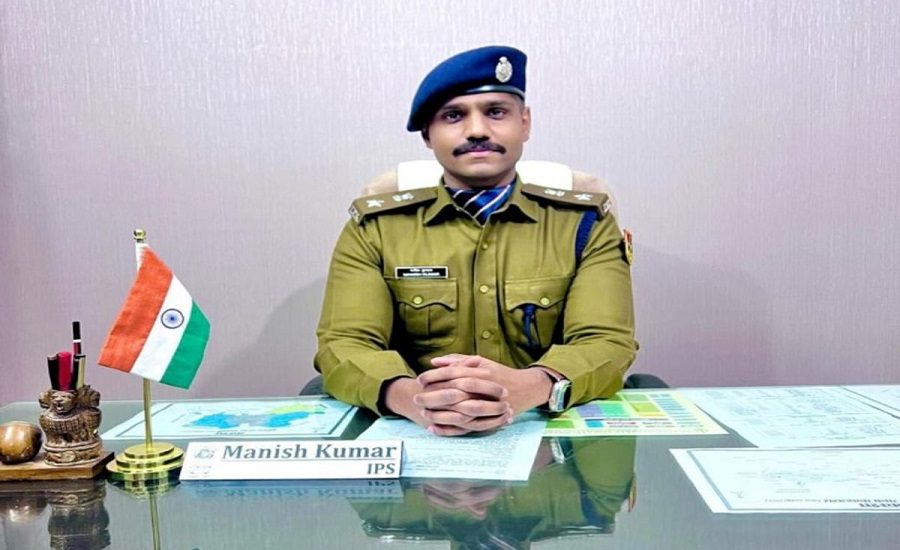
At the center of this transformation stood IPS Manish Kumar, a 2021-batch officer of the Rajasthan cadre and the current Superintendent of Police, Dungarpur, who decided to fight the digital age with digital weapons – and values with authority. Indian Masterminds interacted with Mr Kumar to understand the vision, execution and impact of this innovative policing initiative.
Understanding the Real Problem: A Nexus of Crime, Gangs and Social Media
Explaining the pattern he observed soon after taking charge, Mr Kumar says the issue was not isolated criminal activity but a self-reinforcing loop.
“Actually, this was a nexus of three things – social media, gang culture and crime. First, they would commit a crime on the field. Then they would flaunt that crime on social media. When they got comments and likes, they felt a kick and got motivated to commit crime again,” he explains.
This validation pushed youngsters – mostly between 16 and 20 years of age – to repeatedly engage in unlawful acts just to maintain their online image. According to Mr Kumar, many of these youths came from below poverty line (BPL) families, yet forced their parents to buy superbikes worth ₹2–3 lakh on EMIs.
“Even when families were earning hand-to-mouth, the children were pressuring them to buy expensive bikes. These bikes became entry passes into gangs,” he says.
Soon, these groups began roaming in large numbers, intimidating locals, stopping girls on roads, performing dangerous stunts and spreading fear – both offline and online.
Losing Sanskar: When Values Took a Backseat
What disturbed the officer most was not just the crime, but the loss of values among young minds.
“They were losing their sanskars – their values. They were harming their parents, society and the general public,” IPS Kumar says.
For him, the problem was cultural as much as it was criminal. This realization gave birth to a unique initiative – Operation Sanskar.
Operation Sanskar: Turning Social Media Against Crime
Launched in the last week of July, Operation Sanskar was designed as a two-pronged strategy—strict legal action on the ground and a calculated psychological strike in the digital space.
“Whatever they were getting – attention, fame, motivation – they were getting it from social media. So we decided to use social media against them,” says Mr Kumar.
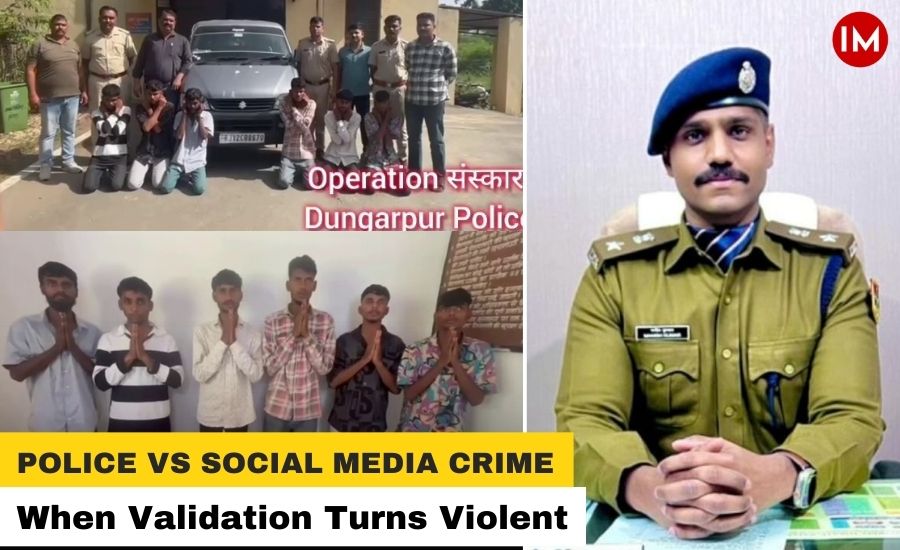
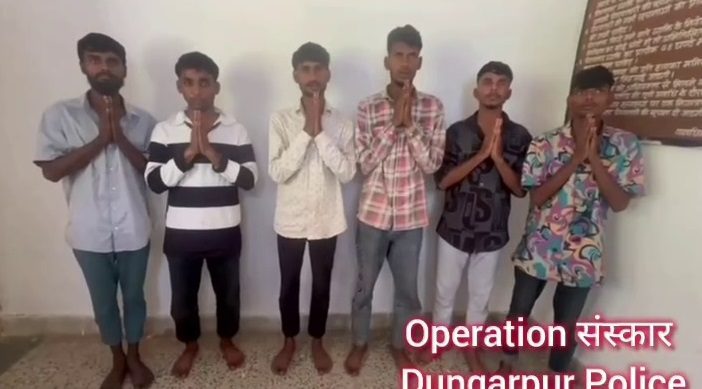
Under this initiative, Dungarpur Police began creating reels and short-form videos featuring the very youths who flaunted weapons and gangster attitudes online. But this time, the narrative was reversed.
Those who once posed with knives were now seen apologising, reciting bhajans, and publicly urging others not to follow their path. Some were even deliberately mocked or renamed to break the illusion of “coolness.”
“They felt they looked cool by committing crimes. We wanted to show them that this is not cool. People will laugh at you,” Mr Kumar explains.
From 500 Followers to Viral Impact
When the initiative started, the district police’s Instagram page had barely 500 followers. But as reels began circulating, the content struck a chord far beyond Dungarpur.
“Many of our reels went viral and were shared across Rajasthan. It set a new benchmark for modern policing,” IPS Kumar notes.
The aim was simple – break the cycle of validation and replace fear with ridicule.
Legal Action on the Ground: No Soft Approach
While social media was used as a psychological tool, the ground action remained firm and uncompromising.
Under Operation Sanskar –
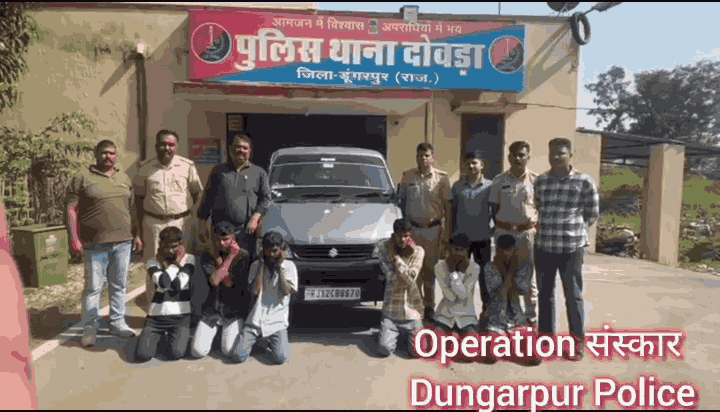
- Several offenders were booked under the Arms Act
- Nearly 500 superbikes were seized
- Cases were registered under the Motor Vehicles Act for drunken driving and stunts
- Social media videos showing weapons led to direct criminal cases
“Those who waved swords or committed crimes on social media – we filed cases against them. Law enforcement was very much part of this initiative,” Mr Kumar clarifies.
Targeting Reels, Not Just Criminals
Investigations further revealed how deeply reels influenced criminal behaviour.
“When we checked phones of accused in a murder case, all of them had gang-style accounts named ‘Don’ or ‘Shooter’. It became clear that today’s youth is influenced more by reels than newspapers,” he says.
That insight shaped the police strategy – target the reels, and the behaviour will follow.
Visible Impact: Crime Drops, Community Steps In
The results were significant.
“Crime never stops completely, but there has been a significant reduction,” he says.
- Highway crimes dropped by nearly 50%
- Community members began supporting police, sending tips and content
- The glorification of gangster culture started losing its appeal
“People started supporting us, and the trend itself began to break,” he added.
Beyond Sanskar: Cracking Down on Liquor Smuggling with Operation Swachhata
Dungarpur’s challenges weren’t limited to youth crime. Being a border district near Gujarat, where liquor is banned, it had long been a major route for illegal liquor smuggling, especially via NH-48, which connects Udaipur, Dungarpur and Ahmedabad.
To tackle this, Kumar launched Operation Swachhata (Cleanliness).
“This year, we registered around 750 cases under the Excise Act and seized illegal liquor worth ₹10.5 crore – the highest ever in the district’s history,” he says.
This marked the biggest action in the last 75 years in Dungarpur.
Technology Over Informers: A Shift in Policing Strategy
Unlike earlier approaches that relied mainly on human intelligence, Operation Swachhata leaned heavily on technical analysis.
“Earlier, we depended mostly on informers. This time, we improved our technical inputs and analysed movement patterns – who was moving where and why. That’s how we succeeded,” Mr Kumar explains.
A New Template for Modern Policing
From shaming crime on Instagram to record-breaking liquor seizures, IPS Manish Kumar’s initiatives show how policing must evolve with society. By understanding youth psychology, digital influence and ground realities, he turned law enforcement into a tool of transformation.
Operation Sanskar stands today not just as a crime-control strategy, but as a reminder that sometimes, restoring values can be as powerful as enforcing the law.