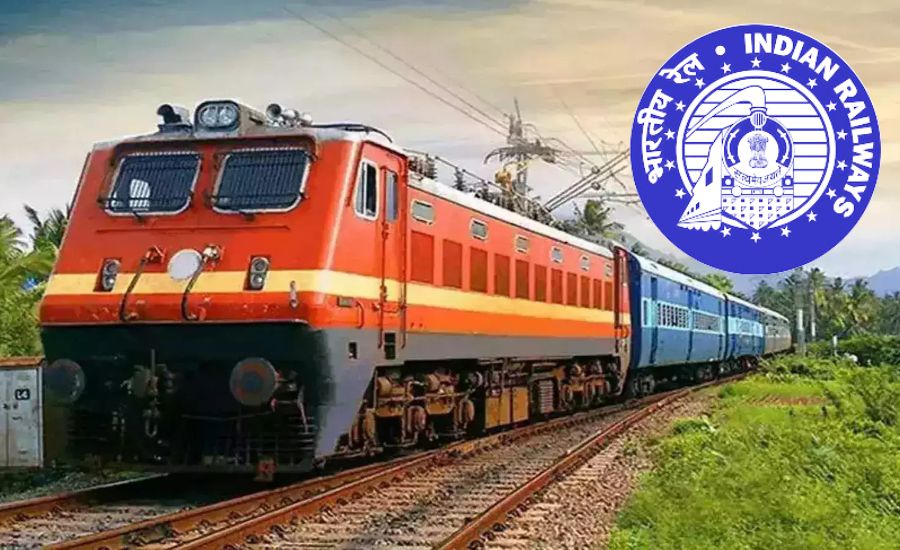
Snowfall brings cheers. But, it also cuts off the Kashmir valley with the rest of the country. Not anymore. The Baramulla–Katra stretch of the Jammu–Baramulla rail link is now operational round the year. It is less a railway than a lesson in engineering audacity — a ribbon of track stitched through some of India’s most forbidding terrain, crowned by structures that have already become symbols: the Chenab Bridge and the Anji Khad Bridge. Together they turned a decades-old strategic promise — to bring the Kashmir Valley onto India’s broad-gauge grid — into a visible, dramatic reality.
The Himalayan region poses unique challenges due to rugged terrain, extreme weather conditions, and seismic activity. The project addresses these challenges by constructing numerous tunnels, viaducts, and bridges, considering the scarcity of flat land. The construction involves overcoming geological complexities, including fault zones, loose strata, and water ingress. Access roads, totalling over 215 km, were built to facilitate the transportation of heavy machinery and materials, connecting remote villages that were previously accessible only by foot or water.
Read More : A Vision for World Largest & Best Rail Network by 2047
The project spans 272 km, with a total estimated cost of Rs 37,012 Crore. It is executed in four legs: Udhampur-Katra (completed in 2014), Katra-Banihal (completed in 2025), Banihal-Quazigund (completed in 2013), and Quazigund-Baramulla (completed in 2009).
The Katra-Banihal section, covering 111 km, is a major focus of ongoing work. Executed by IRCON and KRCL under the supervision of Northern Railway, the section involves extensive tunnelling of over 97 Km in Main Tunnels and 67 Km in Escape tunnels, with the longest tunnel, T-49, stretching over 12.7 km. This section boasts remarkable features, including 37 bridges, noteworthy achievements include the completion of the Chenab Bridge, a technological marvel with a central span of 467 meters at a height of 359 meters, and the Anji Bridge, the country’s first cable-stayed bridge.
Higher Than Eiffel Tower
Soaring 359 metres above riverbed, Chenab Bridge is not merely the world’s tallest steel arch railway bridge; it higher than the top of the Eiffel Tower. It is a monument to modern engineering audacity. Spanning 1,315 meters across the valley, the structure is anchored by a massive 467-meter arch and piers rising up to 169 meters—India’s highest.
To achieve this, engineers deployed one of the world’s longest cable cranes and utilized over 28,000 metric tonnes of steel, incorporating concrete-filled trusses to withstand wind speeds of up to 266 kmph. But the bridge’s brilliance lies in the details: from the consolidation grouting that stabilizes the fractured dolomite foundations to the incremental launching of the deck over a 2.74-degree curve. It is a structure designed for longevity, featuring India’s first on-site NABL-accredited lab and power-operated cars for inspection, ensuring that every weld—verified by advanced Phased Array Ultrasonic Testing—stands the test of time.
First Cable-Stayed Bridge
The Anji Khad crossing — India’s first cable-stayed railway bridge — is the region’s other engineering signature: a long cable-stayed span anchored to a single high pylon, built where steep gorges make conventional viaducts impossible. Both bridges are not merely long or tall: they are novel in design for Indian Railways, and are explicit answers to sites that offered no ready precedent.
Wrestling With Challenges
Constructing the Katra–Baramulla section meant wrestling with layered challenges. The geology is complex — fractured rock, steep slopes and landslide-prone ravines — which forced long bores, 100+ km of tunnels on the wider project and major retaining works on approaches. The weather here is ruthless. Heavy winter snows, spring thaws and a short workable construction season slowed work and complicated concrete curing and steel assembly.
Logistics were monumental. the Chenab arch pieces were fabricated, shipped to site and assembled across a massive void; every element had to be precisely engineered, transported on mountain roads and hoisted under tricky wind conditions. Security and access issues in a sensitive border region added further constraints to labour, equipment movement and scheduling. Finally, the project pushed India’s supply chain — steel procurement, precision fabrication and specialist erection crews.
Railways leaned on national steel and fabrication capacity. Major tonnages came from Bhilai. Each megastructure was staged as a self-contained programme so specialty crews could focus on safe assembly. Incremental testing, trial runs and conservative safety margins smoothed the last mile to commissioning.
Immense Benefits
Operationally and socially, the benefits are immediate and wide. The line shortens, stabilises and de-risks travel between Jammu and the Kashmir Valley. Tourists can enjoy snowfall in Srinagar without fearing of being stuck. The freight can flow round the year on a dependable rail track that is less vulnerable to the seasonal closures and landslips that affects the highway. Strategically, a permanent rail corridor into Kashmir strengthens logistical resilience and national integration. It also ensures better supply of personnel, arms & ammunition to strategically important Pak and China borders.
Over time the line is expected to feed economic corridors and regional hubs, turning connectivity into sustained growth rather than a seasonal spike. As they enter regular service, their true measure will be how reliably they link markets, families and pilgrims — converting spectacular spans into everyday lifelines.
(The author is former Chief Administrative Officer, Udhampur-Baramulla Rail Project)
Read More : ‘Never Lobbied for Posts, Only Worked’: Asha Sinha on Power, Integrity and Policing