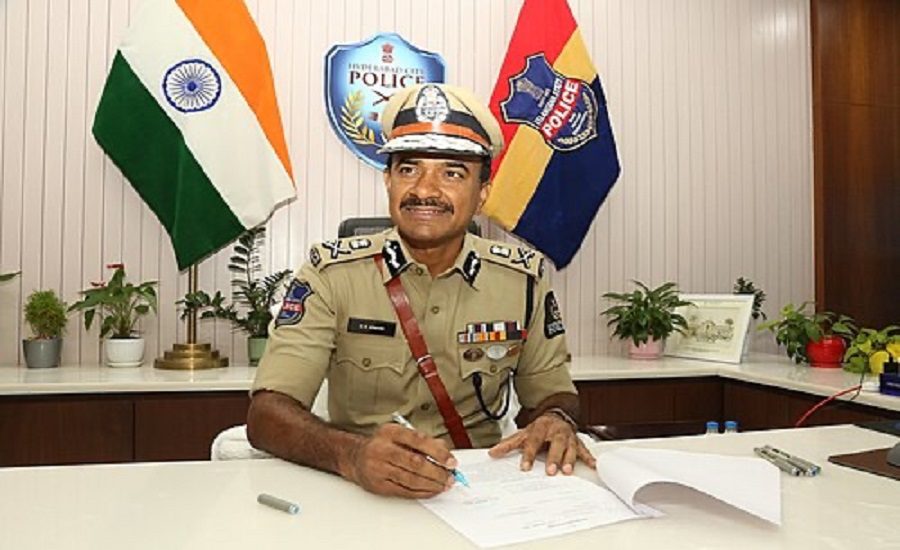
Warangal: With the Maoist era coming to an end, the Telangana Police is preparing to shift its focus from counter-insurgency operations to emerging urban policing challenges, Director General of Police CV Anand said on Sunday.
The state police will redeploy personnel from the Greyhounds and other security wings to newly created dedicated bureaus dealing with issues such as food adulteration, narcotics, traffic management and road safety.
Anand said specialised sectoral wings created primarily to deal with the Maoist threat were no longer required in their existing form and that their personnel could now be utilised to strengthen policing in other areas.
Greyhounds Personnel to Be Redeployed
The proposed restructuring will involve redeploying personnel who were earlier engaged in counter-Maoist operations.
According to Anand, the changing security environment has made it necessary for the police force to reassess how its manpower is deployed.
The staff from the Greyhounds and other security formations will be utilised to create dedicated bureaus that can tackle newer and increasingly complex forms of crime and public-safety challenges.
The move represents a significant shift for the state police, with personnel trained for specialised security operations potentially being deployed in areas requiring intensive policing and enforcement.
Read also: From Maoist Bastion to Tricolour: Telangana DGP CV Anand Hoists Flag at 650 Feet
Focus Shifts From Maoist Operations to Urban Crime
Anand said the police now need to concentrate more strongly on challenges emerging in rapidly expanding urban areas.
Among the areas identified for greater attention are food adulteration, drug and narcotics-related offences, traffic management and road safety.
These issues have become increasingly important as cities expand, populations grow and patterns of crime change.
The DGP indicated that the police organisation must adapt to these changing requirements instead of continuing with structures that were created to address an earlier security environment.
Dedicated Bureaus Planned
The Telangana Police is expected to create dedicated bureaus for the newly identified areas.
These specialised units would provide focused attention to specific problems rather than relying entirely on conventional police stations and general policing arrangements.
Personnel redeployed from Greyhounds and other security wings are expected to strengthen these new formations.
The restructuring could allow the police to use the experience and operational capabilities of specialised personnel in areas where enforcement and surveillance require dedicated teams.
DGP Calls for Stronger Basic Policing
Speaking after a crime review meeting with Station House Officers (SHOs) and senior police officers at NIT Warangal, Anand also stressed the importance of strengthening basic policing.
He said police stations must remain accessible to the public and that officers should ensure citizens can approach them easily for assistance.
The DGP emphasised that specialised operations should not come at the cost of everyday policing.
With urban centres such as Warangal witnessing rapid expansion, he called for greater attention to surveillance, crime prevention and prompt police response.
Warangal’s Expansion Brings New Policing Challenges
Warangal has been expanding rapidly, bringing with it new policing requirements.
As urbanisation increases, police agencies have to deal with a broader range of issues, from traffic congestion and road accidents to narcotics, organised crime and violations relating to consumer safety.
Anand called for stronger surveillance mechanisms to keep pace with these developments.
He also warned that officials who fail to perform their responsibilities effectively could face action.
Action Against Negligent Officials
The DGP made it clear that police officers would be expected to remain proactive in preventing crime and responding to public concerns.
Officials who neglect their responsibilities or fail to maintain adequate policing standards could face disciplinary action, he warned.
The message comes as the department seeks to strengthen its focus on basic policing at a time when the security environment in the state is changing.
End of an Era for Telangana’s Anti-Maoist Force
The proposed redeployment is particularly significant for the Greyhounds, Telangana’s elite anti-Maoist force.
For decades, Greyhounds personnel have been at the forefront of operations against Maoist groups in the forests and difficult terrain of Telangana and neighbouring areas.
Their specialised training and operational experience were developed primarily around counter-insurgency and jungle warfare.
With the Maoist threat significantly weakened, the police leadership now believes that the force’s manpower can be used more extensively for other public-safety priorities.
The restructuring does not necessarily mean that specialised security capabilities will disappear. Instead, personnel and resources are expected to be repositioned according to the changing threat landscape.
New Policing Priorities
The proposed transition reflects a wider change in the nature of policing challenges facing Telangana.
While counter-insurgency dominated the security agenda for decades, police forces are increasingly required to tackle urban crime, drug trafficking, cyber-enabled offences, traffic violations, road accidents and public-health-related enforcement issues.
Food adulteration and narcotics, in particular, require specialised investigation and enforcement capabilities.
Creating dedicated bureaus could allow the Telangana Police to develop greater expertise in these areas while providing clearer accountability for results.
Police Stations to Remain at the Centre
Despite the creation of specialised bureaus, Anand stressed that conventional policing cannot be neglected.
Police stations remain the first point of contact for most citizens, making accessibility and responsiveness essential.
The DGP’s direction to SHOs and senior officers indicates that the restructuring is intended to complement, rather than replace, regular policing.
Stronger surveillance, quicker response and greater accountability at the police-station level will remain important as Telangana’s cities continue to grow.
A Major Shift in Police Manpower Strategy
The planned redeployment of Greyhounds personnel represents a major shift in Telangana’s police manpower strategy.
For years, a significant portion of specialised police resources was directed towards combating Maoist activity. With that threat substantially reduced, the state now has an opportunity to redirect trained personnel towards challenges affecting an increasingly urban and economically active population.
The creation of dedicated bureaus could therefore mark the beginning of a new phase for the Telangana Police — one in which personnel previously deployed in counter-insurgency operations are increasingly used to address the state’s evolving urban crime and public-safety challenges.