In the sandy villages of Barmer, the tribal belts of Pratapgarh, and the dairy clusters of Kota, a quiet revolution is unfolding. It does not arrive with slogans. It grows in weekly meetings under neem trees, in women learning to operate tablets, in bank passbooks that now carry confidence instead of fear.
This is the story of Rajasthan Grameen Aajeevika Vikas Parishad — better known as Rajeevika — and how it is reshaping the lives of rural women across Rajasthan.
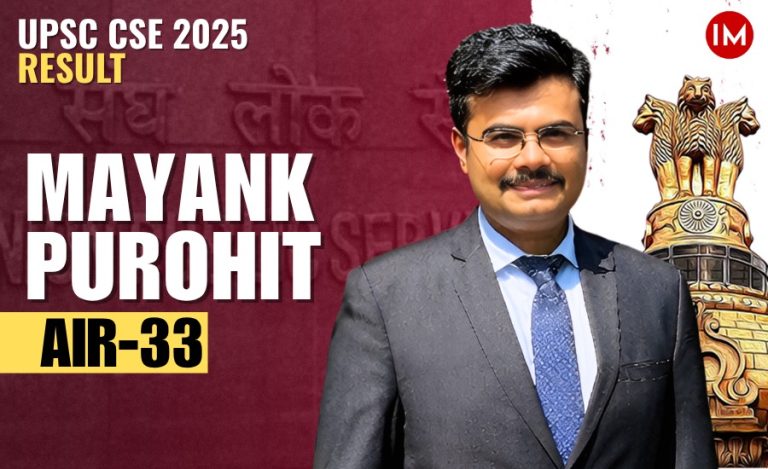
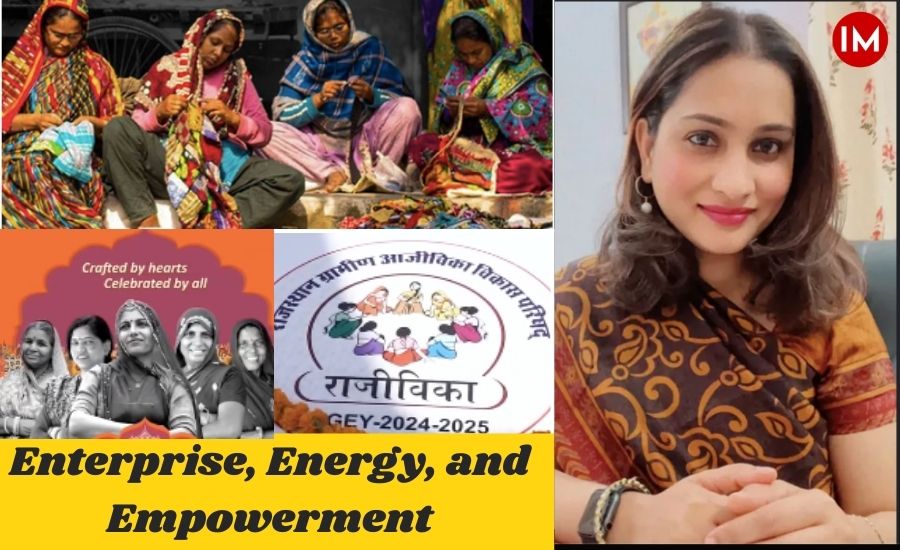
Currently leading the mission is Neha Giri, a 2010-batch IAS officer of the Rajasthan cadre and State Mission Director of Rajeevika. In a detailed conversation with Indian Masterminds, she spoke about the scale of change — and the deeper social shifts unfolding behind the numbers.
BEYOND NUMBERS, A NEW IDENTITY
Rajeevika today reaches over 46 lakh households and has built more than four lakh Self-Help Groups (SHGs). But for Neha Giri, the real story lies elsewhere.
“It is not just about economic growth. We are witnessing a deep behavioural and social change at the grassroots level,” she said during the conversation.
In villages where men traditionally handled all external dealings — banks, markets, official offices — women are now stepping out with confidence. They attend Cluster Level Federation (CLF) meetings, travel for training programs from Meghalaya to Tamil Nadu, participate in fairs, and return as entrepreneurs.
“Women who once hesitated to enter a bank now manage community funds and negotiate with institutions. That is real institutional ownership,” she explained.
Today, Rajeevika has nurtured over three lakh community cadres — including Krishi Sakhis, Pashu Sakhis, Banking Correspondents, and Community Resource Persons — forming one of the largest grassroots women leadership networks in Rajasthan.
FROM SUBSISTENCE TO ENTERPRISE
One of Rajeevika’s defining achievements has been the rise of Lakhpati Didis — women earning over ₹1 lakh annually. Rajasthan now has over 12 lakh such women, marking a shift from survival income to aspirational growth.
Earlier, women were reluctant to take larger loans. Fear of repayment kept ambitions small. That mindset is changing.
“Now they come with a business plan. They think in terms of revenue models. They take bigger loans because they know how to build and repay,” Neha Giri said.
Rajeevika’s strategy has evolved from basic institution building to structured enterprise development. Programs like SVEP (Start-Up Village Entrepreneurship Program), Micro Enterprise Development (MED), Producer Groups, and cluster-based models are helping women set up food processing units, rural canteens, manufacturing ventures, and service enterprises.
A major milestone is the Rajasthan Mahila Nidhi (RMN), the state’s first women-led cooperative credit federation. It offers collateral-free loans within 48–72 hours — cutting through banking delays and enabling women to seize market opportunities quickly.
“Bank linkage created access. Now we are ensuring that credit translates into enterprise and wealth creation,” she said.
DAIRY, SPICES, CAMELS AND CLUSTERS
Rajeevika avoids a one-size-fits-all approach. Rajasthan’s diversity — deserts, tribal regions, livestock belts — demands localized models.
In Kota and Baran, Ujjala and Haroti producer enterprises are thriving dairy collectives fully managed and owned by SHG women. They collect milk daily, supply it to markets, and manage operations independently.
In tribal and desert belts, agri-livestock remains the backbone. Women are working in spices, herbal products, handicrafts, and painting traditions. The mission is also planning camel clusters, herbal clusters, and spices clusters under its upcoming action plan.
“We want women to use what is locally available — raw materials, traditional skills, cultural heritage — and turn it into a viable enterprise,” she said.
Rajeevika is also preparing to launch its own e-commerce platform, expanding market access beyond local haats. Partnerships with academic institutions are helping with branding, product design, and packaging.
Holi, for example, is no longer just a festival. Across districts, SHGs are producing herbal gulal kits — eco-friendly and market-ready — bundled and promoted collectively.
DIGITAL AND FINANCIAL EMPOWERMENT
Financial inclusion was the first step. Financial empowerment is the next.
Over one lakh SHGs have been credit-linked, with cumulative disbursements reaching nearly ₹40,000 lakh. But Rajeevika’s focus is now on digital systems and transparency.
Through LoKoS, real-time SHG transaction tracking has become possible. Tablet Didis ensure accurate bookkeeping. DigiPay Sakhis provide doorstep digital banking. The “One BC–One GP” model ensures each Gram Panchayat has a banking correspondent.
More than 11,000 women have been trained as banking correspondents, conducting over one lakh transactions daily.
“It’s not only about income. When women handle digital transactions and manage accounts, their status within the household changes automatically,” Neha Giri noted.
The upcoming RajSakhi Mobile App will integrate payments, training, DPR tools, grievance redressal, and marketplace access — building a unified digital ecosystem for more than 45 lakh SHG members.
RENEWABLE ENERGY AND NEW SECTORS
Perhaps the most striking shift is in sectors traditionally considered male-dominated.
Rajeevika is training 25,000 women as Solar Didis through 30-day residential programs. Earlier, Durga Solar in Dungarpur — a women-led solar repair enterprise — had won the Prime Minister’s Award in 2014-15. Now the model is being scaled statewide.
Women will not only sell solar products but also repair and maintain them — creating income in renewable energy services.
“We do not want women confined to traditional sectors. They can enter machinery, renewable energy, digital services — any field,” she said firmly.
Customer hiring centers, organic farming, seed banks, and climate-smart agriculture models are also being promoted to address climate risks and labor shortages.
CHANGING HOUSEHOLD POWER DYNAMICS
The impact of Rajeevika is visible inside homes as much as outside.
Studies with institutions like MNIT indicate an 8–13 percent rise in women’s decision-making power after joining SHGs. Women now influence financial planning, asset purchases, and education choices.
“The social transformation is as important as the economic one,” Neha Giri emphasized. “Men are encouraging women to attend meetings and travel. That shift in attitude is significant.”
From being silent contributors, women are now visible leaders — speaking at conferences, representing grassroots models, and shaping policy discussions.
BUILDING INSTITUTIONS THAT LAST
Rajeevika’s sustainability model rests on its three-tier federated structure — SHGs, Village Organizations (VOs), and CLFs. Community Investment Funds revolve responsibly, strengthening capital recycling and reducing dependence on external support.
CLFs generate internal revenue through service charges and enterprise facilitation, ensuring operational sustainability.
“We are strengthening institutions, not creating dependency. Sustainability comes from ownership,” she said.
A QUIET REVOLUTION
Across Rajasthan, more than 46 lakh women are now part of this ecosystem. Hundreds have become millionaires. Thousands manage funds. Lakhs run enterprises.
But perhaps the most powerful change cannot be measured in rupees.
It is in the confidence of a woman who now speaks in public. In a village where daughters see their mothers as entrepreneurs. In a household where decisions are shared.
Rajeevika’s journey proves that when institutions are built patiently and women are trusted with leadership, transformation becomes inevitable.
And in Rajasthan’s villages, that transformation is already underway.