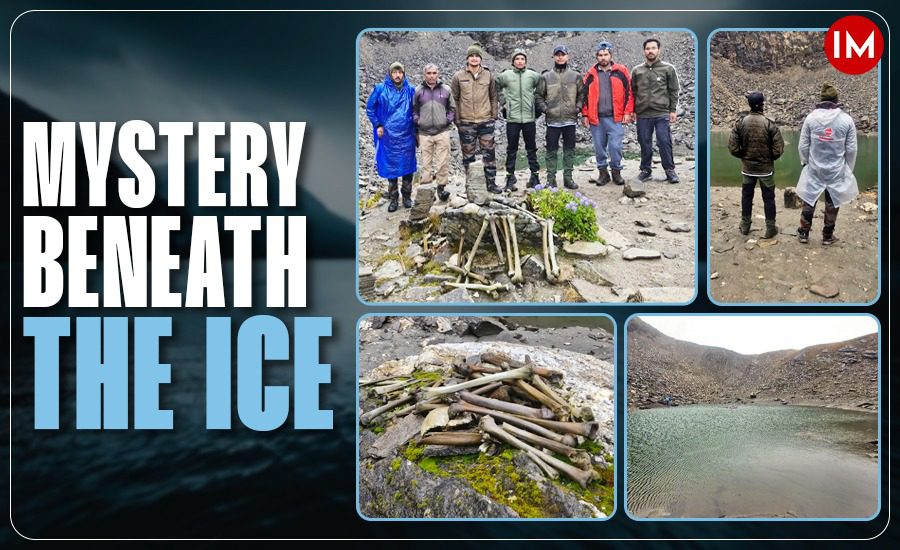
Roopkund Lake, situated 16,500 feet above sea level at the base of Mt. Trishul in Uttarakhand’s Garhwal Himalayas, is well known for its mysterious past. This glacial lake contains hundreds of human skeletons—some remarkably well preserved—which become visible when the ice melts. Roopkund has long attracted global attention for its eerie history, but today it faces growing challenges due to climate change.
Theories Behind Roopkund’s Skeletons
The lake first gained international prominence in 1942 when forest official H.K. Madhwal discovered human bones scattered across its frozen waters. Various theories have since emerged to explain these remains. Initially, it was believed that a group of travellers perished in a single catastrophic event, perhaps a severe hailstorm. However, a 2019 study by scientists from India, the US, and Germany debunked this theory. The study revealed that the skeletons belong to genetically diverse individuals, with deaths occurring over a span of up to 1,000 years. Some skeletons even showed Mediterranean ancestry, pointing to a complex history of migration through the region.
Climate Change and the Shrinking Lake
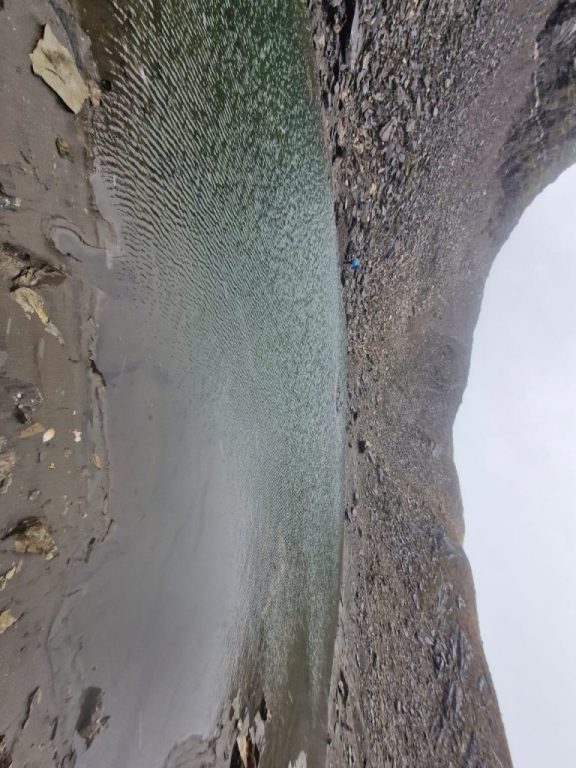
Roopkund is now grappling with a new crisis: it is shrinking. Sarvesh Kumar Dubey, Divisional Forest Officer (DFO) of Badrinath Forest Division in Chamoli, has raised concerns about the lake’s steady decline. He told Indian Masterminds, “Roopkund Lake is shrinking in both width and depth by about 0.1% to 0.5% annually. This is a worrying trend that we believe is directly linked to climate change.”
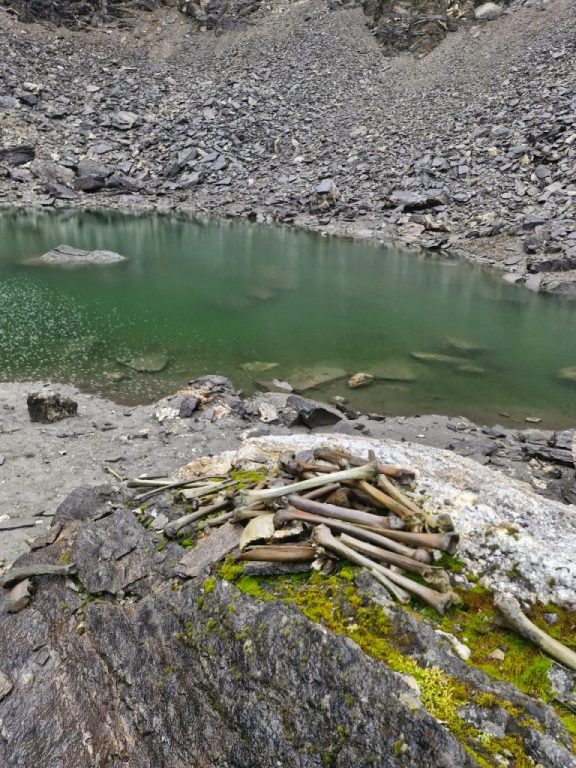
The lake, which originally spanned two acres and reached a depth of approximately nine feet, has been impacted by shifting precipitation patterns. Traditionally, snowfall occurred during the rainy season, but increased rainfall has recently become more common. This has led to the erosion of loose moraine (rock debris) into the lake. Dubey pointed to climate change and global warming as the key factors disturbing the region’s natural balance. “In the past, snow flurries were common here during rains. Now, increased rainfall is causing loose moraine to slide into the lake, which in turn is reducing its volume and silting it up,” he explained.
In response to these alarming changes, forest officials have reached out to experts at the Forest Research Institute and the Wadia Institute of Himalayan Geology (WIHG) to seek potential solutions. Dubey noted that 2023 saw unusually high rainfall, accelerating the silting process and further threatening the lake’s survival.
Mr. Dubey warned that as climate shifts continue, Roopkund and other lakes like it could face ecological upheaval, with rising temperatures causing further erosion and altering local ecosystems.
Broader Ecological and Cultural Importance
The Garhwal Himalayas, home to Roopkund, are part of the larger Himalayan mountain range in Uttarakhand. This region holds both geographical and cultural significance, historically comprising the Garhwal and Kumaon kingdoms. Roopkund’s location in this ecologically diverse area makes it a vital part of Uttarakhand’s natural heritage. The lake also plays an important role in local culture, as it serves as the endpoint of the Nanda Devi Raj Jat Yatra, a pilgrimage held every 12 years in honor of the goddess Nanda Devi.
Despite its cultural importance, the lake is now under threat from climate change, with significant implications for both biodiversity and human activity. Dubey shared concerns about how the changing environment may affect local traditions, including the pilgrimage, saying, “If the lake continues to shrink, not only will it impact the ecosystem, but it could also disrupt cultural practices that are tied to this region.”
Future Challenges and Ecological Impact
Roopkund’s shrinking size and changing climate are not isolated incidents but part of a broader phenomenon affecting the entire Himalayan region. As climate change alters precipitation patterns, high-altitude ecosystems like Roopkund’s are undergoing rapid transformations. These changes are likely to affect not just the environment but also local communities, cultural practices, and biodiversity.
Efforts are underway to study and mitigate the effects of climate change on Roopkund Lake, but much remains uncertain. As scientists and local officials continue to explore solutions, the future of this once-pristine lake hangs in the balance.
Roopkund Lake, with its haunting past and fragile present, stands at a critical juncture. While its mysterious skeletons tell the story of ancient travellers, the shrinking waters signal an ongoing environmental crisis. As local experts like Sarvesh Kumar Dubey and glaciologists work to preserve this site, Roopkund remains a reminder of the growing impacts of climate change on high-altitude ecosystems.