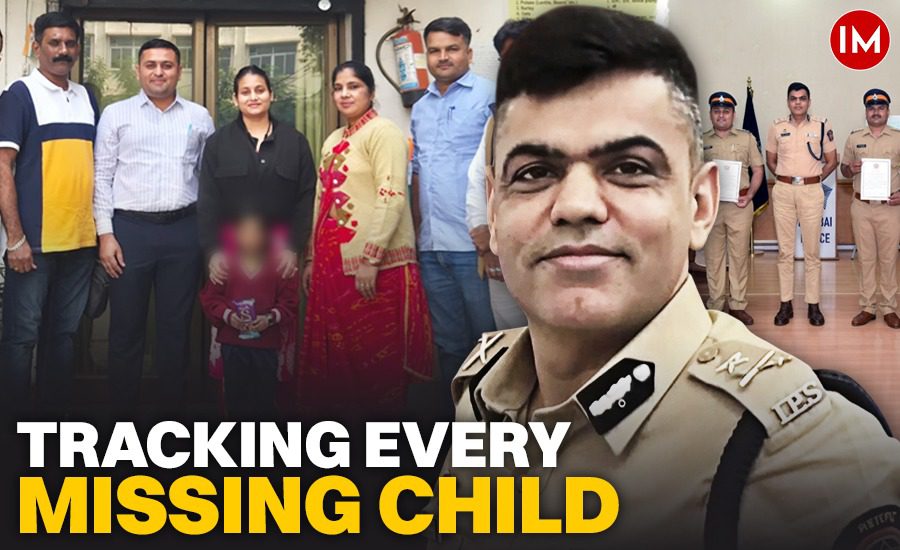
On most days, the numbers tell a quiet but powerful story inside the Mumbai Police headquarters.
In the last year alone, 2,183 missing children cases were registered across the city. Of these, 2,160 were detected. That is more than 98 percent.
And when it comes to children below five years of age, the most vulnerable category, the recovery rate stands at 100 percent.
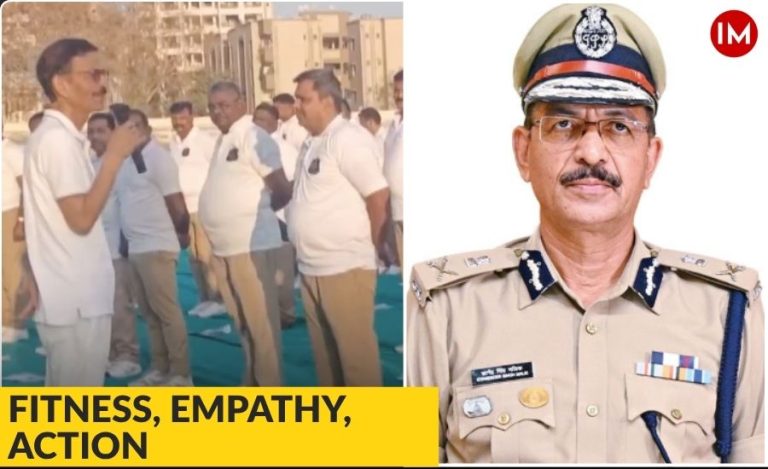
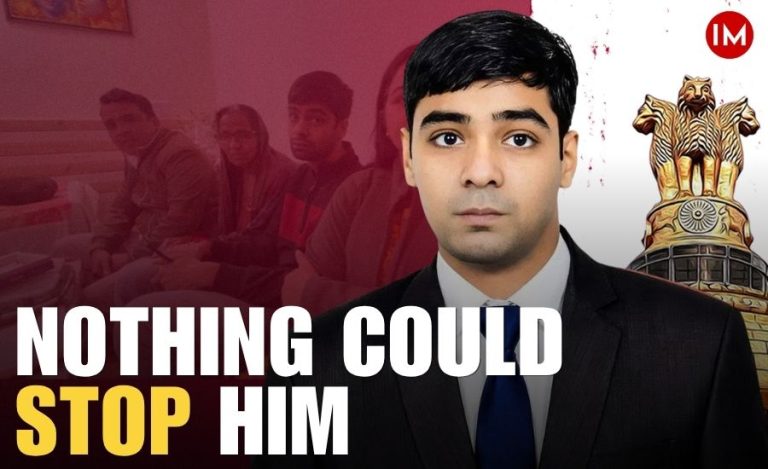
At the centre of this focused push is 2004 batch Maharashtra cadre IPS officer Satyanarayan Chaudhary, Joint Commissioner of Police (Law and Order), Mumbai, the officer steering a citywide mechanism that treats every missing minor as a top-priority emergency.
“FROM DAY ONE, IT’S OUR TOP PRIORITY”
Mumbai registers thousands of complaints every year. But when a minor goes missing, the response is immediate.
“If a child goes missing, first thing, report immediately to the police station. Don’t delay. As soon as we receive the complaint, we assign dedicated officers. From day one, they track down the case. Generally, we don’t assign them other duties. They focus only on this,” the officer shared in an exclusive conversation with Indian Masterminds.
This is not a casual instruction; it is a structured system.
Each case is monitored layer by layer:
Senior Inspector → ACP → DCP → Headquarters.
Every week, a review is conducted across Mumbai’s 93 police stations. If even one or two cases remain pending beyond seven days, they are flagged for intensified follow-up.
“That weekly review is very important. If something is left, it gets extra emphasis,” Chaudhary explains.
THE NUMBERS BEHIND THE MISSION
The figures reflect the scale of the operation:
- 2,183 missing children cases registered in one year
- 2,160 detected
- 98.5% overall detection rate
- 100% detection for children below five years
- Remaining cases largely in the 16–18 age category, mostly not abduction-related
As per a 2013 Supreme Court ruling, every missing minor case, even if suspected to be a runaway, must be registered as a kidnapping case. Mumbai Police follows this strictly.
“Technically, all cases below 18 years are registered under kidnapping. Our efforts are not less in any single case,” Chaudhary says.
In most instances, minors are traced within 24 hours. Some cases stretch longer, but rarely slip through.
FIVE REGIONS, ONE COMMAND GRID
Mumbai’s policing structure plays a crucial role in this coordination.
The city is divided into five regions: East, West, North, South, and Central, each feeding real-time data into the main control room. The compiled reports land directly on the Joint Commissioner’s desk.
“Whatever missing cases are there, they go to our regional control. That is compiled by the main control room and reported to me. If jurisdictions overlap, we intervene and fast-track,” he explains.
Data is shared between stations. Joint teams are deployed when needed. If a team is already outside Maharashtra on another case, they are redirected to assist in a missing child investigation.
“If a team is in West Bengal for another crime and a missing case is top priority, we communicate directly. That helps us speed up detection,” Chaudhary told Indian Masterminds.
11,000 CAMERAS AND A DIGITAL TRAIL
Technology forms the second pillar of the strategy.
Mumbai’s city surveillance project has nearly 11,000 CCTV cameras. Footage tracking, railway station mapping, and digital portals help officers reconstruct routes quickly.
“Technology is always important. CCTV networking, available gadgets, portals… they are very effective in tracking missing cases,” Chaudhary says.
Often, a single frame becomes the breakthrough.
FROM DONGRI TO VARANASI, A 15-DAY PURSUIT
A minor girl was kidnapped from Dongri. CCTV footage showed her heading towards a railway station. Officers tracked which train she boarded, examined footage at successive stations, and followed the digital trail across states.
The investigation eventually led them to Varanasi.
A team stayed there for nearly 10–15 days. They scanned CCTV footage, coordinated locally, and continued ground searches.
“We traced that girl from Varanasi. It was a very lengthy process. The officers were rewarded,” Chaudhary says.
The case became one of the department’s most recognised recoveries.
OPERATION SHODH AND THE GIRL WHO SPOKE MARATHI
On Children’s Day, Mumbai Police reunited a four-year-old girl with her parents, six months after she was abducted from near Chhatrapati Shivaji Maharaj Terminus.
Her family had travelled from Solapur to Mumbai for treatment at St. George Hospital. On May 20, she vanished near the railway premises. CCTV footage showed an unknown man abducting her and boarding a train from Lokmanya Tilak Terminus towards Uttar Pradesh.
The investigation team travelled across Bhusawal, Madhya Pradesh and Varanasi, staying in Varanasi for ten days. The kidnapper remained untraceable.
Then came Operation Shodh, a November 1–15 special campaign launched by the Mata Ramabai Ambedkar Nagar police. Posters were pasted across Varanasi. Photos were distributed. Local newspapers carried her image.
The breakthrough came unexpectedly, a Hindi journalist in Varanasi noticed a Marathi-speaking girl in a shelter home and alerted authorities. A Mumbai police team immediately travelled to Varanasi, confirmed her identity, and brought her home.
The kidnapper is still absconding. The child is back with her family.
BELOW FIVE: DOUBLE THE EFFORT
Children under five cannot tell their full names. They often cannot identify their locality.
“That category is always top priority because they are more vulnerable. In these cases, our efforts are double or triple compared to normal cases,” Chaudhary says.
In the last year, 23 cases were registered in the below-five category. Only one, suspected accidental drowning in a slum nala, remains unresolved. All others were recovered.
NO WAITING PERIOD. NO REFUSAL.
There is a widespread belief that police do not register missing cases before 24 hours. Chaudhary rejects that firmly.
“In our city, late reporting is not allowed. There is no denial in registration. Women, children, senior citizens, these are top priorities. 100 percent registration,” he says.
The focus extends beyond missing children. Crimes against women in Mumbai have a 97–98 percent detection rate as well.
A SYSTEM BUILT ON REVIEW AND RESPONSIBILITY
The strategy may appear straightforward: immediate registration, dedicated teams, strong supervision, CCTV tracking, and interstate coordination, but its consistency is what makes it work.
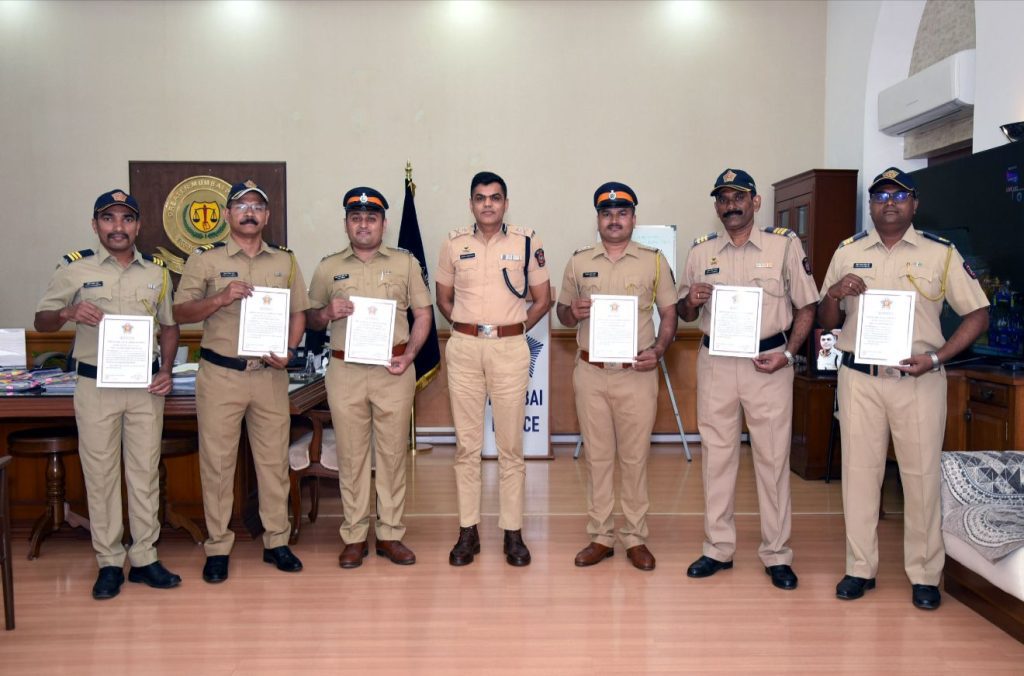
Every missing child becomes a city-level concern. Every pending case is reviewed. Every breakthrough is rewarded.
When asked how he differentiates between runaway and trafficking cases, Chaudhary keeps it simple:
“We treat all minors first in the same category. Our efforts are not less in any single case.”
In a city of over 20 million, where railway stations see lakhs of passengers daily and neighbourhoods stretch endlessly, finding one missing child can mean tracing a train route across states or scanning thousands of camera frames.
But for Mumbai Police under Satyanarayan Chaudhary’s command, the rule is clear: act fast, track hard, and do not let the trail go cold.
And the numbers show that this approach is working.