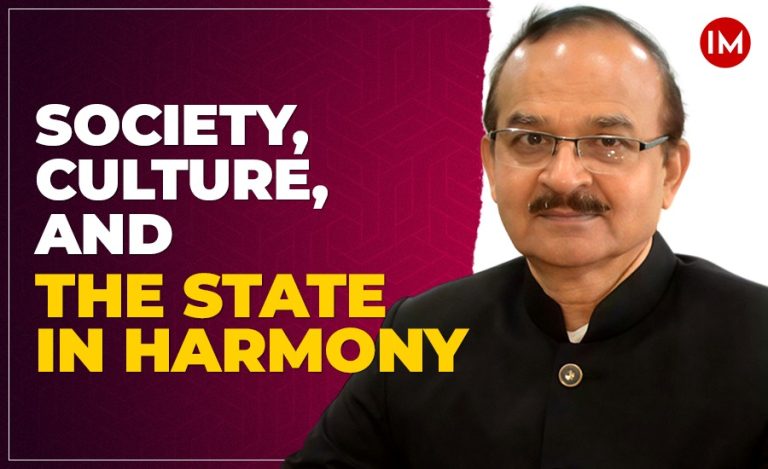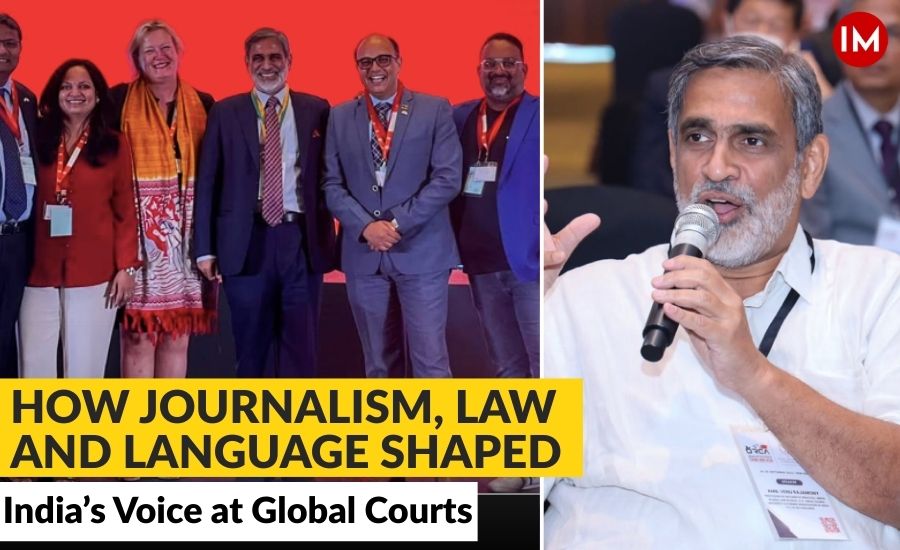
Diplomacy is often seen as a world of protocol, power, and polished statements. But for Venu Rajamony, former Ambassador of India to the Netherlands and a seasoned Indian Foreign Service officer, diplomacy has always been deeply human. In a candid conversation with Indian Masterminds, Rajamony spoke not just about courts, corridors of power, and global negotiations, but also about family, choices, and the values that shaped his journey.
ROOTS IN KERALA, IDEAS THAT TRAVELLED FAR
Born in Thiruvananthapuram in 1960, Venu Rajamony grew up between the capital city and Kochi. His early years in Kunnumpuram, behind the Ayurveda College, and later schooling across institutions like Holy Angels Convent and St. Joseph’s exposed him to diverse social environments. These formative years nurtured his curiosity about politics, society, and public life—interests that would later define his career.
STUDENT POLITICS AND EARLY LEADERSHIP
Rajamony’s political consciousness sharpened at Maharaja’s College, Ernakulam, where he pursued a BA in Politics and was elected Chairman of the Students’ Union. Later, at Jawaharlal Nehru University, he served as Vice President of the Students’ Union during the early 1980s—a period marked by intense ideological debate. These experiences taught him negotiation, consensus-building, and the art of persuasion—skills that would prove invaluable in diplomacy.
A JOURNALIST BEFORE A DIPLOMAT
In a revealing moment during his interaction with Indian Masterminds, Rajamony shared that before joining the Indian Foreign Service, he worked as a journalist with The Indian Express in Kochi. The reason, he said with a smile, was simple and personal. His father had asked him pointedly, “How can you marry without having a job?” Taking that advice seriously, Rajamony entered journalism in 1983. The experience honed his writing, sharpened his understanding of public affairs, and deepened his respect for facts—qualities that later defined his diplomatic style.
Watch the full interview here:
LANGUAGE AS A BRIDGE
Fluent in Chinese and proficient in Malayalam, Tamil, Hindi, and French, Rajamony has always viewed language as a powerful diplomatic tool. His formal training in Chinese from the University of Hong Kong gave him rare insight into one of the world’s most complex civilizations, allowing him to engage with Asia’s geopolitics beyond surface-level analysis.
REPRESENTING INDIA AT GLOBAL COURTS
As India’s Permanent Representative to the OPCW in The Hague, Rajamony handled relations with institutions like the International Court of Justice and the Permanent Court of Arbitration. He was closely involved in landmark cases such as the Jadhav case, the Chagos Archipelago advisory opinion, and the Enrica Lexie dispute. These assignments exposed him to the strengths—and limitations—of international law in a politically charged global order.
DUBAI AND THE INDIAN DIASPORA
His tenure as Consul General in Dubai from 2007 to 2010 proved to be a turning point. Managing the welfare of nearly two million Indians, Rajamony initiated several measures to support migrant workers while also strengthening trade and investment ties between India and the UAE. The experience reinforced his belief that diplomacy must directly touch people’s lives.
INSIDE RASHTRAPATI BHAVAN
From 2012 to 2017, Rajamony served as Press Secretary to President Pranab Mukherjee. Working closely with a President known for his discipline and sharp intellect, he witnessed governance at its most exacting level. The role offered lessons in institutional dignity, preparation, and the quiet power of constitutional values.
LIFE BEYOND OFFICIAL ROLES
After diplomacy, Rajamony took on the role of Officer on Special Duty for External Cooperation for the Government of Kerala, with the rank of Chief Secretary. Though he later resigned when he disgreed with the approach of the Government.
Today, as a professor at Jindal Global Law School and a prolific author, Venu Rajamony continues to shape minds and ideas. His journey—from journalism to diplomacy, from courts to classrooms—underscores a simple belief: true service to the nation begins with integrity, empathy, and courage.