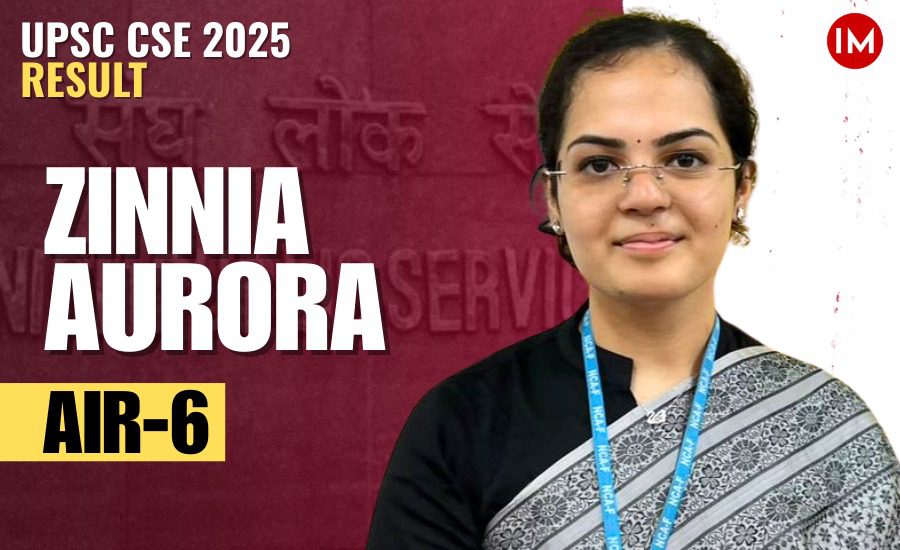
For Zinnia Aurora, the decision to join the civil services was never rushed. It came after years of exploring different worlds of corporate offices, international policy platforms, and social initiatives, before choosing where she truly belonged.
Her approach was simple: try, learn, and only then decide.
“It was more of a matured aspiration. I wanted to try different spaces first: corporate, social sector, international work, and then see where my interests really align,” she shared in an exclusive conversation with Indian Masterminds.
That search ultimately led her to the Union Public Service Commission, where she secured All India Rank 6 in the UPSC Civil Services Examination 2025. The achievement came a year after she had already entered the services with AIR 156, joining the Indian Police Service.
But her journey had begun much earlier.
FROM DELHI CLASSROOMS TO ST. STEPHEN’S COLLEGE
Born in Rohtak, Haryana, Zinnia spent most of her life growing up and studying in Delhi. Her schooling years were spent in the capital before she joined St. Stephen’s College, University of Delhi, one of the country’s most prominent academic institutions.
At St. Stephen’s, she pursued a bachelor’s degree in Economics and Political Science: two disciplines that would later shape both her academic curiosity and career direction.
It was here that she developed a deeper interest in political philosophy and international relations. She credits one mentor in particular for nurturing that interest.
“Professor Sanjay Rao Ayde has been a constant throughout the journey. Because of him I developed a strong interest in political philosophy, and that gradually shaped my academic path,” she shared.
CORPORATE LEADERSHIP TRAINING AND GLOBAL POLICY EXPOSURE
Before stepping fully into UPSC preparation, Zinnia gained significant professional experience.
She worked at Hindustan Unilever Limited as a Management Trainee and was also part of the company’s Leadership Internship Programme, gaining early exposure to corporate strategy and leadership training.
At the same time, her interests stretched far beyond the corporate sector.
She worked on global policy initiatives and had brief stints with international institutions and platforms including the Climate and Clean Air Coalition (CCAC), United Nations Environment Programme (UNEP), United Nations Environment Assembly (UNEA), the World Bank, the International Association for Political Science Students (IAPSS), and NITI Aayog.
In one of her roles, she served as a Green Economy Lead, working on sustainability-related policy initiatives.
Alongside these professional engagements, she also started her own non-profit initiative called PeaceX, reflecting her growing involvement with public policy and social impact.
It was during this phase, moving between boardrooms, policy discussions, and social work, that she began to see civil services as the space where her interests could converge.
“Civil services seemed like the place where all the stars would align in terms of my interests and passions,” stated Zinnia.
THREE ATTEMPTS, TWO RANKS
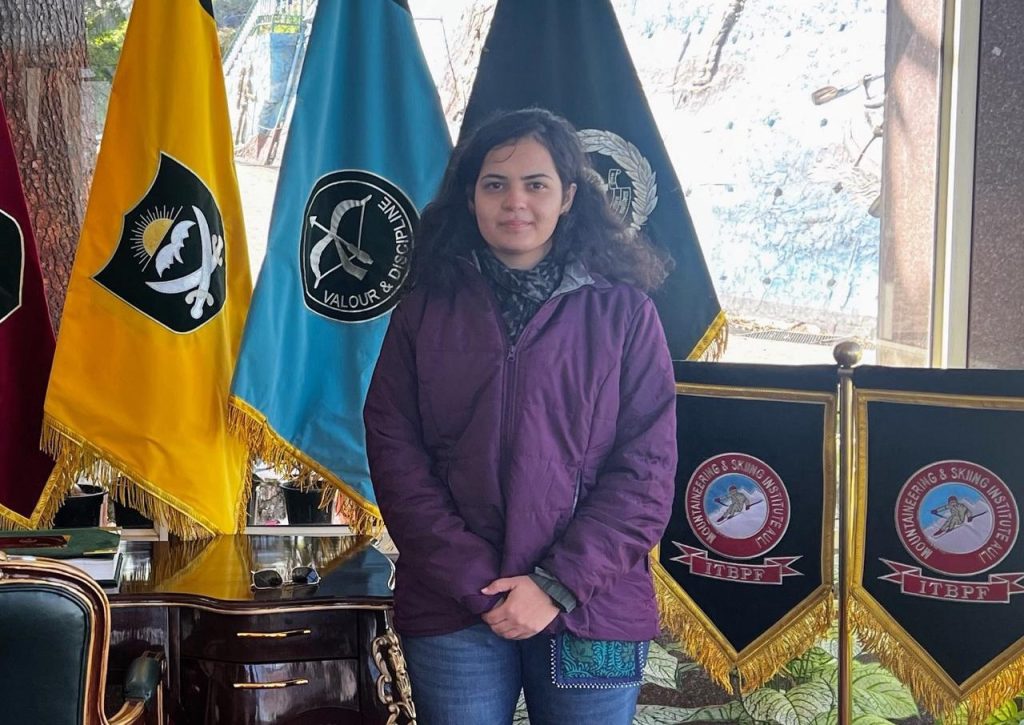
Zinnia’s UPSC journey unfolded across three attempts. Her first attempt was in 2023. In the second attempt, she secured All India Rank 156, entering the Indian Police Service.
For many aspirants, that would have been the end of the journey. For her, it was not.
She decided to take the exam once more, even as people around her were celebrating the earlier success. The decision meant stepping back into preparation despite already securing a prestigious service.
In UPSC CSE 2025, her third attempt, she secured AIR 6.
Her optional subject was Political Science and International Relations, a choice closely linked to both her academic background and professional exposure. She credits her DAF and interview preparation to a senior IPS officer, Mr. Mahesh Muralidhar Bhagwat, an officer accredited with mentoring hundreds of successful aspirants every year.
STUDYING WITH CURIOSITY, NOT JUST STRATEGY
Zinnia describes her preparation method using two ideas: horizontal learning and vertical learning.
Vertical learning meant studying topics deeply and building conceptual clarity. Horizontal learning meant reading widely, beyond the immediate syllabus.
Reading newspapers daily, exploring philosophy, and analysing the root causes of issues became part of her routine.
“Rather than studying for fifteen hours a day, it’s better to study seven or eight hours with full concentration and actually understand what you’re reading,” she shared with Indian Masterminds.
Her preparation also involved reading works by thinkers connected with India’s intellectual and historical traditions. Figures like Sri Aurobindo influenced the way she thought about adaptability and intellectual growth.
Instead of simply memorising information, she focused on building logical reasoning and intuition, something she believes helps in both the written exam and the interview stage.
PREPARING FOR THE PERSONALITY TEST
For the interview stage, Zinnia concentrated on three aspects: depth, awareness, and communication.
She analysed her Detailed Application Form carefully so that she could answer any question related to her background. She also followed current affairs closely, ensuring she could discuss issues with clarity and context.
Equally important, she says, was the ability to hold a conversation.
“If you cannot build an opinion, you cannot rely only on data. The interview is about connecting ideas and being able to hold a conversation with the board,” she shared.
To practice, she often discussed issues with her parents, siblings, and mentors, treating them as mock interview panels.
One question from a previous interview stayed with her. It revolved around the contrast visible in urban India, between those entering luxury markets and those working outside them.
The discussion pushed her to think about bridging “aspirational India” and “aspirational Bharat” into one broader narrative of development.
THE HARDEST CHOICES ALONG THE WAY
When asked about challenges during preparation, Zinnia speaks less about academic pressure and more about the choices she had to make.
Preparing for UPSC meant saying no to many other possibilities. She left a corporate career, dropped plans to study at Cambridge, and decided to reattempt the exam even after securing a service.
“Saying no to things you would otherwise want to do is often the biggest challenge. But those choices shape the direction of your life.”
LOOKING TOWARD RURAL DEVELOPMENT
As she prepares to enter the civil services at a higher rank, Zinnia says she feels particularly drawn toward rural development. Her training in economics, especially microeconomics and behavioural economics, has shaped her understanding of how policy works at the grassroots.
She believes meaningful change often begins with small behavioural shifts within communities.
“Policies work best when people themselves feel part of the change,” she explains.
For her, working closely with communities and understanding how people make decisions is central to effective governance.
HER ADVICE FOR ASPIRANTS
To those preparing for the civil services, Zinnia offers two key pieces of advice.
First, aspirants must keep going even when the journey feels uncertain. The exam, she says, stretches candidates intellectually and emotionally.
Second, they should continue building skills that keep them employable outside the exam as well.
“It’s good to have a strong aspiration, but you should also keep upgrading your skills. Preparation should not close other doors in life.”
Her own journey, from corporate training programmes to international policy work and finally to AIR 6 in UPSC, shows how diverse experiences can eventually converge into a single path of public service.