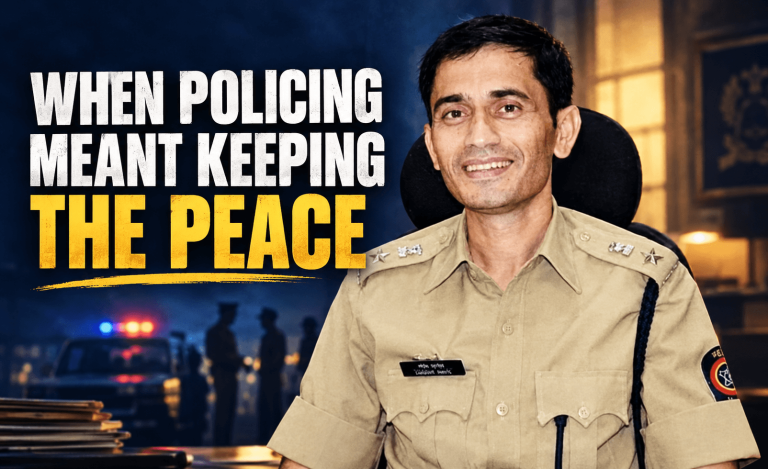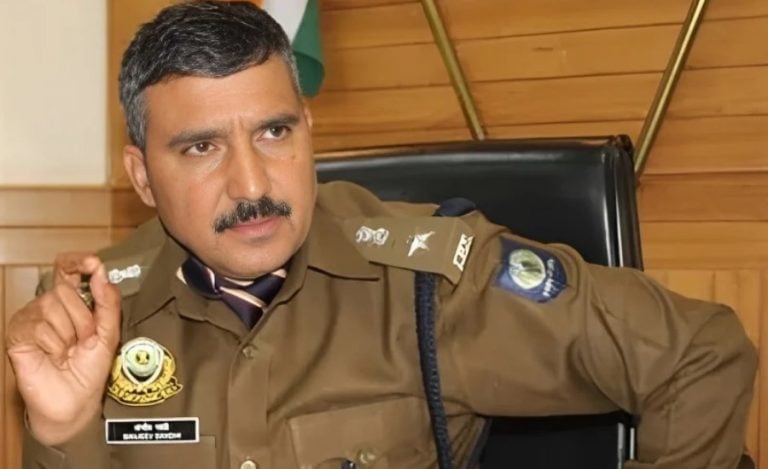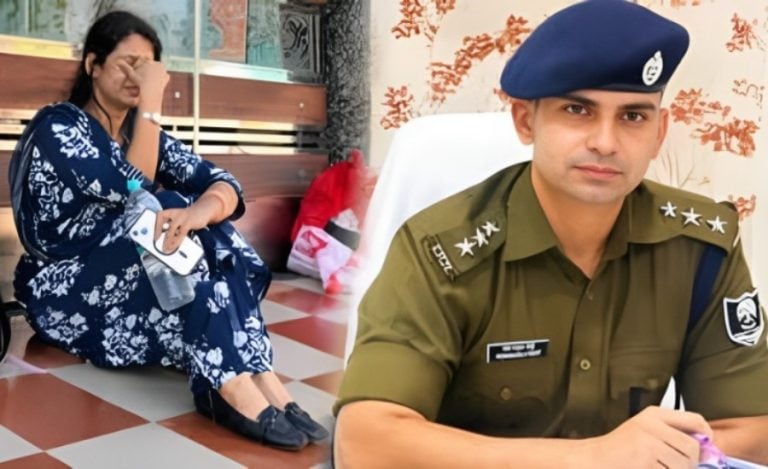
Within a short time of joining service, K Vijay Shankar, IPS, has managed to earn the reputation of being an efficient and dynamic police officer, feared by all on the wrong side of the law. Today, we are going to take you through the life and career journey so far, of this 2018-batch IPS officer of Jharkhand cadre, who is currently the City SP of Jamshedpur.
Coming from a family of police officers, Mr. Shankar had also joined BSF as an Assistant Commander, but left the job to pursue his IPS passion. He started giving the UPSC Civil Services Examination from 2012, and finally in his sixth attempt, he cleared it.
During an exclusive conversation with Indian Masterminds, the officer shared about his long journey into Indian Police Service.
FOLLOWING THE FAMILY LINEAGE
Hailing from Tamil Nadu, Mr. Shankar’s father was also an IPS officer of Haryana cadre. His grandfather, too, served as Subedar in police. While growing up, Mr. Shankar closely observed his father’s work and was greatly inspired. Slowly, he started developing a passion to be a part of the police force himself, and this passion grew over the years.
He made six attempts at UPSC CSE and wrote four Mains, but the chance to appear for the interview came only in the last attempt, which was in 2017. But, that was it! There was no looking back from thereon. He was fully prepared for it and sailed through comfortably. He qualified for IAS but opted to go for IPS, where his passion lay.
Talking about it, he told Indian Masterminds, “I was always passionate about law enforcement, investigating and solving crimes. With IPS, there also comes a sense of satisfaction after you are able to serve justice to someone who is in grief. Plus, every day is a challenge in this service and a risk factor is also involved. All of these intrigued me to join the IPS. I also believe that you must choose the things which you love and are passionate about, otherwise, you can’t do justice to what you do.”
QUITTING BSF TO GET INTO IPS
In 2012, Mr. Shankar gave attempts for both UPSC CSE and CAPF. He cracked the Pre of CSE and wrote the Mains. On the other hand, he got into BSF by cracking CAPF in the first attempt itself.
In 2013 and 2014, he cracked the Pre of UPSC CSE. While he was preparing for his next attempt, he was called to join the training for BSF.
“There is also 1.5 years of gap after you crack CAPF and you’re called for the training. So, I joined the BSF training academy in January 2015. While I was in training, I gave my attempt and couldn’t crack the Pre. I had realized that if I need to get into CSE, I will have to leave the job in BSF to completely focus on it,” Mr. Shankar said.
Before his fifth attempt in 2016, Mr. Shankar quit BSF. He shared an anecdote of that time with Indian Masterminds: “During the exit interview, the DIG asked me, what if I won’t get into UPSC CSE. I answered him that, it isn’t ‘if’ I get it. It is just ‘when’ will I get it.”
However, after not being able to crack two back-to-back Pre in 2015 and 2016, his confidence took a beating and he started doubting his decision. “It is only normal and natural. At that time, you just have to keep in mind why you took the decision and give everything to it. I was confident that I just needed a chance to write the Mains, because my preparation was complete and I knew I would sail through when that happens.”
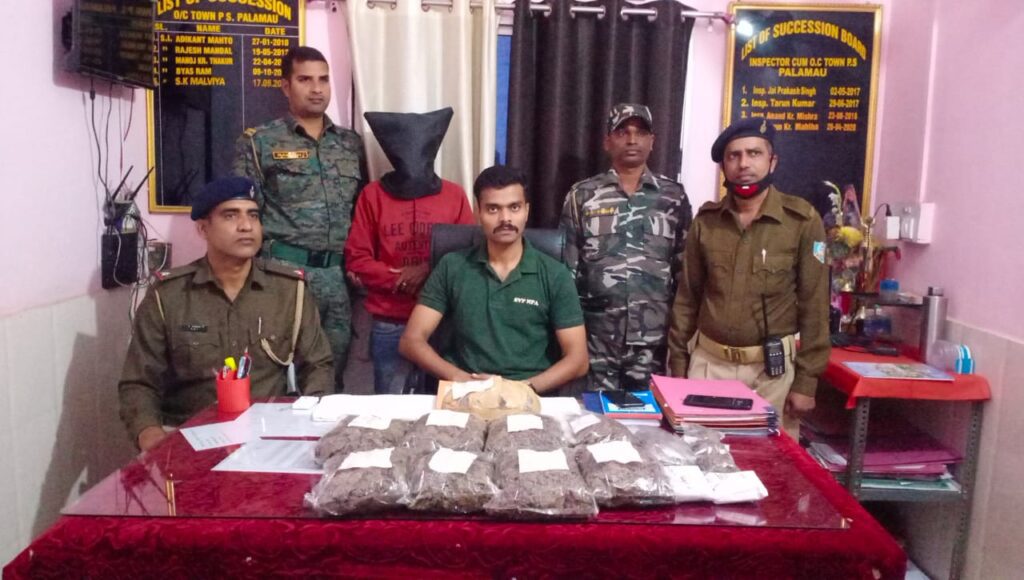
Finally, his persistence and consistency paid off and everything fell into place. He joined his dream service, IPS, and today, he is an efficient police officer who’s served in Ranchi as ASP and as SDPO in Palamu before joining as City SP in Jamshedpur.
DIFFERENCE IN TRAINING OF IPS & BSF
When asked about the major differences in the training of BSF and IPS, he replied: “The basic training for all the police forces including CRPF and CISF is same, the difference is in the intensity. You have to go through the same drill of running, swimming, obstacle course, etc. The difference comes in indoor classes. In IPS, you’re trained for IPC and CrPC and taught the techniques for investigating the crimes. While in BSF, you are taught to secure and man the border.”
He also added that the other major difference is, in BSF or other uniform services, you have to meet certain physical standards before getting selected. While in UPSC CSE, one has to clear written exams and interview only, so people from all spectrum can join the IPS. However, to pass from the National Police Academy, each officer has to complete the physical training.
(IPS officer K Vijay Shankar was awarded the Gallantry Medal on this Independence Day by the Home Ministry, Government of India. In the second part, we will highlight the operation that got him this award.)