The picturesque Nilgiris in Tamil Nadu is not only famous for its serene blue mountains and ecology but also for its tea. A major part of its economy is dependent on tea tourism. That is why when the Covid 19 lockdowns were announced, things took a drastic turn. Tourism was majorly hit and, as a result, the economy slumped. On top of that, the steadily increasing number of coronavirus cases were also becoming a huge challenge for the administration. In such a scenario, vaccination seemed like the only solution to stem the situation and avoid further damage to public health and the economy.
The district administration of Nilgiris made an action plan and achieved 100 per cent vaccination of the tea workers and other tribal communities in record time. During a conversation with Indian Masterminds, the District Collector, Ms. J Innocent Divya, explained how they overcame challenges like difficult terrain and superstitions to achieve this cent per cent vaccination target.

VACCINATING TEA & MIGRANT WORKERS
Although tourism was completely shut during both the lockdowns, the workers in tea estates were allowed to work in the plantation fields and factories as tea was declared an essential item. Since they were working during the peak periods of Covid spread, cluster of cases were detected in the estates even though they were following the Covid norms as much as possible. The only way left to control the situation before it escalated further was to ensure complete vaccination in the communities.
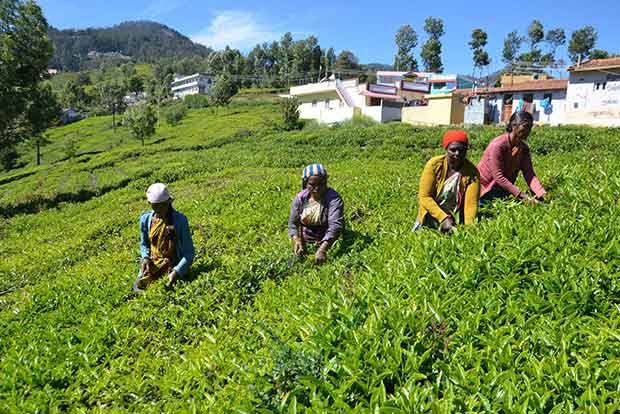
“Although most of the migrants had gone back to their hometowns during the lockdowns, around 38,700 were still working in the private and public sectors. Vaccinating them were our first priority. So, we drew up a plan of action in consultation with agencies like the United Planters’ Association of Southern India (UPASI) and Eco Serve. Special teams were designated to vaccinate the people,” said the collector.
She further informed that a substantial number of the total vaccines received by the administration was dispatched to the tea sector and the tribal villages. Ms. Divya acknowledged the efforts of the private and public entities involved in the tea sector for coming forward to offer support. They organized camps in their areas for vaccination and offered vehicles to the government teams who were assigned with the task to vaccinate people. After the migrants returned after lockdown relaxations, separate vaccination camps were organized for them as well.
CHALLENGES FROM TRIBAL VILLAGES
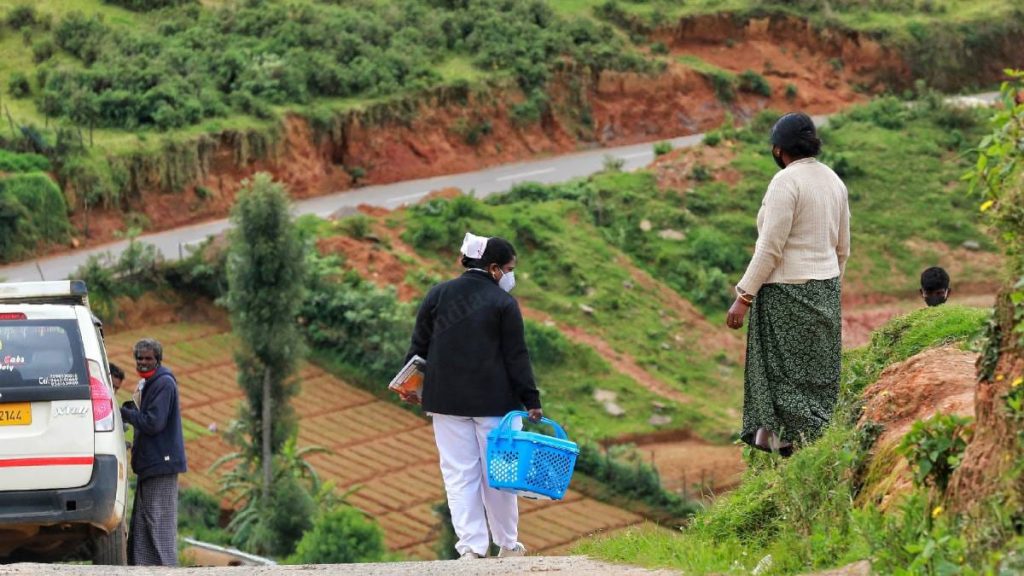
The most difficult part in the entire process was to travel to the villages. The teams travelled on foot in difficult terrains. Apart from that, lot of fake news were also spreading around the vaccination, like the danger of becoming impotent or dying within six months of taking the dose. The teams had to tackle these challenges as well. “Tribal people are hesitant towards even regular vaccines. Mostly they are into themselves, and it is very intimidating for them to see a group of officials approaching them. In the first wave, they were not affected by the virus, but in the second wave, Covid cases reached the tribal villages, too. Since they live in close-knit community and are reluctant to approach hospital, the danger of cases increasing was higher,” Ms. Divya informed.

USING STREET PLAYS TO EDUCATE
The Nilgiris administration started the vaccination drive from those tribal villages that have more educated people. They first convinced the tribal council members to come forward for the vaccination by explaining to them about the danger of the situation. By that time, vaccination for 18+ had also started, so the team encouraged the youth to come forward.
The administration also tied up with many NGOs, who visited the villages and convinced the people about vaccination through street plays, songs and dramas. After their visits, the vaccinating team would visit the same place the very next day. This method worked and showed extremely good results.
Eventually, the entire population of tea workers and the tribal communities were fully vaccinated. Now, all of them have also taken the second dose. So, the tribes of Nilgirs can be said to be safe from Covid19, thanks to the efforts of a proactive administration.