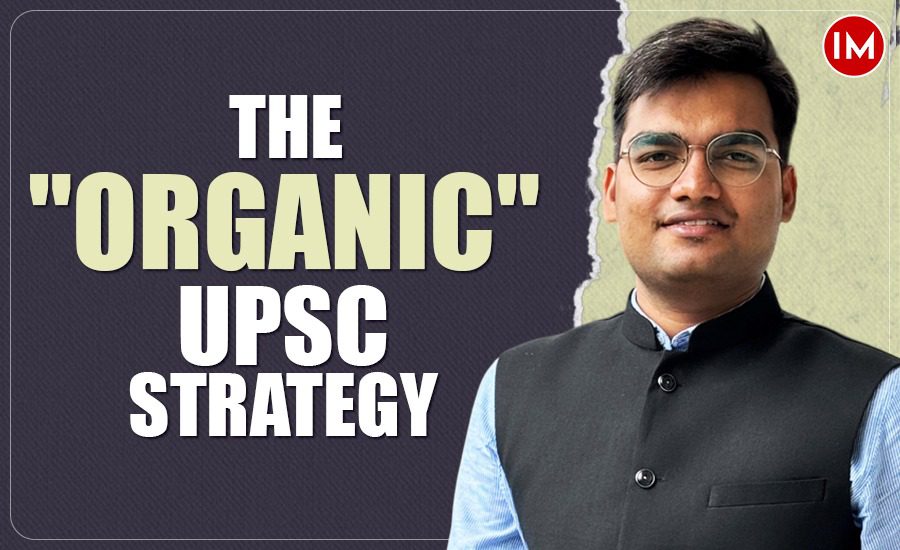
When Rishabh Bhatt was a child, his parents would take him to see the convoys of district officials passing through their village in eastern Uttar Pradesh. They pointed out the District Magistrate and Superintendent of Police, explaining their responsibilities and influence. These moments left a lasting impression on him. Years later, he decided to join their ranks—not as an observer but as a part of the system itself.
Hailing from a small village in Bhadohi, near Varanasi, Rishabh’s early years were shaped by the challenges of rural life. His father, a private school teacher, ensured that education remained a priority. With a strong academic record, Rishabh pursued mechanical engineering at Maulana Azad National Institute of Technology (MANIT), Bhopal. However, even as he excelled in his technical studies, his mind was set on a different path.
“I think I decided in class 10th that I would go for UPSC. I was always drawn to subjects like history, geography, and international relations,” Rishabh shared with Indian Masterminds. “But since I was also good at science, engineering felt like a natural step.”
Despite completing his degree, Rishabh did not participate in his college’s placement process. While many of his peers prepared for corporate jobs, he was already charting his course for the UPSC Civil Services Examination.
OVERCOMING EARLY SETBACKS
The road to success was not immediate. Rishabh’s first two attempts at the UPSC prelims ended in disappointment. “I was overconfident,” he admits. “I had always done well in academics, so I thought knowledge alone would be enough. But UPSC requires a very different skill set.”
It took him time to grasp the nuances of the exam. In his third attempt, he reworked his approach. He credits his success to analysing previous years’ questions (PYQs) and refining his strategy.
“Understanding the pattern of the exam is crucial. I had to move beyond just reading and start practicing. The exam is not just about what you know—it’s about how you apply that knowledge under pressure.”
With guidance from mentors, including an Indian Foreign Service officer, Rishabh learnt to adapt. He focused on developing an aptitude for solving multiple-choice questions in prelims, honing his answer-writing skills for mains, and refining his articulation for the interview round.
A STRUCTURED YET FLEXIBLE APPROACH
Unlike many aspirants who follow rigid study schedules, Rishabh took a more organic approach. “Studying is not a mechanical process. If you force yourself into a strict daily schedule, it can become overwhelming. Instead, I set weekly targets. Some days I studied more, some days less, but I ensured that I covered everything by the end of the week.”
He also prioritised concise study material. Instead of running after multiple sources, he revised the same content multiple times. “Quality over quantity—that’s what worked for me.”
For mains, he focused on structuring his answers effectively, using diagrams, data, and critical analysis to make his responses stand out. “Everyone preparing for UPSC has knowledge, but presentation makes a difference. An answer that is well structured and visually appealing is more likely to fetch marks,” he added.
By the time he reached the interview stage, he had learned the importance of balance. “Your answers should be crisp, diplomatic, and well thought out. The interview is not about showing off knowledge—it’s about demonstrating maturity and judgement.”
SELF-STUDY AND THE ROLE OF MINDSET
Rishabh’s journey was largely self-driven. The COVID-19 pandemic disrupted his plans of joining coaching institutes, and financial constraints meant he had to rely on self-study. Yet he turned this into an advantage, developing a deep understanding of the syllabus on his own terms.
He also refrained from thinking about a backup plan too early. “I wanted to give my best to UPSC before considering anything else. If you start thinking about a Plan B too soon, it can weaken your focus.” Instead, he opted for what he calls ‘Plan A1’—a related alternative like state PCS exams, which kept him within the sphere of governance.
Rishabh Bhatt’s (IPS (Probationer), 2024) persistence paid off when he cleared the exam in his third attempt with AIR 363, earning a place in the Indian Police Service.
A NEW CHAPTER BEGINS
Now an IPS officer of the 2024 batch, Rishabh is stepping into a role that carries immense responsibility. His journey is a reminder that success in UPSC is not about instant results—it is about learning from failures, adapting, and maintaining consistency. His story will likely inspire many more aspirants from small towns and villages who dare to dream beyond their circumstances.
“If I have learned one thing from this journey, it is that UPSC is all about balance. Knowledge, strategy, mindset—everything matters. You need to be patient, but you also need to be smart in your approach.”
व्याकुल खग, मुरझाए उपवन
जलहीन सरोवर, नील गगन
असहनीय ताप से शुष्क धरा
श्लेष ग्रीष्म और नक्षत्र है मृगिशरा
कब तक ये ऊष्मा भू को तपायेगी?
कब तक ये तृष्णा अपूर्ण रह पाएगी?
कब तक यह ठिठकी प्रकृति रुक पाएगी?
कब तक अपने यौवन को आस बंधाएगी?
आखिर जमीन से सोंधी सुगंध को आना है।
आखिर चातक को अपनी प्यास बुझाना है।
आखिर मैना को धूल में नहाना है।
आखिर मानसून को हिंद की सीमा से टकराना है।
भीषण गर्मी ही होती वर्षा का आधार
जैसे सुख का आना दुख के उस पार
नव पल्लव को आना ही है पतझड़ के पश्चात
जैसे ऊषा की किरणे चीरती है अंधेरी रात
इन क्षणिक पलों से वीर नही घबराते
अपने भुजबल पर शंका नहीं जताते
रखते खुद पर वो विश्वास अटल
युद्धभूमि में आशा बनता उनका संबल
सुख दुख का ये चक्र जीवन का आधार विशेष।
पर मनुपुत्रो को लड़ने होंगे जीवन के संग्राम अशेष।
“My hobby is to write and read Hindi poems. I have written this during my interview preparation it would be helpful for aspirants to connect,” Rishabh said.
As he begins his service, Rishabh remains committed to the ideals that first drew him to this career—making a meaningful impact and contributing to the system he once admired from afar.