New Delhi: In a major development in India’s diplomatic corps, the Ministry of External Affairs (MEA) has appointed Aliawati Longkumer, an Indian Foreign Service (IFS) officer of 2008 batch, as the next Ambassador of India to the Democratic People’s Republic of Korea (DPRK), commonly known as North Korea.
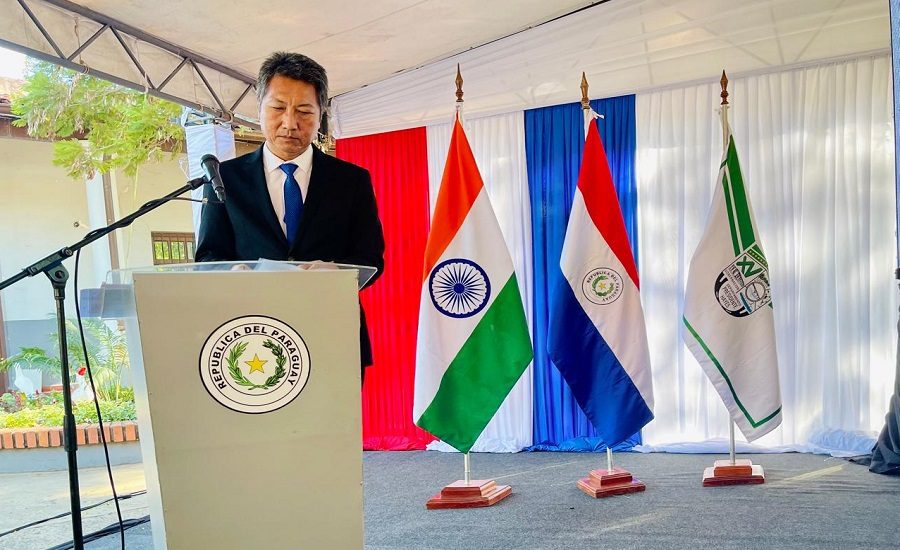
IFS Longkumer is currently serving as Charge d’affaires ad interim at the Embassy of India in Asuncion, Paraguay, and is expected to assume his new posting in Pyongyang shortly. The last Indian ambassador to North Korea was Atul Malhari Gotsurve, an IFS officer of 2004 batch, who served before the embassy closed four years ago due to the pandemic.
Experienced Diplomat with a Strategic Posting
The appointment underscores the importance of maintaining steady diplomatic engagement with North Korea amid complex geopolitical dynamics in the Korean Peninsula. As Ambassador, Mr Longkumer will be responsible for managing India’s limited but historically significant diplomatic presence in North Korea and advancing mutual cooperation in line with India’s principled foreign policy stance.
India-North Korea Relations: A History of Diplomatic Engagement
India and North Korea have shared cordial and cooperative diplomatic ties since the early 1960s. Key milestones include–
- Consular relations established: March 1962
- Consulate General of India in DPRK opened: 1968
- Embassy-level diplomatic relations established: December 10, 1973
India also played a pivotal role in the Neutral Nations Repatriation Commission after the Korean War (1950–1953), chaired by Major General K S Thimayya, which helped facilitate the return of prisoners of war – a role that garnered international appreciation.
Beyond Sanctions: India’s Nuanced North Korea Policy
India reopened its embassy in Pyongyang in December 2024, almost four years after it was closed in July 2021 due to disruptions caused by the pandemic. Prior to restarting operations, New Delhi carried out security evaluations and implemented anti-surveillance protocols.
The diplomatic re-engagement takes place against the backdrop of escalating tensions between North Korea and the United States. Despite this, India has continued to maintain a balanced and measured approach in its ties with Pyongyang. In adherence to UN-imposed sanctions, India suspended trade with North Korea in 2017. However, this move – along with North Korea’s perceived support for Pakistan’s missile development program – did not lead to a break in diplomatic relations between the two countries.
New Delhi’s practice of quiet diplomacy was exemplified by the rare 2018 visit of former Minister of State for External Affairs, V.K. Singh, to North Korea. During that trip, Pyongyang reportedly offered assurances that it would not pose a threat to India’s security.
India has also extended humanitarian support to North Korea, providing food and medical aid, as well as offering training programs for North Korean diplomats and scientists. This approach reflects New Delhi’s strategy of balancing its criticism of North Korea’s nuclear provocations with carefully calibrated engagement.
North Korea’s uneasy reliance on China is another key consideration in India’s strategic outlook. By sustaining a working relationship with Pyongyang, India seeks to position itself as a modest counterweight to Beijing’s overwhelming influence in the region.
Foreign Office Consultations and India’s Policy Approach
India and North Korea maintain regular dialogue through Foreign Office Consultations (FOC), ensuring periodic reviews of bilateral issues and concerns. While India has limited economic and political interaction with the DPRK, it has consistently called for peace, restraint, and denuclearization in the Korean Peninsula.
India has welcomed past peace initiatives, including-
- The inter-Korean summits of April and September 2018
- The historic Trump–Kim summits held in Singapore (June 2018) and Hanoi (February 2019)
India remains a strong proponent of resolving tensions through dialogue and diplomacy, while urging North Korea to refrain from nuclear and ballistic missile tests that risk regional stability.
Strategic Significance of the Appointment
Mr Longkumer’s new role places him at the helm of India’s diplomatic outreach to one of the world’s most isolated regimes. As India continues to assert itself as a responsible stakeholder in global security, maintaining channels of dialogue with countries like DPRK reflects a nuanced approach to diplomacy – one that balances national interest with international responsibility.