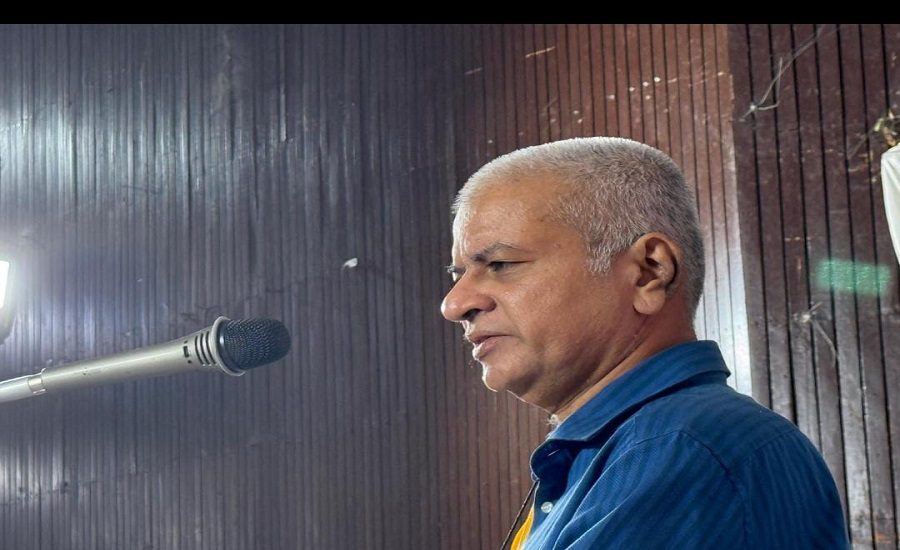
Mumbai: The growing role of Artificial Intelligence (AI) in forensic science and criminal investigationstook center stage at the 7th International and 46th Indian Criminology Conference held in Mumbai. Addressing the gathering, Raju Narayana Swamy, Principal Secretary to the Government of Kerala and widely known as Kerala’s anti-corruption crusader, stressed that integrating AI into forensic processes has become the need of the hour for strengthening India’s criminal justice system.
He chaired a panel discussion on “Recent Advances in Forensics and Investigation in the Indian Criminal Justice System”, raising several crucial questions related to digital evidence, forensic standards, and institutional reforms.
Challenges of Accessing Digital Evidence Abroad
Dr. Swamy highlighted the growing challenge investigators face when critical digital evidence is stored on servers outside India, such as global cloud platforms.
He questioned how Indian investigators can legally access such information without violating foreign data sovereignty laws and suggested that India may need specialized Mutual Legal Assistance Treaties (MLATs) focused specifically on digital forensics and cross-border data sharing.
Read also: Major Setback for Kerala Government as CAT Orders IAS Cadre Posts Only for Serving Officers
Standards for AI-Based Forensic Tools
With the increasing use of AI in investigations, Dr. Swamy stressed the need to establish clear validation standards for AI-driven forensic tools before their findings can be accepted in courts.
He emphasized that scientific accuracy, transparency in algorithms, and reliability of AI systems must be ensured to maintain judicial credibility and evidentiary integrity.
Addressing Delays and Weaknesses in Forensic Reports
Despite advancements in forensic science, the panel noted that forensic reports in India are often delayed, misplaced, or challenged in courts.
Dr. Swamy suggested several reforms to improve the process, including:
• Digital tracking of forensic reports
• Blockchain-based logging systems
• Mandatory timelines for report submission
• Transparent monitoring mechanisms
Such reforms, he said, could significantly strengthen the chain of custody and reliability of evidence.
Need for Independent Forensic Authorities
Another key issue discussed was the institutional independence of forensic laboratories.
Currently, many forensic labs operate under police departments. Dr. Swamy raised the question of whether India should move towards independent forensic authorities, similar to the system in the United Kingdom with the Forensic Science Regulator, to ensure scientific autonomy and impartial investigations.
Lessons from High-Profile Criminal Cases
The discussion also examined lessons from some of India’s most widely discussed criminal cases, including:
• Nirbhaya case
• Aarushi Talwar murder case
• Sushant Singh Rajput death case
Dr. Swamy noted that these cases underline the importance of forensic diligence, procedural integrity, and resisting media pressure during investigations.
Proposal for a ‘Forensic Bill of Rights’
Another idea discussed during the panel was the possibility of creating a “Forensic Bill of Rights” in India.
According to Dr. Swamy, such a framework could define non-negotiable principles protecting suspects, victims, and investigators, ensuring transparency, scientific accuracy, and fairness throughout the forensic process.
Panel Discussion and Participants
The session was moderated by Abhishek Negi. Several prominent academicians also participated in the discussion, including:
• Upneet Lalli
• Purvi Pokhariyal
• Minakshi Sinha
• Kavitha Singh
The experts shared insights on modern investigative technologies, forensic challenges, and the evolving role of science in criminal justice.
Significance of the Conference
The Indian Criminology Conference serves as a major platform for scholars, policymakers, and law enforcement professionals to discuss advances in forensic science, criminology, and criminal justice reforms.
This year’s discussion highlighted the urgent need for technology-driven forensic systems, international cooperation on digital evidence, and institutional reforms to keep pace with the rapidly evolving nature of crime.