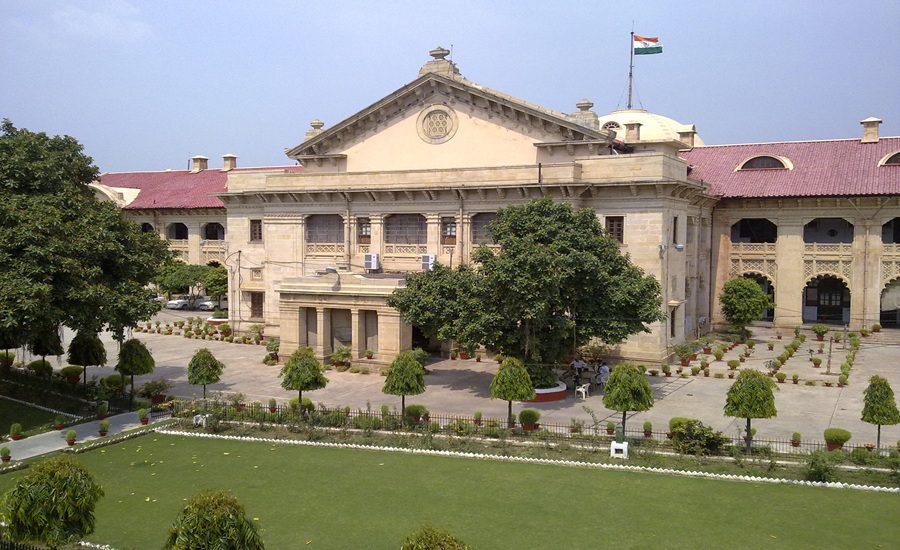
Prayagraj: The Allahabad High Court has taken a firm stance against the alleged practice of ‘half-encounters’ by Uttar Pradesh Police, highlighting that unnecessary firing and self-styled punishment by police officers are unacceptable. A single bench of Justice Arun Kumar Deshwal emphasized that punishing criminals is the exclusive domain of the judiciary, not the police, and that police officers cannot encroach upon judicial functions.
The court specifically noted concern over incidents in which suspects are shot in non-essential parts of the body, such as legs, and then classified as encounters, often to gain promotions, praise, or social media attention.
SPs and SSPs to Be Held Personally Responsible
The High Court warned that Superintendents of Police (SPs) and Senior Superintendents of Police (SSPs) will be personally liable if their officers violate these directives. The court clarified that contempt of court proceedings could be initiated against responsible officers, in addition to departmental action.
Justice Deshwal stressed that India, as a democratic state governed by the rule of law, strictly separates the powers of the executive, legislature, and judiciary. Any attempt by the police to punish suspects extrajudicially is a serious violation of constitutional principles.
Court Issues Six-Point Guidelines for Police
The Allahabad High Court made compliance with the following mandatory:
- Strict adherence to Supreme Court directives, particularly those in the PUCL vs. Maharashtra case regarding encounters.
- Registration of FIRs in all cases involving death or serious injury during police action.
- Recording statements of injured persons before a magistrate or medical officer.
- Investigation of encounters by officers of higher rank than the head of the police team involved.
- Ensuring that no verbal or written instructions exist to target non-vital body parts or misrepresent incidents as encounters.
Immediate departmental and legal accountability for SPs, SSPs, or Police Commissioners if guidelines are violated.
Case Context: Raju Alias Rajkumar and Others
The observations were made during bail hearings of Raju alias Rajkumar of Mirzapur and two other accused, all of whom were injured in separate police encounters. The court noted that no police officer sustained injuries in these incidents, raising questions about the necessity and proportionality of firing.
The state government informed the court that an FIR had been registered; however, the injured persons’ statements were not recorded either before a magistrate or by a medical officer, a clear violation of Supreme Court guidelines.
Initially, a sub-inspector was assigned as the investigating officer, but the responsibility was later upgraded to an inspector, which the court considered insufficient for compliance.
Court Questions DGP and Home Secretary
The court asked the Director General of Police (DGP) and the Home Secretary to clarify whether any instructions—verbal or written—were given to officers to shoot suspects in legs or non-vital parts while claiming an encounter. The court observed that such practices are increasingly routine, often done to impress senior officers or teach the accused a so-called lesson.
Supreme Court Guidelines Must Be Followed
Justice Deshwal highlighted that Supreme Court directives on encounters, including those in the PUCL judgment, were not followed in the cases under review. The court underscored:
- Statements of injured persons must be recorded before a magistrate or medical officer.
- Encounters causing serious injury or death must be investigated by a senior officer above the rank of the team leader.
- Non-compliance will result in direct contempt proceedings against SPs and SSPs.
The DGP assured the court that these directives would be strictly followed going forward.
Conclusion: Police Cannot Take Law Into Their Own Hands
The Allahabad High Court’s ruling makes it clear that police cannot substitute the judiciary, and encounters must not be misused as tools for personal gain, publicity, or intimidation. The court’s six-point guidelines reinforce the rule of law, holding officers accountable while ensuring the safety and legal rights of accused persons are respected.