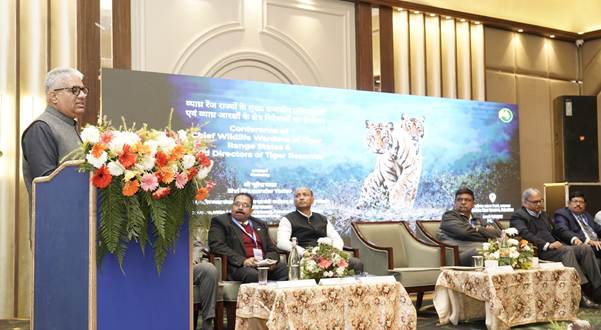
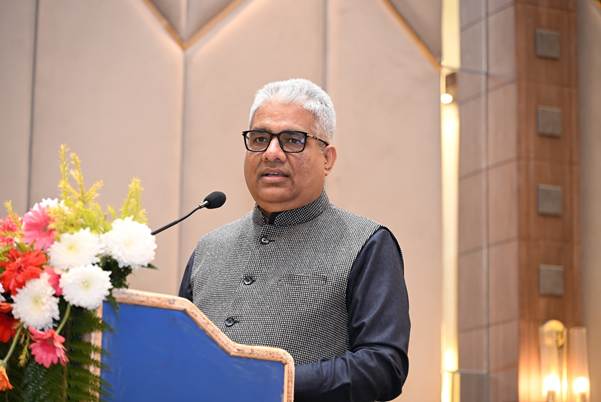
Alwar, Rajasthan: Union Minister for Environment, Forest and Climate Change Bhupender Yadav on Saturday called for a comprehensive review of all policy decisions taken by the National Tiger Conservation Authority (NTCA) since its inception. Addressing the inaugural session of the two-day ‘Conference of Chief Wildlife Wardens of Tiger Range States and Field Directors of Tiger Reserves’, the Minister said decisions taken across 28 NTCA meetings should be examined to identify outdated, unimplemented and successfully executed measures.
50 Years of Project Tiger: Time for Policy Consolidation
Highlighting that India has completed 50 years of tiger conservation, Shri Yadav said the milestone presents an ideal opportunity for a holistic reassessment of existing policies. He proposed consolidating major decisions taken over the past five decades into a formal policy statement and placing the issue as the first agenda item in the upcoming NTCA meeting.
High-Level Participation from Centre and States
The conference is being attended by Rajasthan Forest Minister Sanjay Sharma, senior officials of the Ministry of Environment, Forest and Climate Change, NTCA representatives, Chief Wildlife Wardens of tiger range states, and Field Directors of tiger reserves from across the country, reflecting a strong Centre-State coordination framework.
Focus on Population Estimation and Conflict Management
The Union Minister identified key areas requiring focused deliberation, including tiger population estimation, rescue and rehabilitation infrastructure, human-wildlife conflict management, utilisation of the Tiger Reserve Fund and strengthening of institutional foundations for conservation. He said the conference would review the overall status of tiger conservation while addressing policy, management and operational challenges.
Working Groups to Address Region-Specific Challenges
Shri Yadav called for the formation of four working groups to assess region-specific issues such as changes in tiger population trends and the implementation of centrally sponsored schemes across tiger reserves. He also emphasised improving coordination between NTCA and apex research institutions, including the Wildlife Institute of India, Botanical Survey of India, Zoological Survey of India and the Indian Council for Forestry Research and Education.
Research Institutions to Play Larger Role
The Minister urged closer collaboration with scientific and research bodies to ensure that research inputs lead to practical conservation outcomes on the ground, strengthening evidence-based decision-making in tiger management.
Cheetah Reintroduction Programme Highlighted
Referring to the cheetah reintroduction initiative, Shri Yadav said India has successfully undertaken an international translocation of a species that had gone extinct in the country. He noted that the project has now reached the third India-born generation of cheetahs, with a fresh batch from Botswana expected to arrive by the end of February.
India’s Leadership Through International Big Cat Alliance
The Minister highlighted India’s global leadership in wildlife conservation through the International Big Cat Alliance (IBCA), established under the leadership of Prime Minister Narendra Modi. The alliance currently has 24 member countries, while several others have sought observer status. International agencies such as UNDP, IUCN, FAO, CCF, GTF and GSLEP have expressed interest in associating with IBCA. He added that the Union Budget has announced that the first Global Big Cat Summit will be hosted in India.
Need for Robust Rescue and Rehabilitation Systems
Emphasising the growing movement of tigers beyond core forest areas, Shri Yadav said strong response systems are critical. Injured animals, conflict-related cases, orphaned cubs and wildlife in distress require timely and professional intervention, making it essential to develop a standardised framework for rescue, rehabilitation and transit treatment centres around tiger reserves.
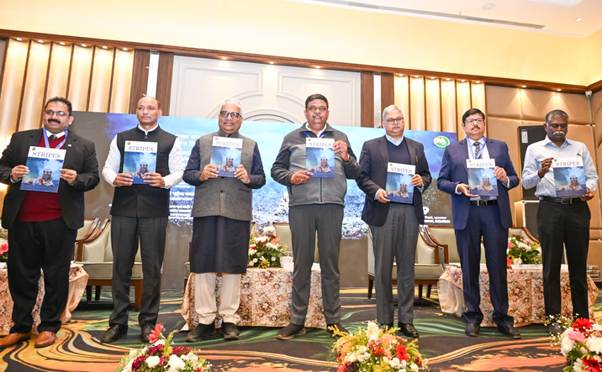
NTCA Journal ‘STRIPES’ Released
On the occasion, the Union Minister released NTCA’s outreach journal ‘STRIPES’ and distributed prizes to students who participated in a painting competition organised by the National Museum of Natural History.
Key Issues on Agenda Over Two Days
Over the two-day conference, state-level officers and field managers will discuss conservation priorities, implementation challenges and emerging needs. Major agenda items include the All India Tiger Estimation 2026, protection and patrolling mechanisms, active management of tiger populations, rescue and rehabilitation infrastructure, management of human-wildlife interactions, utilisation of Project Tiger funds and strengthening of Tiger Conservation Foundations.
Reviewing Tiger Mortality and Field-Level Challenges
Pending issues such as tiger mortality cases will also be reviewed to better align financial, administrative and technical processes with field requirements. The conference aims to facilitate direct interaction between policy, management and field implementation levels, enabling informed decision-making, exchange of best practices among states and coordinated national action towards national tiger conservation objectives.