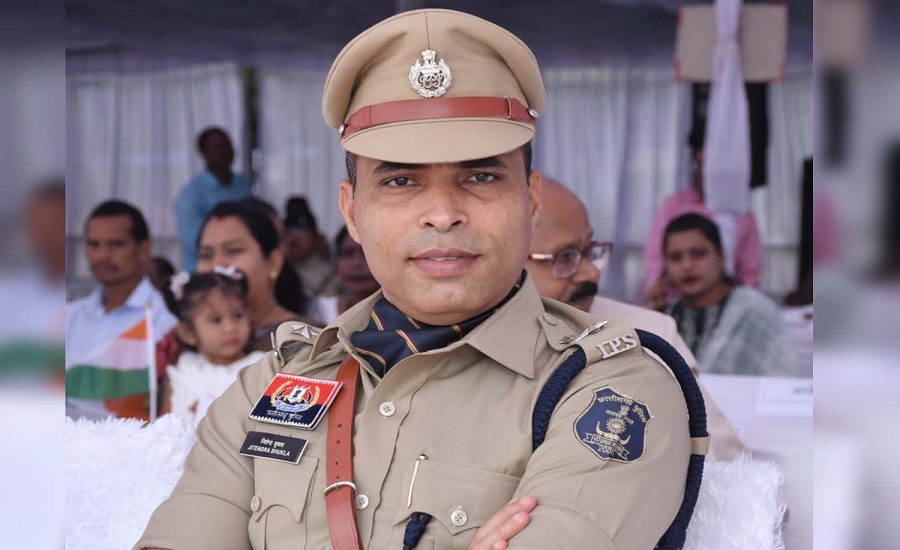
Raipur/New Delhi: The central government has appointed Chhattisgarh IPS officer Jitendra Shukla as a Group Commander in the elite National Security Guard (NSG). The Union Home Ministry has formally communicated the decision to the Chhattisgarh state government through an official letter, instructing them to relieve Shukla of his state duties immediately. The letter also mentioned that Shukla, a 2013-batch IPS officer, will hold an SP-level position in the NSG under central deputation.
Early Life and Education
Jitendra Shukla hails from Allahabad (Prayagraj), Uttar Pradesh. He was born on September 22, 1983, and completed his schooling from Government Inter College, Allahabad. Shukla went on to earn a Bachelor’s and Master’s degree in Geography from Allahabad University. Following his studies, he began preparing for the UPSC Civil Services Examination, ultimately joining the Indian Police Service in 2013.
Career in Chhattisgarh Police
Shukla joined the IPS on September 2, 2013. During his training, he was posted in Bilaspur and served as the Station House Officer of Kota Police Station. He later held positions as Circle Superintendent of Police (CSP) in Ambikapur and Additional Superintendent of Police in Sukma. Shukla has also served as Superintendent of Police in several districts including Sukma, Mahasamund, Korba, Rajnandgaon, and Durg. Known for his dynamic approach and leadership skills, Shukla has made a mark as an efficient officer in Chhattisgarh.
About the National Security Guard (NSG)
The National Security Guard, established in 1986 under the National Security Guard Act, is India’s premier counter-terrorism force. The NSG was primarily formed in response to the growing threat of terrorism following Operation Blue Star in 1984. The force is tasked with responding to high-level anti-terrorism operations and is considered a “zero-error” force, emphasizing precision and flawless execution.
In addition to counter-terrorism duties, the NSG is responsible for the security of the Prime Minister of India and other select VVIPs. The appointment of IPS officers like Jitendra Shukla strengthens the operational capabilities of the NSG in handling sensitive national security tasks.
Significance of the Appointment
Shukla’s appointment reflects the central government’s trust in his leadership and operational expertise. Serving as a Group Commander in the NSG is a prestigious position, requiring exceptional skills in strategy, crisis management, and counter-terrorism operations. His transition from state policing to a central anti-terrorism role is seen as a significant step in his career.