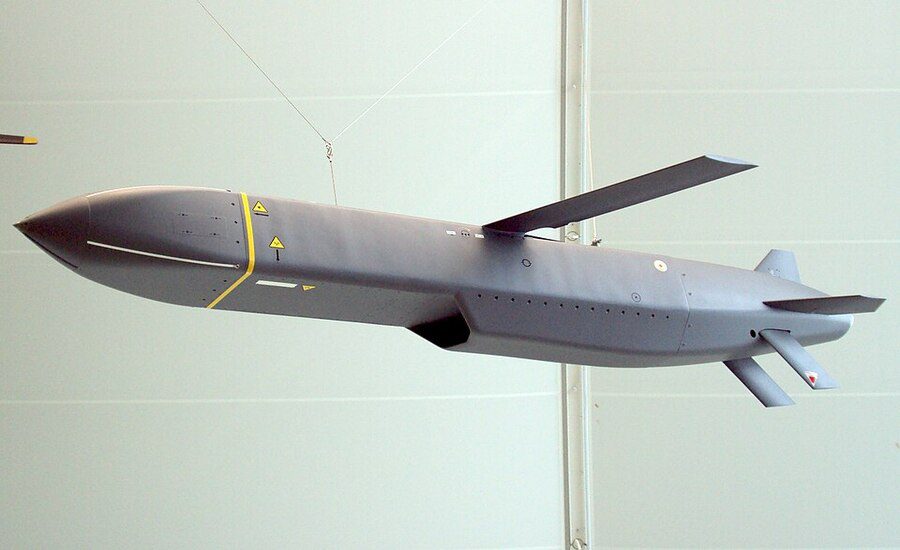
New Delhi: The Indian Defence Acquisition Council (DAC) has cleared the way for the procurement of SCALP cruise missiles to significantly enhance the Indian Air Force’s (IAF) long-range precision strike power. This move comes as part of a broader defence modernisation push under which India is investing heavily in advanced combat systems, including additional Rafale fighter jets and other combat platforms.
What Are SCALP Missiles?
SCALP missiles – also known internationally as Storm Shadow – are long-range, air-launched cruise missiles developed by European defence firm MBDA.
These missiles are designed for terrain-hugging flight and precision targeting, allowing aircraft to strike fortified or high-value enemy assets without entering heavily defended airspace.
The missile has:
- SCALP missile Range: A range in excess of 250 km, with some optimised variants capable of even greater distances.
- Navigation systems including GPS, inertial navigation, and terrain-referencing radar, enabling highly accurate strikes with minimal collateral damage.
- SCALP missile weight: A 450 kg tandem warhead, capable of penetrating hardened bunkers, command centres, and strategic infrastructure.
Key Details of DAC Approval
The Defence Acquisition Council (DAC) — India’s top procurement decision-making body chaired by Defence Minister Rajnath Singh — has granted Acceptance of Necessity (AoN) for the SCALP missile deal. This is a key procedural milestone in the defence acquisition process leading up to final contract negotiations and clearances.
Officials indicate that between 100 and 150 SCALP missiles are currently being considered for acquisition. These missiles will be integrated with India’s existing Rafale fighter fleet, significantly boosting the IAF’s stand-off deep strike capability.
Combat Proven of SCALP missiles
The push for SCALP missiles has strong operational justification, rooted in recent combat experience. During Operation Sindoor, IAF Rafale jets successfully used SCALP missiles, alongside BrahMos weapons, to neutralise terrorist infrastructure located across the border.
These precision strikes were highly effective, avoiding enemy air defences and accomplishing key objectives with minimal collateral damage — an operational validation that has accelerated India’s procurement efforts.
Part of a Larger Defence Upgrade
The SCALP missile approval is not an isolated decision. It comes bundled with a wide range of capability enhancement initiatives, including:
- 114 additional Rafale fighter jets to modernise aerial combat power.
- Acquisition of Meteor air-to-air missiles.
- Procurement of S-400 long-range surface-to-air missiles and additional ammunition stocks.
- Upgrades involving P-8I maritime patrol aircraft, and high-altitude pseudo-satellites for improved ISR (Intelligence, Surveillance & Reconnaissance).
Together, these acquisitions form a ₹3.6 lakh crore+ capability enhancement programme approved by the DAC under the Defence Acquisition Procedure (DAP).
What is the Importance of SCALP missiles
SCALP missiles will provide the IAF with the ability to strike deep into hostile territory from safe stand-off distances. This capability is crucial in various threat environments — especially along India’s borders where air defence systems pose significant risks.
Bolstering Regional Deterrence
By fielding long-range precision weapons with proven combat effectiveness, India strengthens its deterrent posture — particularly in the context of regional security challenges with China and Pakistan.
Boosting Defence Cooperation with France
The SCALP missile acquisition underscores the deepening strategic defence partnership between India and France — building on the existing Rafale aircraft collaboration and ongoing negotiations for tech transfer and offsets.
What’s Next?
Following AoN clearance by the DAC, the procurement process will move to:
- Cost negotiations with the missile manufacturer and allied governments.
- Cabinet Committee on Security (CCS) approval and financial sanction.
- Contract signing and delivery timelines, likely to prioritise rapid integration with operational squadrons.
Officials have also emphasised the importance of technology transfer and local industry involvement to support India’s Atmanirbhar Bharat defence manufacturing goals.
Read also: Big Push for Atmanirbhar Bharat: MoD Seals ₹659 Crore MKU Deal for Army’s SIG-716 Rifles