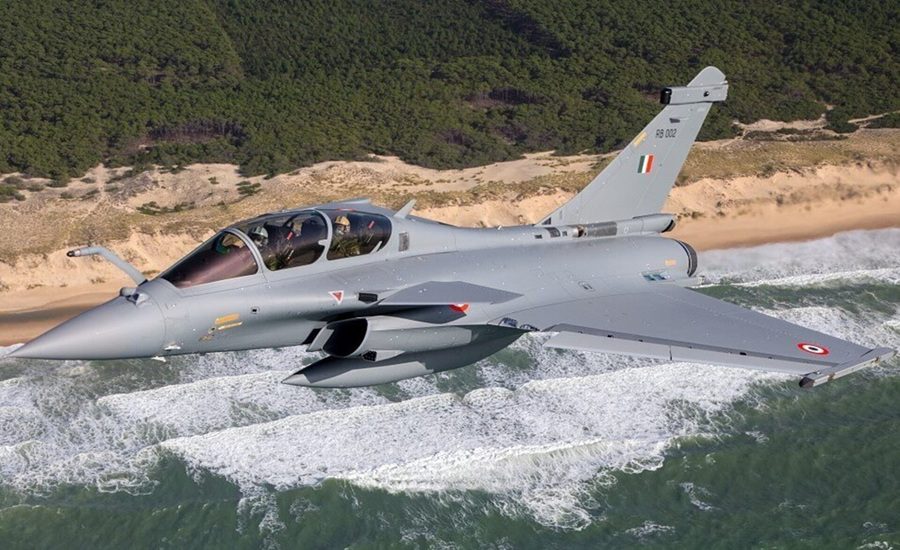
New Delhi: The 114 Rafale MRFA deal is gaining fresh momentum as Dassault Aviation’s CEO Éric Trappier has expressed confidence that the massive contract with India could be signed in 2026.
The proposed deal, part of India’s Multi-Role Fighter Aircraft (MRFA) programme, aims to strengthen the Indian Air Force’s fighter jet fleet with advanced Rafale jets.
According to Dassault, the company wants to ensure that the 114 Rafale MRFA deal is finalized this year as negotiations continue with India’s Defence Ministry. If signed, it would become one of the largest defence procurement deals in India’s history and significantly boost the country’s combat capabilities.
Official Statement of CEO on the Rafale MRFA Deal
Dassault Aviation CEO Éric Trappier recently said that the company is strongly pushing to complete the agreement with India soon.
Read also: Inside the Indian Army’s ‘Bhairav’ Force: How 100,000 Drone Warriors Are Transforming Modern Warfare
He stated that the company wants to ensure the contract for 114 Rafale fighter jets is signed this year, highlighting Dassault’s urgency to secure the deal.
The negotiations are currently ongoing between Dassault and India’s Ministry of Defence. Discussions include:
- Final pricing of the aircraft
- Delivery timelines
- Weapons and support packages
- Local manufacturing and technology collaboration
If these discussions move forward smoothly, the contract could be signed within 2026, marking a historic milestone for India-France defence cooperation.
Why India Needs the 114 Rafale Fighter Jets
India’s fighter squadron strength has been declining due to the retirement of older aircraft such as MiG-21 and other legacy platforms.
The MRFA programme aims to address this gap by acquiring 114 modern multi-role fighter aircraft capable of performing several combat missions such as:
- Air superiority missions
- Ground attack operations
- Precision strike capabilities
- Maritime strike missions
The Rafale jet, manufactured by Dassault Aviation, is considered one of the world’s most advanced 4.5-generation fighter aircraft and is already in service with the Indian Air Force.
India currently operates 36 Rafale jets, purchased from France under a deal signed in 2016, which have significantly enhanced India’s air combat capability.
Rafale MRFA Deal: Defence Acquisition Council’s Approval
A major step toward the deal came recently when India’s Defence Acquisition Council (DAC) approved the proposal to procure 114 Rafale jets through a government-to-government route.
The DAC is chaired by India’s Defence Minister Rajnath Singh, and its approval is considered a key milestone in major defence procurements.
This approval effectively revived the long-pending MRFA programme and allowed negotiations with France to move ahead.
Possible “Make in India” Production
One of the most important aspects of the deal is local production in India.
Reports suggest that:
- Over 90 of the 114 Rafale jets could be built in India.
- A second Rafale assembly line may be set up in Hyderabad if the order is confirmed.
- Around 50% of components may be locally produced in India.
This would significantly support India’s Make in India defence manufacturing strategy, helping local companies gain advanced aerospace manufacturing capabilities.
Dassault already has partnerships with Indian companies such as Tata Advanced Systems for Rafale component manufacturing.
Importance of Rafale MRFA Deal for India
The proposed Rafale deal carries major strategic importance for India.
1. Strengthening Air Force Capability
India needs more fighter jets to maintain adequate squadron strength amid regional security challenges.
2. Countering Regional Threats
Modern aircraft like Rafale enhance India’s ability to respond to security challenges from China and Pakistan.
3. Defence Industrial Growth
Local manufacturing could help India build a stronger aerospace and defence ecosystem.
Impact on France–India Defence Relations
The deal also highlights the growing strategic partnership between India and France.
France has become one of India’s most reliable defence partners. The two countries already cooperate in several areas including:
- Fighter jets
- Naval aircraft
- Submarines
- Space and defence technologies
The Rafale programme further deepens this partnership and strengthens defence ties between the two nations.