New Delhi: In a decisive stride towards Aatmanirbhar Bharat and defence self-reliance, India’s Defence Research and Development Organisation (DRDO) has formally transferred an indigenously developed, high-voltage power supply unit (PSU) to the Indian Armed Forces.
Developed collaboratively with private industry partner Versabyte Data Systems Private Ltd under DRDO’s Technology Development Fund (TDF) programme, this advanced subsystem is designed to power active self-protection jammers used in airborne electronic warfare (EW) applications — a critical requirement for enhancing the survivability of combat and support aircraft in hostile environments.
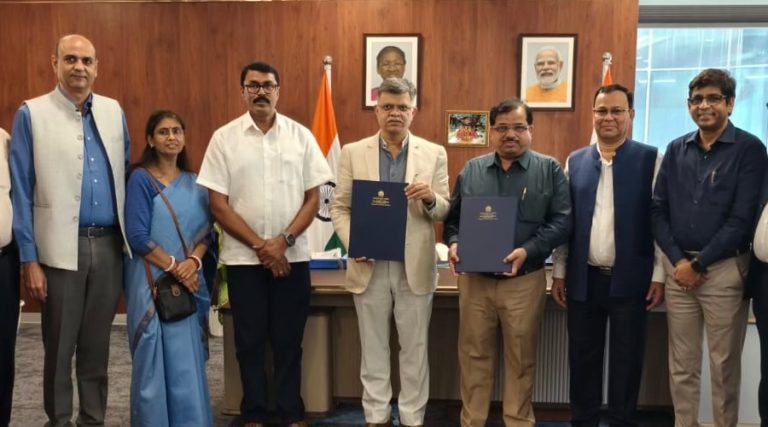
The handover ceremony took place at DRDO Bhawan, New Delhi, underlining the increasing maturity of India’s defence electronics ecosystem and the growing role of Indian industry in supplying strategic combat technologies.
Background of DRDO Indigenous High-Voltage Power Supply
DRDO’s Technology Development Fund initiative was created to forge public-private partnerships, enabling private firms, start-ups, and MSMEs to take on high-end defence R&D and co-develop technologies alongside DRDO laboratories. The objective is to nurture a domestic supply chain for complex defence systems previously reliant on foreign sources.
On December 2, 2025, DRDO’s Empowered Committee formally handed over seven indigenous technologies to the Indian Armed Forces. These innovations — ranging from naval equipment to advanced defence subsystems — were designed, developed, validated, and tested with robust industry participation, demonstrating significant progress in import substitution and strategic autonomy.
Among these seven is the high-voltage airborne power supply developed by Versabyte Data Systems, making it a focal point for India’s airborne EW capabilities.
What the DRDO Indigenous High-Voltage Power Supply Does
At the core of this milestone is a high-voltage power supply unit engineered to support active self-protection jammers on military aircraft.
These jammers operate in both pulse and continuous-wave modes and are essential for countering radar and missile threats by disrupting enemy tracking and targeting systems — a key capability in modern electronic warfare.
Unlike passive electronic support measures, active self-protection systems require precise, high-power energy sources to function effectively.
The PSU developed by Versabyte delivers this capability with ruggedised design, electromagnetic compatibility (EMC), and environmental resilience suitable for airborne missions.
The Handover Ceremony of DRDO Indigenous High-Voltage Power Supply System
The formal transfer was marked by senior attendance from both DRDO and the Indian Armed Forces:
- Air Marshal Awdhesh Kumar Bharti, representing the Indian Air Force leadership, accepted the high-voltage PSU.
- DRDO Chairman Samir V. Kamat, led the organisation’s commitment to indigenous technologies.
- Vice Admiral Vineet McCarthy, Deputy Chief of Integrated Defence Staff, underscored the multi-service interest in advanced EW capabilities.
- R. Chandra Kumar, CEO of Versabyte, personally handed over the technology, signifying industry-to-services cooperation.
The event highlighted the government’s ongoing emphasis on integrating home-grown technologies into frontline defence systems.
Significance of DRDO Indigenous High-Voltage Power Supply for India’s Defence Posture
1. Enhancing Airborne EW and Survivability: Aircraft operating in contested environments increasingly depend on robust EW suites to evade detection and lethal targeting. Indigenous power systems that reliably energise these suites enhance platform survivability, mission success, and strategic deterrence.
2. Reducing Import Dependence: By developing and supplying such a critical subsystem domestically, India strengthens its defence industrial base and reduces reliance on imported components — a key aspect of the Aatmanirbhar Bharat initiative.
3. Strengthening Public-Private Collaboration: The success of this project reinforces the value of the Technology Development Fund model where DRDO labs and private companies co-innovate, test, and deploy advanced defence systems.
4. Broader Defence Ecosystem Impact: Technologies like the high-voltage PSU open avenues for Indian firms to enter high-technology markets such as phased array radars, next-generation jammers, seeker systems, and integrated defensive aids suites.
Read also: MDL Delivers Project 17A — India’s Fiercest Stealth Frigate Built Under Aatmanirbhar Bharat