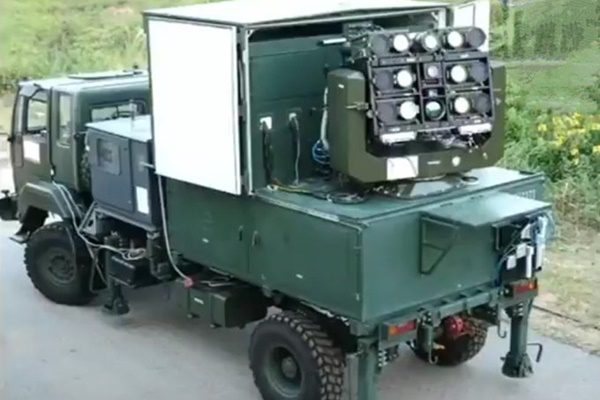
New Delhi: India’s Defence Research and Development Organisation (DRDO) has made a major breakthrough in high-energy laser (HEL) technology, advancing the development of a 300 kW class high-energy laser weapon that could transform aerial defence.
This powerful laser system uses a hybrid gas laser architecture to deliver precise and sustained energy at extended ranges of over 20 kilometres, offering a new layer of protection against drones, missiles, and aircraft in modern combat scenarios.
What Is the DRDO Surya Laser Weapon
At its core, the DRDO’s 300 kW HEL weapon is a directed energy system designed to destroy or disable targets without traditional ammunition. Instead of firing projectiles, it uses a focused laser beam to rapidly heat and neutralise threats in mid-air. This system represents a major step forward from earlier, lower-power laser systems that India previously tested or deployed.
The new design integrates electric power with advanced gas laser technology, combining the best features of both approaches to optimize performance and scalability. It builds upon DRDO’s prior work in solid-state lasers and gas lasers, bringing them together into a potent hybrid solution.
How DRDO Surya Laser Weapon Works
One of the key innovations in this system is its hybrid gas laser architecture — a combination of electrical excitation and gas dynamics that enhances efficiency and output power.
Key Technical Modules
- Centrifugal Bubble Secondary Optical Group (SOG): This advanced optical protection system keeps the beam path clean by expelling gas bubbles and particles that could interfere with the high-energy laser beam. It ensures stable power transmission over long distances.
- High Gain Supersonic Nozzle: By accelerating the gain media through supersonic flow, this nozzle significantly boosts energy extraction, increasing the efficiency of the laser output.
- Large Aperture Beam Director: A precision mirror assembly that shapes and directs the high-energy beam to accurately hit targets beyond 20 km. This part is still under development but is essential for long-range performance.
- Adaptive Control Systems: These systems adjust the beam dynamically in real time to counter atmospheric effects like turbulence, ensuring the laser remains effective in varied weather and battlefield conditions.
What are the Features of DRDO Surya Laser Weapon
Once fully validated, the 300 kW HEL weapon is expected to neutralise aerial threats at ranges beyond 20 kilometres, including:
- Unmanned aerial vehicles (UAVs) and drones
- Cruise missiles
- Fixed-wing aircraft
- Other high-speed or low-signature targets
Unlike traditional missile interceptors, laser weapons deliver energy at nearly the speed of light, reducing response time and allowing repeated shots at a low per-shot cost once powered.
Testing and Development Status
DRDO has already validated several critical technologies in controlled environments. Tests have included simulations under varying conditions such as high humidity and dusty terrain, reflecting the diverse geographies in India.
Some modules, like the Large Aperture Beam Director and Adaptive Control Systems, are still undergoing refinement. DRDO anticipates comprehensive trials by mid-2026, with field trials on mobile platforms slated for 2027.
Deployment could begin on heavy-duty vehicles, air defence networks like the Akash-NG, or even on naval vessels in future phases.
What is the Significance of DRDO Surya Laser Weapon
Introducing a 300 kW high-energy laser weapon into India’s defence inventory would elevate the nation’s deterrence and air defence capabilities. Directed energy systems offer several advantages over conventional interceptors:
- Instant engagement at light speed
- Lower operating costs once infrastructure is in place
- Greater precision with minimal collateral damage
In the Indo-Pacific region, where rapid aerial threats such as drones and cruise missiles are increasingly common, such innovations could provide a crucial edge.
India’s Progress in Directed Energy Weapons
India has been steadily advancing in directed energy weapons (DEWs). Earlier achievements include smaller laser systems of 10–30 kW class that demonstrated anti-drone capability. The 300 kW HEL represents a quantum leap in power and operational reach.
These systems are part of a broader move toward future warfare technologies, where traditional kinetic systems are complemented by high-speed, contactless weapons.