New Delhi: India has taken a major leap in strengthening its air defence architecture with the unveiling of a sophisticated anti-stealth radar grid, set to significantly elevate the country’s capability to detect and track advanced fifth-generation stealth aircraft such as the US F-35 Lightning II, Russian Su-57, and China’s J-35 stealth fighter prototypes.
This development comes amid evolving aerial threats, increasing regional tensions, and a global shift toward low-observable aerial platforms that challenge traditional radar detection.
What is Important of Indian Anti-Stealth Radar Grid Matters
Stealth technology, characterised by low radar cross-section and advanced materials, allows aircraft and drones to evade conventional high-frequency radar systems.
Countries around the world, including the United States, Russia, and China, have invested heavily in fifth-generation fighters that leverage stealth for strategic advantage.
India’s new anti-stealth grid addresses this threat by integrating passive radar technologies and a multi-layered detection network capable of identifying low-observable targets that would otherwise “disappear” on traditional radar screens.
Mission Sudarshan Chakra: The Strategic Push
The radar grid is a key component of Mission Sudarshan Chakra, India’s ambitious defence initiative aimed at building an interconnected, multi-layered defence architecture.
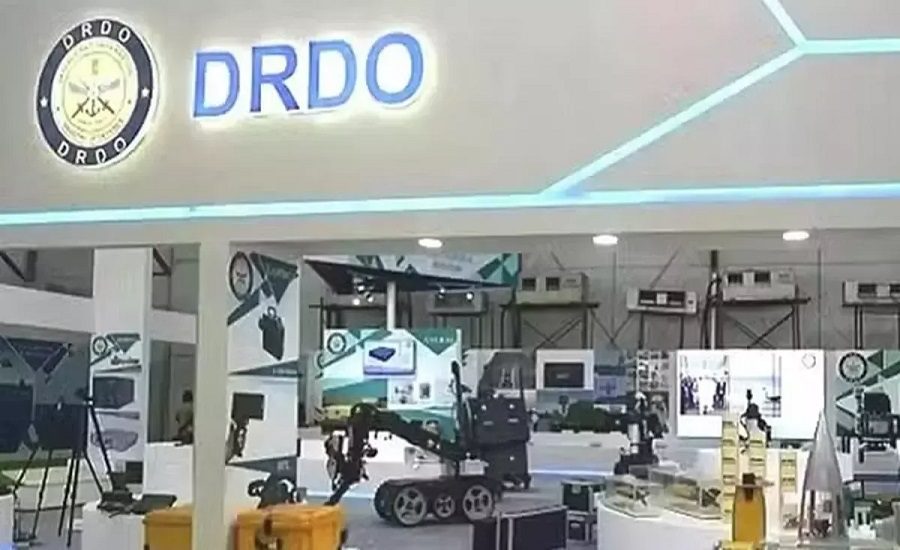
Led by the Defence Research and Development Organisation (DRDO), the mission seeks to harness cutting-edge technologies including AI-assisted signal processing, quantum enhancements, and networked sensor fusion to provide comprehensive aerial vigilance.
The mission emphasises:
- Early detection of low-observable threats
- Rapid response and threat assessment
- Seamless data integration across radars and intercept systems
- Reduced reliance on foreign radar technologies
- Enhanced indigenous defence tech development
Understanding Passive Coherent Location Radar (PCLR)
At the core of India’s anti-stealth radar grid is the Passive Coherent Location Radar (PCLR) — a passive multi-static radar system. Unlike traditional radars, which emit radio waves and listen for reflections, PCLR does not transmit any own signals.
Instead, it uses ambient electromagnetic emissions (like FM radio broadcasts) already present in the environment to detect disturbances caused by aircraft passing through these signals.
How PCLR Works
1. Ambient Signal Reflection: Ground systems capture commercial signals reflected off objects in the sky.
2. Multistatic Tracking: Distributed receivers monitor changes in the ambient signals from multiple angles.
3. Stealth Detection: Stealth aircraft, designed to evade high-frequency emissions, become more visible to low-frequency passive systems.
4. Silent Operation: With no active emissions, the system remains hard to detect, making enemy countermeasures such as anti-radar missiles ineffective.
Integration with National Low Observable Detection Network (LODN)
PCLR is integrated into the broader Low Observable Detection Network (LODN), which combines:
- VHF-band surveillance radars
- Long-range low-level tracking systems
- Advanced radar innovations, including Vostok-D and others
- AI-based analysis for false-alarm reduction and improved target classification
This layered approach ensures that multiple technologies complement one another, bridging gaps in individual systems and creating a resilient detection grid.
Enhancing India’s Existing Air Defence Ecosystem
The anti-stealth radar grid does not operate in isolation but enhances India’s already formidable air defence array. India’s integrated systems include:
- Akash Missile System — indigenous surface-to-air missile platform providing tactical air defence and area protection.
- S-400 Triumf — long-range SAM system procured from Russia.
- Barak-8 — medium-to-long-range air and missile defence system co-developed with Israel.
- SPYDER — quick-reaction short-range SAM system.
This layered defence envelope ensures a comprehensive shield that spans from short-range intercepts to strategic long-range engagements.
What are the Implications of Indian Anti-Stealth Radar Grid
Experts suggest that while advanced stealth platforms like the F-35 and Su-57 reduce radar returns in higher frequencies, they remain susceptible to detection at low frequencies exploited by PCLR and similar technologies.
Deter Threats Across Borders
With heightened geopolitical tensions along India’s western and northern borders, and the rapid modernization of neighbouring air forces, the grid strengthens deterrence by increasing the risk for potential hostile incursions.
Boost to Indigenous Defence Industry
The focus on indigenous development strengthens India’s self-reliance strategy under the Atmanirbhar Bharat initiative, offering potential future export avenues to nations that face similar stealth threats.
Timeline of Indian Anti-Stealth Radar Grid
According to defence sources, early operational trials have demonstrated promising results, with simulated stealth incursions successfully tracked by the grid at greater distances than traditional systems.
Live exercises using surrogate stealth drones have further validated tracking continuity, even under electronic warfare conditions.
Looking ahead, DRDO is exploring quantum-enhanced radar systems and more powerful AI processors to further refine detection capability and reduce computational overhead.