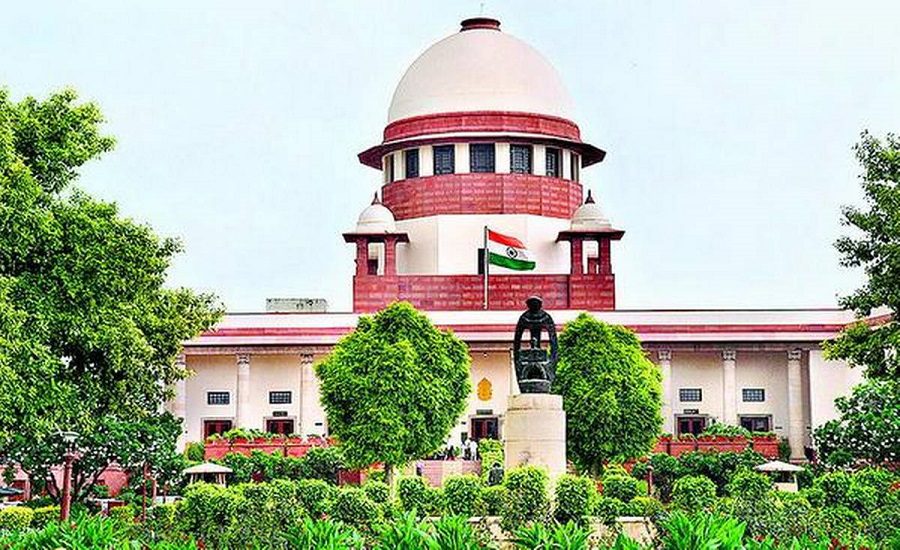
New Delhi: In a landmark judgment that could reshape anti-corruption law in India, a two-judge bench of the Supreme Court delivered a split verdict on the constitutional validity of Section 17A of the Prevention of Corruption Act, 1988.
While Justice B.V. Nagarathna struck down the provision as unconstitutional, holding that it undermines the very object of the anti-graft law, her colleague Justice K.V. Viswanathan upheld it with qualifications.
The split ruling has now been referred to the Chief Justice of India for the constitution of a larger bench to decide the matter finally.
What Is Section 17A Prevention of Corruption Act
Section 17A was inserted into the Prevention of Corruption Act, 1988 through the 2018 Amendment with the stated purpose of requiring prior approval before any inquiry or investigation could be commenced against a public servant for acts connected with the discharge of official duties.
Read also: A Big Blow to Contractual Employees: Supreme Court Rejects Equal Pay Demand by Contractual Workers
This protection was intended to shield honest officers from frivolous, vexatious or politically motivated complaints.
The provision mandated that no investigation by the police or any agency—including central agencies like the CBI—could start without obtaining prior sanction from the appropriate government authority. Critics, however, argued that such a precondition effectively creates a shield for corrupt officers and hampers prompt detection and deterrence of corruption.
Justice Nagarathna’s Reasoning: “Old Wine in a New Bottle”
In her detailed opinion, Justice B.V. Nagarathna held that Section 17A is unconstitutional and contrary to the object of the Prevention of Corruption Act (PC Act) because it forestalls even preliminary inquiries, thereby protecting corrupt public servants rather than ensuring accountability.
She described the provision as “old wine in a new bottle,” noting that it resurrects the same approval regime that was struck down in earlier Supreme Court decisions such as Vineet Narain v. Union of India (1998) and Subramanian Swamy v. CBI (2014).
Justice Nagarathna highlighted six key reasons for striking down Section 17A:
1. No Judicial Rewrite of Clear Statutory Words
She emphasized that courts cannot rewrite the statute by substituting the approval authority with an independent body—such as the Lokpal or Lokayukta—as that amounts to judicial legislation.
2. Arbitrariness and Institutional Bias
The provision vests the power of granting prior approval within the government or authority competent to remove the official. Justice Nagarathna found it unrealistic to expect neutrality from internal administrative authorities, observing that decision-making often involves collective inputs within government departments.
3. Disguised Classification
Though framed to apply to all public servants, Section 17A effectively extends protection only to those public servants engaged in decision-making or recommendation roles—typically senior officials—creating an impermissible classification under Article 14 of the Constitution.
4. Reviving Struck-Down Regimes
She traced the history of similar provisions like Section 6A of the Delhi Special Police Establishment Act, which previously mandated prior approval and was struck down for violating Article 14. Section 17A, in her view, attempted to bring back the same regime in another form.
5. Undermining Anti-Corruption Objectives
Justice Nagarathna asserted that detecting corruption requires unhindered investigation, and placing prior approval as a precondition hinders early verification of complaints. She bluntly concluded that the provision grants protection to corrupt officers.
6. Existing Safeguards Are Sufficient
The judge pointed out that Section 19 of the PC Act already requires sanction for prosecution, allowing governments to prevent frivolous cases after material collection, which she said was a more suitable stage for scrutiny.
Justice Viswanathan’s Counter View: Protecting Honest Officers
In contrast, Justice K.V. Viswanathan upheld Section 17A as constitutionally valid, reading the provision narrowly. He suggested that requiring prior approval could function as a “gatekeeper” to filter out baseless investigations and protect honest officials from harassment.
He further opined that recommending authorities like the Lokpal or Lokayukta could play a role in deciding approvals to ensure independent scrutiny.
This divergence of views has resulted in a split verdict, requiring the referral of the case to the Chief Justice of India to form a larger bench to settle the constitutional questions definitively.
What are the Implications of Section 17A Prevention of Corruption Act
The debate over Section 17A taps into broader principles of criminal investigation, equality before law (Article 14), and the purpose of anti-corruption legislation. Justice Nagarathna’s opinion stresses that robust investigation mechanisms are crucial to uphold the rule of law and India’s international commitments to combat corruption.
In contrast, the counter view underscores the need to balance accountability with safeguards against frivolous probes that may paralyze governance or unfairly target honest officials.
Read also: What Are ‘Stock Witnesses’ and Why the Supreme Court Took Strict Action Against MP Police