“Success is the sum of small efforts, repeated day in and day out.” – Robert Collier
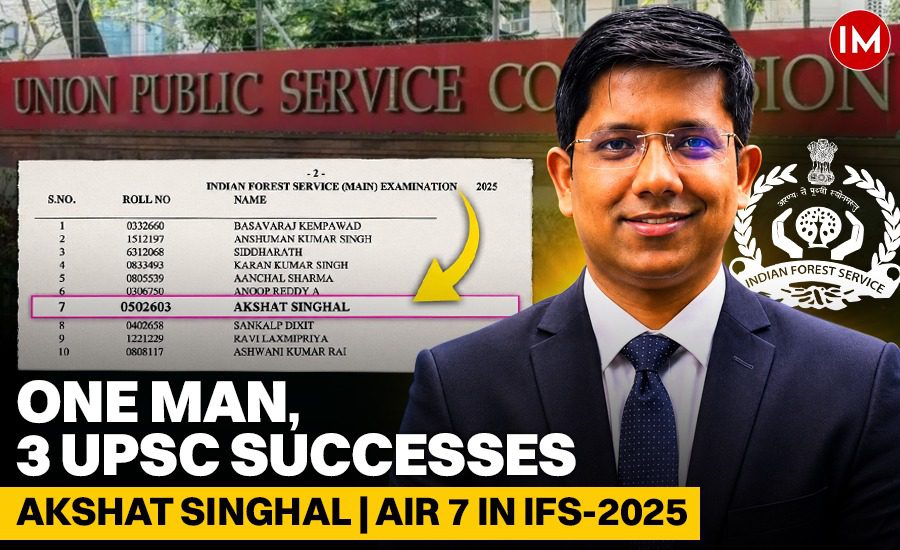
In a country where lakhs of aspirants dedicate years solely to preparing for the UPSC examinations, very few manage to crack even one prestigious exam. Yet, Akshat Singhal from Rajasthan achieved something extraordinary. While serving as an officer in the Indian Engineering Services (IES), he not only cleared the Civil Services Examination (CSE) but also secured an impressive All India Rank 7 in the Indian Forest Service (IFS) Examination 2025 – all while managing a full-time government job.
His journey is not merely a story of success; it is a testament to resilience, discipline, intelligent planning, and unwavering determination. There were moments when exhaustion after work left him with little energy to even open a book. There were moments when failure shook his confidence. There were moments when he almost decided to quit the UPSC journey altogether.
But he chose to continue.
Today, Akshat’s success stands as a powerful reminder that consistency often matters more than the number of study hours, and that even the busiest individuals can achieve extraordinary goals when guided by clarity of purpose and disciplined execution.
In an exclusive conversation with Indian Masterminds, Akshat shared his inspiring journey, preparation strategy, biggest struggles, interview experience, and valuable advice for future aspirants.
Journey So Far: From Failed Attempts to AIR 7 in IFS
Akshat’s UPSC journey was far from smooth. Although many see only the final success, the path was filled with setbacks, self-doubt, and repeated challenges.
Interestingly, his first UPSC experience came in 2022, but he does not even consider it a serious attempt.
Read Also: From Missing Cut-Offs to AIR 11: The Inspiring Journey of Aakash Singhal in UPSC IFS 2025
“I had not studied anything at all. I simply filled the form to understand what the examination looked like. I scored around 22-23 marks in General Studies and failed badly,” he recalled with a smile. After that, he began taking the examination seriously.
2023: Cleared GS, Failed CSAT:
His first serious attempt came in 2023. He successfully cleared the General Studies paper in Prelims but failed to qualify because of CSAT.
2024: Reached Interview Stage
The following year, he made significant progress. He cleared Prelims and Mains and reached the Interview stage of the Civil Services Examination.
However, the final result brought disappointment.
“When the final list came out, I searched the PDF again and again but couldn’t find my name. For almost an hour, I couldn’t believe it. I was completely shattered,” he said.
2025: Breakthrough Year
Despite the setback, Akshat gathered the courage to make one final serious attempt. The result transformed his life.
He secured Rank 352 in UPSC Civil Services Examination and became eligible for the Indian Revenue Service (IRS).
Simultaneously, in his very first attempt at the Indian Forest Service Examination, he secured All India Rank 7.
“I had decided that if 2025 didn’t work out, I would probably stop giving UPSC exams and continue my career in Engineering Services. Thankfully, things worked out.”
His Background: A Small-Town Boy with Big Dreams
He belongs to Gangapur City in Rajasthan’s Sawai Madhopur district. His academic journey reflects consistent excellence.
He completed his B.Tech in Electrical Engineering from Malaviya National Institute of Technology (MNIT), Jaipur in 2019.
Soon after graduation, he joined Qualcomm in Hyderabad as a Software Developer. However, destiny had different plans.
During his college days, he had appeared for the Engineering Services Examination conducted by UPSC. He cleared the examination in his very first attempt. Although his joining was delayed due to the COVID-19 pandemic, he eventually joined the Ministry of Defence in 2020 and has been serving there for the last five years.
His father works as a chemist while his mother is a homemaker.
Balancing Studies with a Full-Time Government Job
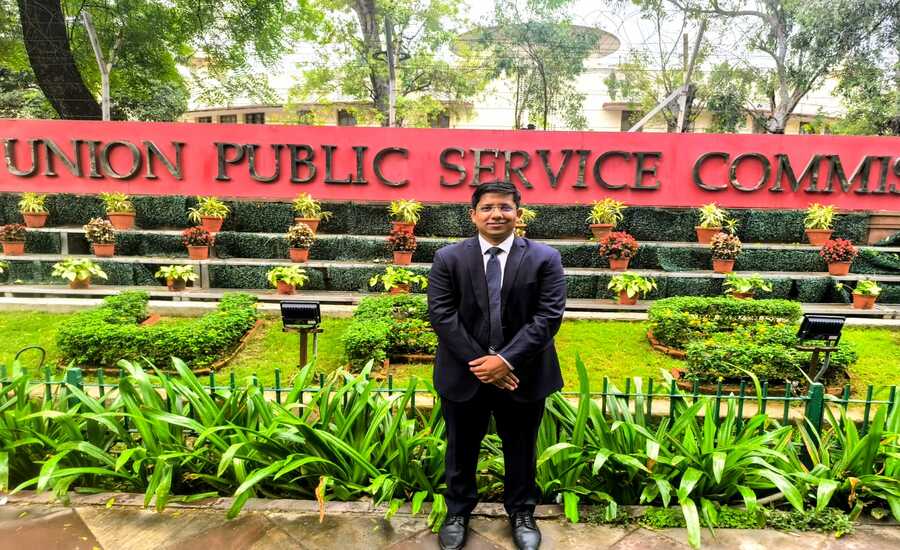
One of the most remarkable aspects of Akshat’s journey was managing UPSC preparation alongside a demanding government job.
Working at the Ministry of Defence meant long office hours and limited free time.
Moreover, he was living alone in Mumbai, away from his hometown and family.
“Managing a job, living alone and preparing for UPSC simultaneously was the biggest challenge. Many days I returned home mentally exhausted and had no energy left to study.”
Unlike full-time aspirants who could dedicate entire days to preparation, Akshat often had to make do with one or two hours on weekdays.
Sometimes even that wasn’t possible.
Yet he never completely disconnected from his preparation.
“I always tried to study something, even if it was just for an hour. The goal was continuity.”
The Biggest Struggle: Fighting the Battle Against Time
When asked about his biggest challenge, Akshat’s answer came without hesitation.
“Time management was my biggest struggle.”
Unlike most aspirants, he did not have the luxury of unlimited study hours.
Every chapter, every revision, every current affairs note had to be fitted into a packed schedule.
He often utilized lunch breaks, office intervals, and small pockets of free time for studying.
Most of his notes were stored digitally on Telegram and accessible through his tablet and smartphone.
“If I got even 30 minutes free in office, I would revise my notes or read current affairs magazines.”
His success demonstrates that effective utilization of available time can sometimes outweigh the total amount of time available.
The Turning Point: When Failure Almost Ended the Journey
The 2024 result was perhaps the lowest point of Akshat’s UPSC journey.
After reaching the interview stage, failing to make the final list left him emotionally drained.
For some time, he seriously considered ending his UPSC journey.
It was during this difficult period that his friends played a crucial role.
“I spoke to some friends who were preparing with me. They told me that reaching the interview stage itself meant I was doing something right. They encouraged me to give it one more chance.”
Those words changed everything.
That final attempt eventually became the year of his biggest success.
His Preparation Strategy: Planning Over Pressure
One of the most interesting aspects of Akshat’s preparation was his unconventional planning style.
Unlike many aspirants, he never believed in daily targets.
“I never made daily targets because I knew I wouldn’t be able to complete them consistently due to my job.”
Instead, he planned in 15-to-20-day cycles.
His focus was on achieving broader goals rather than stressing over daily checklists.
This approach reduced anxiety and provided flexibility.
Most of his major studying happened on Sundays.
Since Saturdays were often working days, Sunday became his dedicated preparation day.
“When Sunday arrived, I would isolate myself completely and devote the entire day to studies.”
Resource Minimization: The Secret Behind His Success
Another key pillar of Akshat’s strategy was resource minimization.
He consciously avoided collecting excessive study material.
“I knew I didn’t have time to study multiple resources. So I focused only on essential materials.”
His preparation revolved around:
- Previous Years’ Questions (PYQs)
- UPSC syllabus
- Limited current affairs sources
- Digital notes
- Repeated revision
Rather than joining numerous test series, he spent most of his time analyzing actual UPSC questions.
“I built my preparation around PYQs. Understanding UPSC’s thought process became my priority.”
Exceptional Performance in General Studies
Akshat’s focused preparation reflected in his marks.
In the Civil Services Examination, he scored an outstanding 459 marks in General Studies.
This placed him among the highest scorers in the country.
“I secured the third-highest marks in General Studies.”
He believes this performance was largely due to his deep analysis of PYQs and his disciplined revision strategy.
How He Cracked IFS in His Very First Attempt
What makes Akshat’s achievement even more remarkable is that he secured AIR 7 in IFS during his very first attempt. His optional subjects for the Forest Service Examination were Forestry and Geology.
After completing the CSE Mains, he had approximately two to two-and-a-half months before the IFS Mains. He immediately shifted focus toward optional preparation. A senior colleague who had previously cleared IFS advised him to focus exclusively on the syllabus and PYQs. Akshat followed that advice meticulously.
Geology Strategy: The Game-Changer
Since Forestry was comparatively manageable, Akshat devoted most of his effort to Geology.
His approach was highly analytical.
He collected and studied the last fifteen years of IFS Geology question papers.
Then he carefully examined recurring patterns.
“I spent a lot of time identifying UPSC’s patterns. Eventually, I could predict which topics were more likely to be important.”
Because Geology requires substantial memorization, he adopted selective learning.
Instead of trying to memorize everything, he concentrated on topics repeatedly appearing in previous examinations.
This focused strategy ultimately helped him secure AIR 7.
Interview Experience: A Conversation About Purpose
Akshat’s IFS interview was unique. Since he was already serving in Engineering Services and had also qualified Civil Services, the interview board focused largely on one question:
“Why do you want to join the Indian Forest Service when you already have a government job and have qualified another UPSC examination?”
The majority of the interview revolved around this theme. The panel wanted to understand his motivation, commitment, and clarity of purpose.
Apart from this, he was asked a question regarding the Iran-Israel conflict. He said, “My entire interview was essentially centered around why I wanted to join the Forest Service.”
Important Interview Questions Asked
Some of the major questions discussed during the interview included –
- 1. Why do you want to join the Indian Forest Service?
- 2. You already have a government job. Why are you appearing for another examination?
- 3. Since you have qualified Civil Services as well, why not continue there?
- 4. Why should you be selected when other candidates are waiting for opportunities?
- 5. What are your views on the Iran-Israel conflict?
The interview largely tested his clarity of purpose and understanding of the service.

Lessons from His Success
Several key lessons emerge from Akshat’s journey:
Consistency Beats Intensity: Even one hour daily matters if done consistently.
Quality Matters More Than Quantity: A focused study plan can outperform excessive resources.
Previous Years’ Questions Are Gold: Understanding UPSC’s patterns can significantly improve performance.
Planning Creates Productivity: Clear weekly and monthly planning helped him manage studies alongside work.
Failure Is Not the End: His 2024 interview-stage setback eventually became the foundation of his 2025 success.
Message for UPSC Aspirants
Akshat believes the most important thing an aspirant must know is their “why.”
“People often start preparing after watching videos or getting influenced by others. But this journey is extremely demanding. If you don’t know why you want to join the service, sustaining the preparation becomes very difficult.”
He emphasizes aligning preparation closely with:
- UPSC syllabus
- Previous Years’ Questions
- Examination trends
- Consistent revision
At the same time, he acknowledges that luck also plays a role.
“This is a subjective examination. Sometimes your answer may resonate with the examiner and sometimes it may not. There is definitely a luck factor.”
However, he firmly believes hard work eventually pays off.
“If you have worked honestly and consistently, success may take one or two extra years, but it will eventually come.”
Looking Ahead
Despite securing AIR 7 in the Indian Forest Service and qualifying Civil Services, Akshat’s journey is not over.
He is likely to choose the Indian Forest Service but remains committed to personal growth and excellence.
He also plans to give one final UPSC attempt in 2027.
For thousands of aspirants struggling to balance jobs, family responsibilities, and UPSC preparation, Akshat Singhal’s story offers a powerful message:
Success is not reserved only for those who can study all day. Sometimes, it belongs to those who refuse to give up after a long day at work, open their books despite exhaustion, and keep moving forward one hour at a time.
And perhaps that is what makes his achievement truly extraordinary.