“Success is not built on success. It is built on failure, frustration, and sometimes catastrophe.” – Sumner Redstone
For every aspirant preparing for the UPSC examinations in a small town, there comes a moment when self-doubt becomes louder than confidence. A moment when repeated failures begin to feel personal. A moment when dreams appear distant, uncertain, and perhaps impossible.
But then emerge stories like that of Aakash Singhal – stories that redefine perseverance.
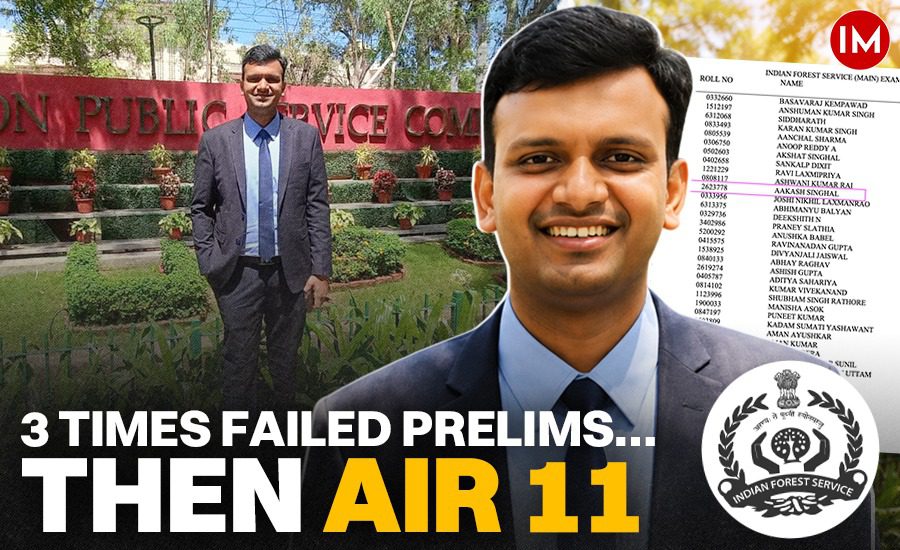
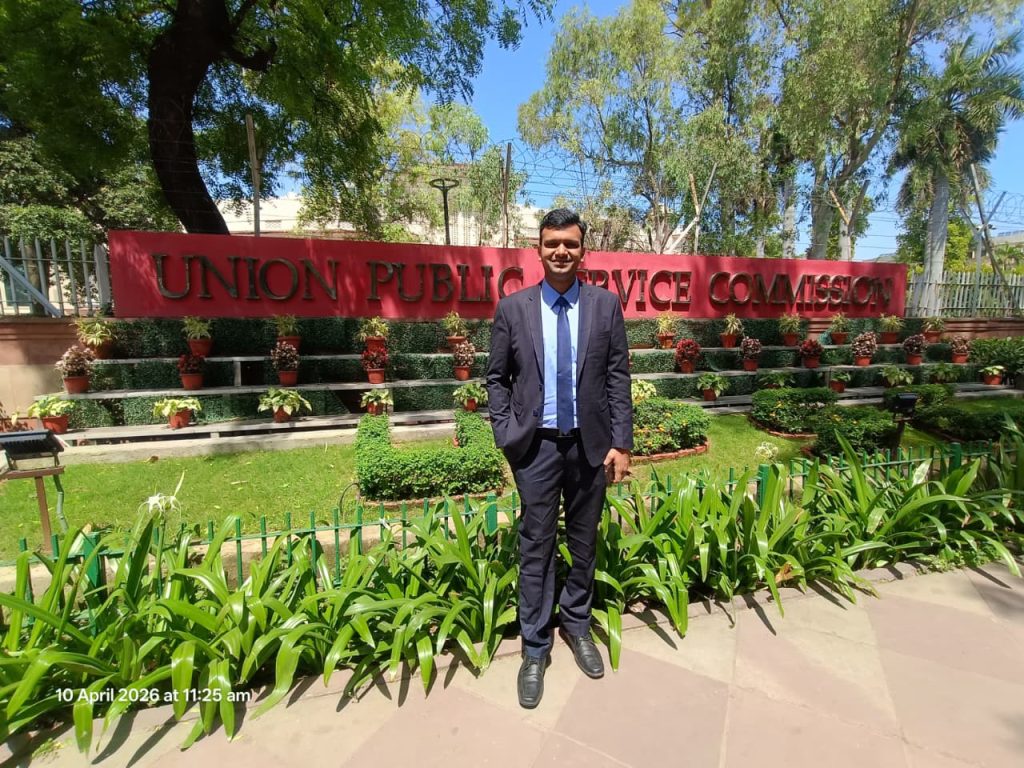
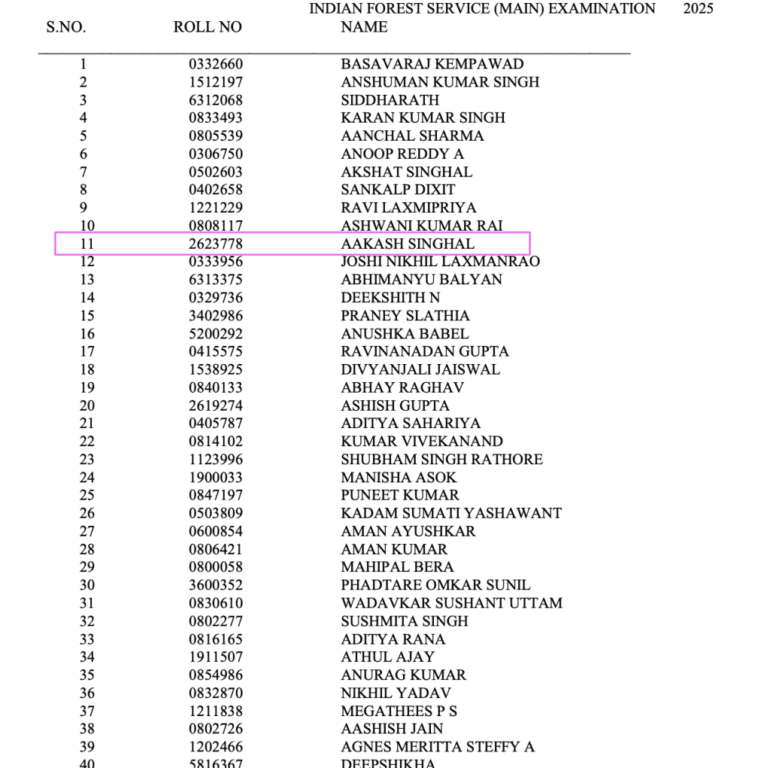
Hailing from Bahraich, a district often labelled “backward” in Uttar Pradesh, Aakash shattered stereotypes and secured All India Rank 11 in the UPSC Indian Forest Service (IFS) Examination 2025. His journey was not one of overnight success, nor of uninterrupted achievements. It was a journey filled with heartbreak, depression, near misses, silent sacrifices, and years of invisible hard work.
There were attempts where he could not even clear the IFoS prelims. There were moments when he missed the cut-off by a single mark. There were years when he gave everything and still faced rejection. And yet, he continued.
What makes Aakash’s story truly extraordinary is not merely the rank he secured, but the emotional resilience with which he endured failure after failure while quietly carrying the weight of expectations, uncertainty, and guilt.
Speaking to Indian Masterminds, Aakash reflected on his long journey with remarkable honesty – “What kind of journey has it been? In one word, it is a lot of experience and learning. There was depression, there were highs and lows. But at the end, I would say — all’s well that ends well.”
Today, his success stands not just as a personal achievement, but as a symbol of hope for thousands of aspirants coming from small towns and underrepresented regions of India.
Journey So Far: Four Attempts, Endless Setbacks, and One Historic Result
His UPSC journey began in 2021. Like many aspirants, he initially appeared for both the Civil Services Examination (CSE) and the IFS examination simultaneously.
This was his fourth overall attempt. However, the road was far from smooth.
In the first three attempts:
- He appeared for the UPSC CSE Mains twice but could not secure an interview call.
- In IFS, he failed to clear the prelims stage for three consecutive years.
- At one point, he even missed the CSAT qualifying cut-off by just one mark.
Recalling those painful moments, he said, “For three consecutive attempts, I couldn’t even clear the IFS prelims. I wasn’t making the cutoff. And this time, by God’s grace, I cleared prelims, mains, and interview, and secured AIR 11.”
The turning point came after another setback in CSE 2024. Realising that divided focus was affecting his performance, Aakash made a difficult but strategic decision — he would prepare exclusively for IFS in 2025.
That decision changed everything. What followed was a remarkable comeback story.
His Background: From Bahraich to the National Spotlight
Aakash belongs to Bahraich district in Uttar Pradesh’s Terai region — an area not commonly associated with UPSC success stories.
He completed his early schooling from St. Robert School in Bahraich and later studied at CMS Gomti Nagar, Lucknow. He pursued B.Tech in Metallurgical and Materials Engineering from MNIT Jaipur and graduated in 2019.
After graduation, he worked for one year at HMEL in Bathinda before fully dedicating himself to UPSC preparation. Alongside preparation, he also pursued a Master’s degree in Geography through IGNOU.
Coming from a traditional business family, the path he chose was unconventional.
His father is a businessman, while his mother is a homemaker. In many traditional Marwari/Baniya households, joining the family business is considered the natural career path.
But Aakash wanted something different. “I wanted to create a new legacy through Civil Services.”
And that dream eventually transformed him into an inspiration for his entire district.
Breaking Stereotypes: “People From Bahraich Can Also Achieve This”
One of the most powerful aspects of his journey is the larger message attached to his success. He believes that regions like Bahraich and Shravasti suffer not just from lack of resources, but from lack of confidence and exposure.
“People often think that such achievements are only possible for students from metropolitan cities. In our region, many believe Civil Services is something from another world.”
For Aakash, this success was bigger than personal validation. He wanted to challenge the narrative that “backward districts” cannot produce top rankers.
“This result is significant not only for my community but for the entire Bahraich district. I wanted to prove that students from these regions are equally capable.”
His AIR 11 has now become a source of pride for countless young aspirants across eastern Uttar Pradesh.
The Biggest Struggle: Fighting Failure in Silence
Perhaps the most emotional chapter of Aakash’s journey came during his final attempt.
After years of setbacks, he became mentally exhausted. The fear of disappointing his family had grown so intense that he decided not to inform them about his exams anymore.
He secretly appeared for Prelims, Mains, and even the Interview. His father did not even know that the interview had already taken place.
Recalling that difficult phase, Aakash shared, “I didn’t want to raise their expectations again and disappoint them later. So, throughout the year, I kept everything hidden.”
Just ten days before his UPSC interview, he received another devastating setback – he failed to clear the UP PCS examination, an exam he was confident about.
“I was completely shattered. I didn’t know whether I would clear UPSC either.”
At that moment, a friend’s words became his emotional anchor: “Maybe you didn’t clear PCS because you were meant to clear UPSC.”
Those ten days changed his mindset. He gathered himself, focused entirely on the interview, and gave it everything he had.
When the final result arrived, the same father who knew nothing about the interview saw his son secure AIR 11.
“The ultimate satisfaction and joy my father felt outweighed everything else. Finally, my name appeared on the list.”
Preparation Strategy: From Hard Work to Smart Work
One of the biggest lessons he learned over the years was that hard work alone is not enough for UPSC.
This time, he changed his entire approach.
“Earlier, I focused only on hard work. This time, I focused on smart work.”
His revised strategy included –
1. Limited Resources, Multiple Revisions
Instead of collecting excessive material, he narrowed his sources and revised repeatedly.
“Studying less but revising more became the key.”
2. Solving Previous Year Questions (PYQs)
Aakash admitted that ignoring PYQs was one of his biggest mistakes earlier.
This time, PYQs became central to his preparation.
3. Strategic Optional Preparation
For CSE, his optional was Geography. For IFoS, he chose Geology and Forestry.
Interestingly, Geography had disappointed him repeatedly in CSE Mains. But Geology turned out to be a game-changer.
He prepared Geology in just two-and-a-half months and scored exceptionally high marks.
“I studied Geography for four years and could score only 249. But in Geology, after studying for just two and a half months, I scored 279.”
4. Home-Based Preparation
For four years, Aakash prepared entirely from home.
He did not relocate to Delhi or join extensive coaching programs. Instead, he ordered study materials and relied on self-study, test series, and online resources.
The Role of Luck: “I Cleared by Just 0.66 Marks”
UPSC success stories often highlight discipline and strategy, but Aakash candidly acknowledged another important factor — luck.
And his example proves why.
“I qualified the prelims by just 0.66 marks in the General category.”
Had he made one bubbling mistake, his journey would have ended at the prelims stage itself.
Similarly, in the previous year, he had failed CSAT by just one mark.
“That one mark cost me an entire year.”
These razor-thin margins taught him humility.
“Success is a combination of hard work, smart work, luck, and blessings.”
The Mentors Who Changed His Preparation
He credited much of his optional success to guidance from mentors and courses that helped him structure his preparation.
He specifically mentioned the contribution of Mayank Sir, Lawrence Sir, and Apoorv Tekchitt Sir for Geology preparation.
“The Planet Geology course and the notes were absolute blessings for me.”
He also praised the mnemonic techniques and strategic methods taught during the crash course.
“In five months, I achieved more progress than I had in the previous four years.”
Interview Experience: Languages, Wildlife, and Geopolitics
Aakash described his UPSC IFoS interview as “fascinating” and “cordial.”
His hobbies — travelling and learning languages — became central discussion points during the personality test.
One particularly memorable question asked him to divide India into linguistic regions.
Instead of giving generic answers like “North East” or “South India,” he carefully discussed the linguistic diversity of individual states like Nagaland and Sikkim.
“I wanted to show that these regions have distinct cultures and identities.”
The board, chaired by Mr. Dasgupta, also asked questions related to:
- Wildlife in Uttar Pradesh
- Gharial conservation
- Gangetic Dolphin
- Bharatpur Wildlife Sanctuary
- Pakistan’s geographical advantages
- The Malacca Dilemma in geopolitics
Despite not being fully satisfied with his interview marks, Aakash believes his strong Mains performance balanced everything perfectly.
Family Support: The Invisible Strength Behind Success
Though Aakash hid his exams from his family in the final year, he openly acknowledged that family support remained one of the pillars of his journey.
According to him, three forms of support are essential in UPSC preparation:
- Mental support
- Financial support
- Family support
“If all three are absent, the challenges become truly formidable.”
His words reflect the harsh reality many aspirants face during long preparation cycles.
Message for Aspirants: Perseverance, Patience, and a Backup Plan
Aakash’s advice for UPSC aspirants comes from lived experience rather than theory.
He emphasizes three qualities above all else:
- Perseverance
- Dedication
- Patience
At the same time, he strongly advocates having a backup plan.
“This exam is unpredictable. After five or six years, you should not feel completely lost if things don’t work out.”
His message is practical, balanced, and deeply honest – exactly what aspirants need to hear.
A Story Bigger Than a Rank
Aakash Singhal’s journey is not merely about securing AIR 11 in IFS 2025.
It is about:
- surviving repeated failures,
- enduring silent emotional battles,
- challenging social stereotypes,
- believing in oneself despite setbacks,
- and proving that dreams from small towns are just as powerful as those from metropolitan cities.
From missing cut-offs by a single mark to securing one of the top ranks in the country, his story is a reminder that perseverance eventually creates its own destiny.
And perhaps the most beautiful part of his journey lies in the simplicity of his final reflection: “All’s well that ends well.”
Read Also: From 3 Interview Failures to AIR 9 in UPSC IFS 2025: The Inspiring Journey of Ravi Laxmipriya