
Deep within the lush forests of Nagaland’s Peren district, a quiet conservation revolution is unfolding. At a time when wildlife across the globe faces mounting pressure from habitat destruction, climate change, and human encroachment, the people of Bamsiakilwa village have chosen a different path – one of stewardship, coexistence, and responsibility.
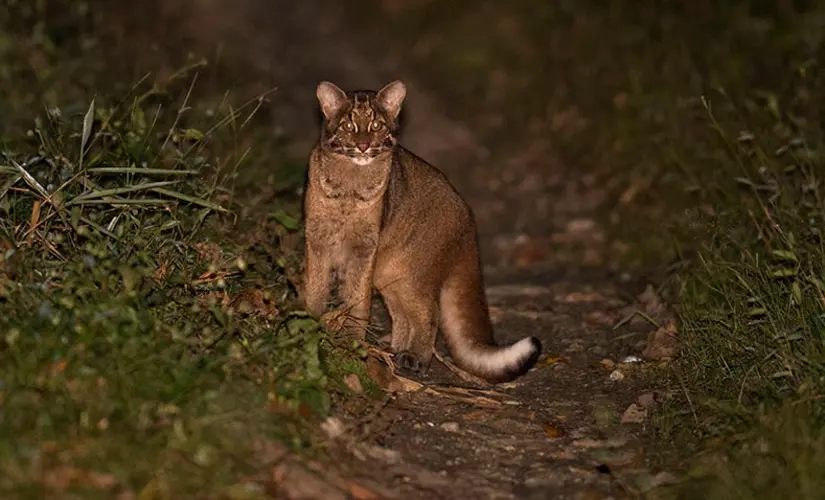
The village has officially declared the Daukeling-Hebamlo Community Conserved Area (CCA) for the protection of the elusive Asiatic Golden Cat, marking what conservationists describe as the world’s first community-conserved area dedicated specifically to this rare wild feline.
The initiative is not merely about protecting a single species. It represents a powerful model of grassroots conservation where indigenous knowledge, community governance, and scientific evidence come together to safeguard forests, wildlife, and future generations.
Speaking to Indian Masterminds, Dr. C. Zupeni Tsanglai, Wildlife Warden of Dimapur Division and a 2013-batch Indian Forest Service (IFS) officer of the Nagaland cadre, explained how the initiative emerged from the community’s long-standing commitment to preserving its forests.
“The villagers have been conserving this forest for years. They have protected the area without any direct intervention from the government. They themselves are the guardians of that forest, and because of their efforts, wildlife and birds continue to thrive there,” she said.
A Historic Declaration for a Rare Predator
The declaration ceremony witnessed the participation of conservationists, village elders, forest officials, and local residents, reflecting a shared commitment towards protecting the forests and wildlife of the region.
The event was inaugurated by Dr. Tsanglai, who attended as the chief guest and unveiled a monolith and statue of the Asiatic Golden Cat, symbolizing the historic conservation effort.
The initiative has been made possible through a collaboration between the Bamsiakilwa (Hebamlo) community, the Eastern Himalayas Marbled Cat Project (EHMCP), and the Small Wild Cat Conservation Foundation (SWCCF). Together, they aim to strengthen habitat protection, encourage community stewardship, and ensure a secure future for the Asiatic Golden Cat and other wildlife species inhabiting the forest landscape.
A Forest Already Protected by Its People
Unlike many conservation projects that begin with government intervention, the Daukeling-Hebamlo story is different.
According to Dr. Tsanglai, the forest had already been preserved by local villagers long before formal recognition was considered.
“The pristine forest was already there. The community had protected it and did not allow activities that would disturb the ecosystem. Nobody is allowed to carry out destructive activities inside the forest,” she told Indian Masterminds.
The forest’s conservation status is therefore not the beginning of protection but rather the formal recognition of years of voluntary stewardship by the community.
What prompted the latest declaration was scientific confirmation of the Asiatic Golden Cat’s presence in the area.
“With the help of camera trapping, we found evidence of this wild cat in the forest. Once its presence was authenticated, the villagers themselves came forward and expressed their desire to dedicate the area to the conservation of the species,” she explained.
Camera Traps Reveal the Presence of an Elusive Species
The Asiatic Golden Cat is among Asia’s least-studied wild cat species. Its secretive nature and preference for dense forests make sightings extremely rare.
For years, local villagers had reported seeing the animal in nearby forests. However, wildlife conservation increasingly depends on scientific documentation rather than anecdotal accounts.
Dr. Tsanglai emphasized the importance of camera trapping in validating the species’ presence.
“Villagers may tell us that the cat exists in their forests, but scientific evidence is essential. Camera traps help authenticate those observations. Once we gather sufficient evidence, conservation planning becomes much stronger,” she said.
The successful camera-trap records from Daukeling-Hebamlo provided the critical evidence needed to highlight the area’s ecological importance.
Government Support on the Horizon
Although the community has already been protecting the forest, the Nagaland Forest Department is now preparing to strengthen those efforts through official processes.
Dr. Tsanglai said the government intends to support and formalize the conservation framework through notification and institutional backing.
“The villagers have already done the hard work of conservation. Now the government will take up the process and help them further. Once the necessary procedures are completed, the area will be formally notified, which will strengthen protection efforts,” she said.
She noted that the process requires extensive ground surveys because of the region’s challenging terrain.
“It is a hilly landscape and the weather conditions, especially rainfall, make field verification difficult. Ground surveys are essential before notification, and that will take some time,” she added.
Despite logistical challenges, she stressed that the proposal is being treated as a priority. “We will take it up on a priority basis,” she said.

Why the Asiatic Golden Cat Matters
While charismatic megafauna such as tigers often dominate conservation conversations, smaller wild cats are increasingly becoming vital components of forest ecosystems, particularly in regions where larger predators have declined.
Dr. Tsanglai explained that in many parts of Nagaland, tigers are now rarely found, making smaller felines ecologically important.
“These small cats have become extremely important for our forests. They play critical ecological roles and help maintain the health of forest ecosystems. Not only the Asiatic Golden Cat but several other small cat species also need protection,” she said.
She further warned that the same threats that affected larger predators – habitat destruction, hunting, and human disturbance – could also impact smaller wild cats if conservation efforts are not strengthened.
“If habitat loss and hunting continue, these species may eventually face similar challenges. That is why conserving them now is so important,” she added.
Threats Facing the Golden Cat
The Asiatic Golden Cat continues to face significant threats across its range. Habitat fragmentation, forest degradation, hunting pressure, and increasing human activity have all contributed to concerns about the species’ long-term survival.
Although the species is not currently considered to be on the verge of extinction in Nagaland, conservationists believe proactive protection is necessary.
Dr. Tsanglai clarified that the cat continues to be found in several pockets of forest across the state.
“It is not restricted to this area alone. The species is found in other parts of Nagaland as well. However, we still need more scientific studies and camera-trap surveys to understand its distribution properly,” she said.
When asked about population numbers, she acknowledged that no comprehensive statewide estimate currently exists.
“At present, we do not have exact data regarding the number of Asiatic Golden Cats in Nagaland. Researchers working on the species may have a better understanding, but statewide enumeration has not yet been completed,” she said.
A Species of Global Conservation Importance
Globally, the Asiatic Golden Cat remains one of the least understood members of the cat family.
According to rough estimates from the IUCN Cat Specialist Group, the worldwide population may consist of approximately 7,000 mature individuals, although estimates range widely from 1,000 to 12,000 individuals.
A significant proportion of this population is believed to inhabit the protected landscapes and foothills of the Eastern Himalayas, making Northeast India particularly important for the species’ future survival.
The cat’s distribution extends across parts of the Himalayan region and several northeastern states of India.
“In India, the species is primarily found in the northeastern states and Himalayan landscapes,” Dr. Tsanglai noted.
A Community’s Pledge to Protect Nature
One of the most inspiring aspects of the initiative is the collective resolve demonstrated by the people of Bamsiakilwa.
Village Chairman Pauka urged residents to completely stop hunting and actively protect wildlife within the conserved area.
Community leaders highlighted the importance of preserving forests not only for wildlife but also for future generations.
Residents collectively agreed to enforce strict conservation measures, including a ban on hunting and any activities that could disturb wildlife within the conserved landscape.
Their commitment reflects a growing recognition across Nagaland that healthy forests are directly linked to water security, climate resilience, and sustainable livelihoods.

Conservation Beyond Wildlife
During the event, Dr. Tsanglai emphasized that protecting forests is not only about saving animals but also about safeguarding human well-being.
She noted that healthy forests provide clean air, freshwater sources, and ecological stability while helping communities adapt to climate change.
“Conserving forests today means securing water resources, regulating local climate, and ensuring a better future for coming generations,” she said.
The Daukeling-Hebamlo initiative therefore serves a dual purpose: conserving biodiversity while strengthening environmental resilience for local communities.
A Model for the Future
Conservationists believe the Daukeling-Hebamlo Community Conserved Area could become a model for wildlife conservation across Northeast India and beyond.
By combining traditional community governance with modern conservation science, the initiative demonstrates how local leadership can produce meaningful conservation outcomes.
The forests of Bamsiakilwa were protected long before formal recognition arrived. Today, that commitment has evolved into a pioneering conservation movement centered on one of Asia’s most mysterious wild cats.
As the monolith of the Asiatic Golden Cat now stands overlooking the conserved landscape, it symbolizes more than the protection of a species. It represents a powerful message—that communities, when empowered and committed, can become the strongest guardians of nature.
In the hills of Nagaland, that message is already becoming reality.