For many Mumbai motorists, driving a few metres on the wrong side of the road can seem like a harmless shortcut: a way to avoid a signal, skip a long U-turn or save a few minutes in the city’s relentless traffic.
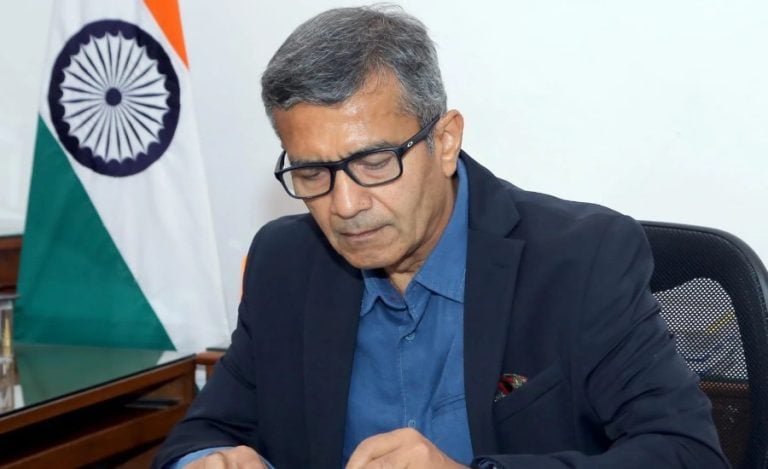
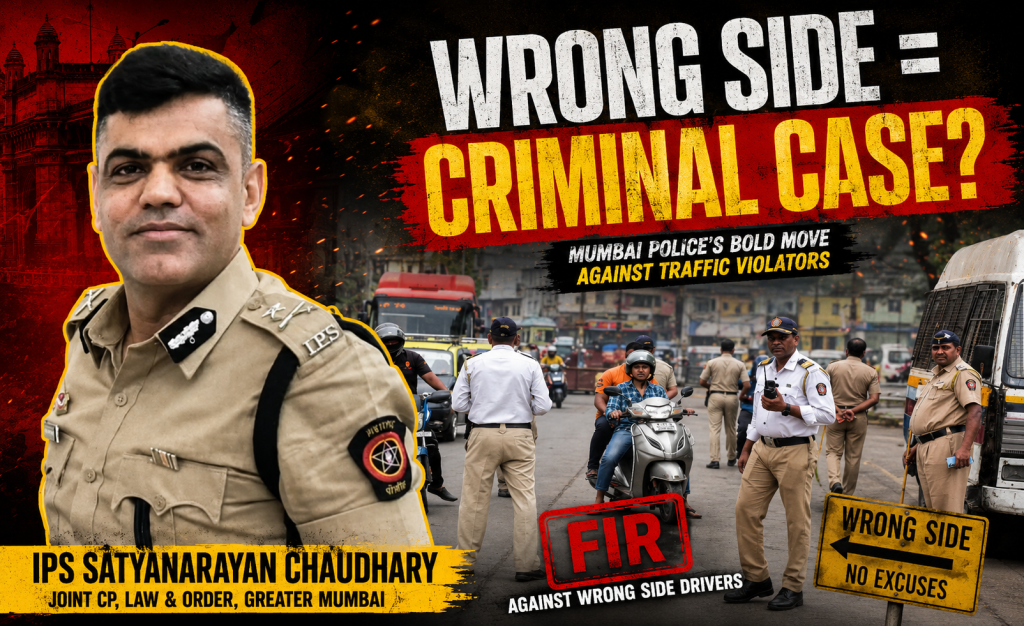
For IPS officer Satyanarayan Choudhary, it is anything but harmless.
The 2004-batch Maharashtra cadre officer, serving as Joint Commissioner of Police (Traffic), Mumbai, is leading an enforcement campaign that is changing how the city deals with wrong-side driving. Instead of stopping at challans, Mumbai Police is now filing FIRs, seizing vehicles and recommending driving licence action against offenders whose violations are considered serious or deliberate.
The message is blunt: a traffic violation that can put another person’s life at risk will no longer be treated as a minor inconvenience.
Also read: The Officer Behind Mumbai’s Calm: IPS Satyanarayan Choudhary
From Challans to Criminal Cases
The urgency behind the campaign became painfully clear after an alleged wrong-side riding incident in Amboli left eight-year-old Rewa Pawar critically injured on July 15.
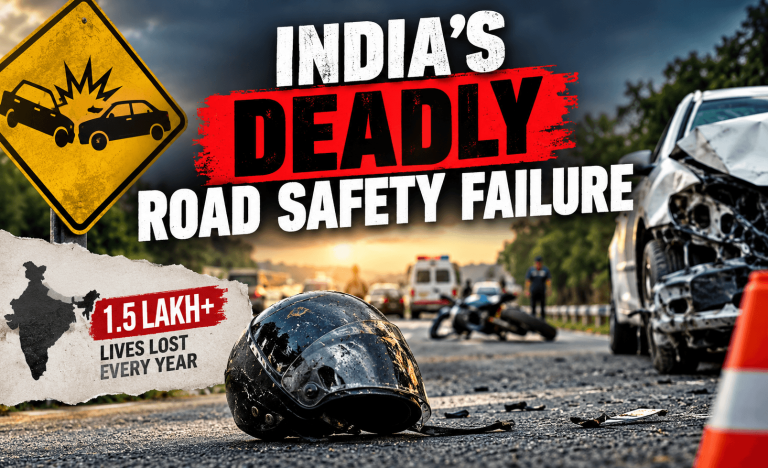
Wrong-side driving creates a particularly dangerous situation because motorists travelling legally do not expect a vehicle to suddenly appear from the opposite direction. The result can be head-on collisions, sudden braking, disrupted traffic flow and, in the worst cases, deaths.
Choudhary explained to Indian Masterminds why the police decided that conventional fines were no longer enough. “The wrong side is dangerous for the life of not only the motorist driver, but also the person who is travelling in the right direction.”
The distinction is important. Not every violation automatically results in an FIR. According to Choudhary, minor violations can still attract a challan, while blatant, grievous or deliberately dangerous violations can lead to criminal action.
“If it is a blatant violation, then we have to go by the FIR,” he says. “If it is grievous in nature, then certainly FIR is the suitable action.”
800 Vehicles a Day, 20 Criminal Cases
The scale of the campaign is striking.
In just one month, Mumbai Traffic Police acted against 5,199 wrong-side motorists, taking the total number of such cases in 2026 to over 17,000 by the end of July.
That figure had stood at 11,579 on June 30.
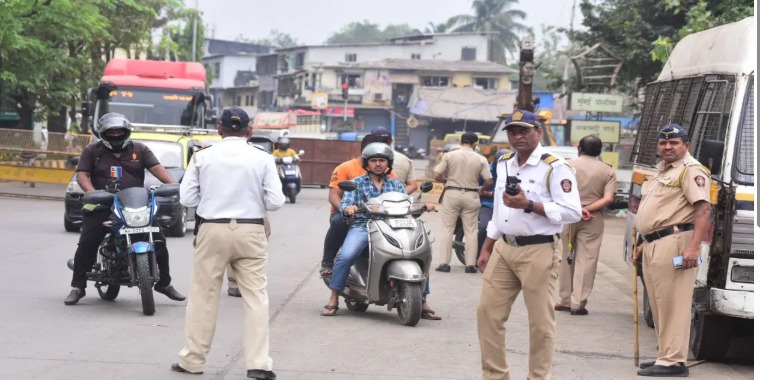
Police are now taking action against roughly 700 to 800 wrong-side offenders every day, with some days touching more than 800. Choudhary recalls that 824 actions were recorded in a single 24-hour period.
The campaign has also resulted in 15 to 20 criminal cases being registered daily against motorists whose actions are found to have endangered public safety.
And the problem is overwhelmingly concentrated among two-wheeler riders, making bikers the primary focus of the crackdown.
The numbers reveal how widespread the offence has become. Mumbai recorded 12,794 wrong-side driving cases in 2024 and 11,711 in 2025. By July 2026, the city had already surpassed both those annual totals.
A Vehicle’s History Can Decide What Happens Next
The crackdown does not end with catching an offender. Traffic officials examine the vehicle’s history to determine whether the motorist is a habitual offender. Previous challans and violations are checked through the police system.
If the person has repeatedly violated traffic rules, the case can move into a more serious category.
So far, around 350 vehicles have been seized, according to Choudhary. Vehicles can also be seized when multiple violations or unauthorised modifications are detected.
Pending challans are recovered, while reports are sent to the RTO for further action. Where vehicle modifications are involved, action can also be recommended concerning the vehicle’s registration.
For wrong-side violations, police can recommend suspension of the driving licence. The seized vehicle does not simply return to the offender immediately. The person has to approach the court and present their case.
Mumbai’s 95 Crash Spots Under the Scanner
The campaign is not only about catching motorists. Choudhary says Mumbai Traffic Police has identified around 95 locations associated with previous crashes or fatalities.
At these spots, the police are working with the Brihanmumbai Municipal Corporation (BMC) on road-design interventions, signal changes, directional improvements and lighting-related issues.
Work has already begun at around 40 locations. Separately, Mumbai’s 41 traffic divisions have been tasked with identifying locations where wrong-side driving is particularly common.
These could be places where motorists seek the nearest access point, areas with high pedestrian footfall, or stretches where residents repeatedly report violations during morning, evening or late-night hours.
The police are responding by deploying more personnel at these locations. Even housing societies are becoming part of the enforcement network, with residents feeding information about recurring wrong-side driving in their neighbourhoods.
CCTV, Citizens and a Simple Message
Technology is another crucial layer. CCTV footage and the e-challan system are being used to identify offenders, while field-level intelligence helps police understand exactly where and when violations occur.
For Choudhary, however, enforcement alone cannot solve the problem.
“Everyone should follow the traffic rules,” he says, stressing that road discipline protects not just the individual driver, but motorists and pedestrians around them.
His final message is even simpler: life is precious, and a small mistake should never put it in danger. That is ultimately what Choudhary’s campaign is trying to change: the mindset that a wrong-side manoeuvre is merely a shortcut.
In Mumbai, the police now want motorists to understand that those few saved minutes can come at a devastating cost. And this time, there may be far more than a challan waiting at the other end.
Also read: How Mumbai Police Hunted Down Criminals Who Thought Time Had Erased Their Crimes