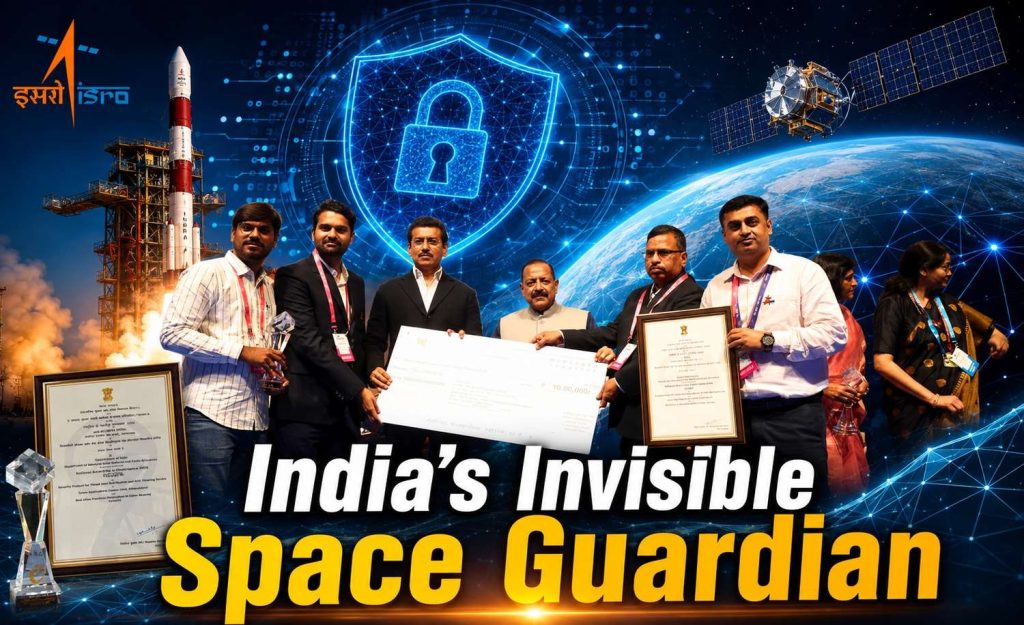
As India’s space programme scales new heights – from ambitious planetary missions to advanced satellite networks – the challenges are no longer confined to rockets, launch vehicles, or outer space. Today, one of the greatest battles is being fought in cyberspace, where sophisticated cyberattacks constantly target critical infrastructure, communication systems, and mission-critical digital networks.
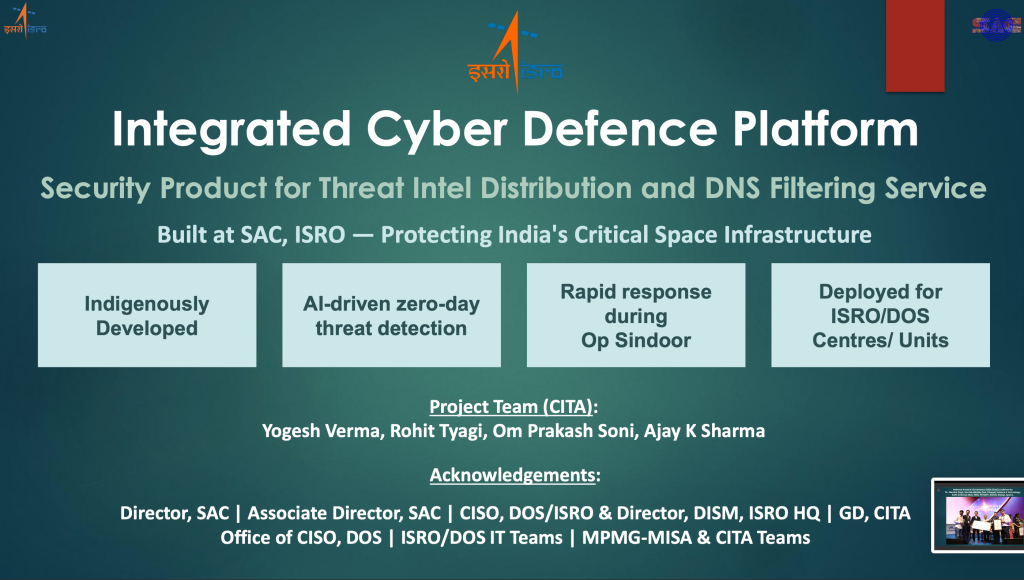
Recognising this emerging challenge, scientists at the Space Applications Centre (SAC), ISRO, developed an entirely indigenous cybersecurity solution that is transforming how India’s space infrastructure is protected. Their Security Product for Threat Intelligence Distribution and DNS Filtering Service has emerged as a pioneering cyber defence platform capable of blocking malicious domains in real time, distributing actionable threat intelligence across ISRO centres, and detecting advanced cyberattacks using Artificial Intelligence.
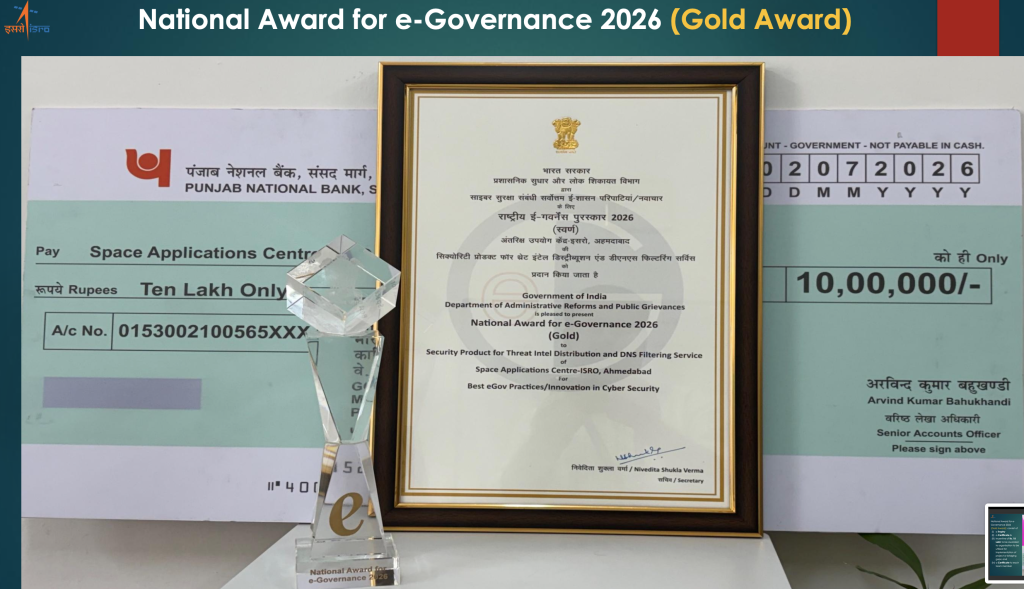
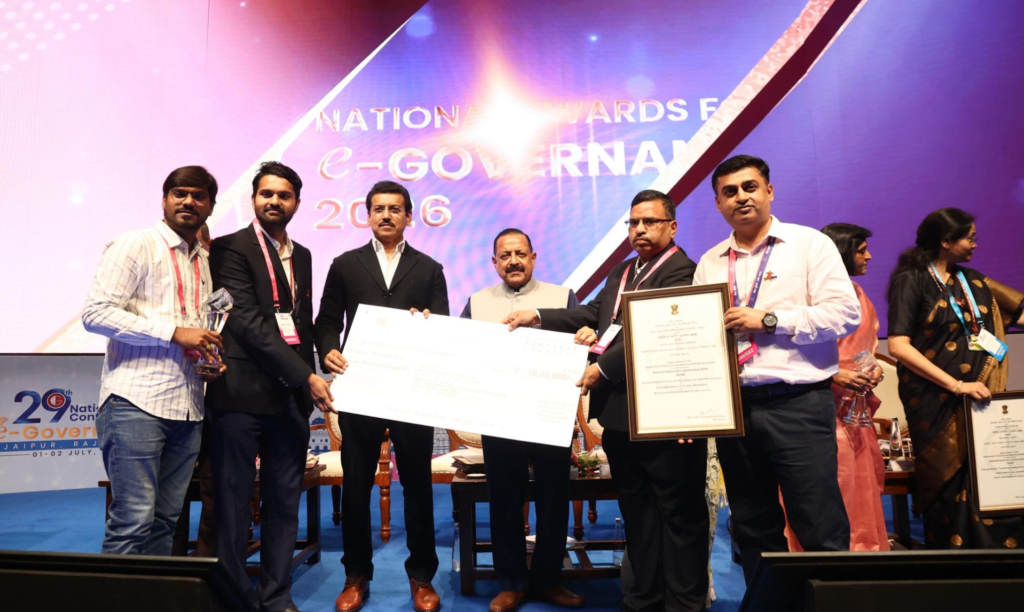
The innovation has now received national recognition with the Gold Award at the National Awards for e-Governance (NAeG) 2026 in the Cyber Security Innovation category. Presented during the 29th National Conference on e-Governance held in Jaipur on July 1–2, 2026, the prestigious honour acknowledges a project that has significantly strengthened the cybersecurity posture of India’s Department of Space.
More than just another software platform, this home-grown security system represents India’s commitment to building secure, resilient, and self-reliant digital infrastructure for one of the country’s most strategic sectors.
The main purpose of this award-winning initiative is to safeguard India’s critical space sector infrastructure from cyberattacks by automatically blocking malicious cyber threats in real-time.
A Growing Need for Stronger Cybersecurity
As India’s digital footprint in the space sector expanded, cyber threats targeting satellite communication systems, ground stations, research centres, and mission-critical infrastructure also became increasingly sophisticated.
Traditional cybersecurity solutions were proving insufficient against modern attack techniques such as malware employing Domain Generation Algorithms (DGA), DNS tunnelling, phishing campaigns, zero-day attacks, and rapidly evolving malicious domains.
Protecting the digital backbone of India’s space programme required more than conventional firewalls—it demanded an intelligent, automated, and indigenous cyber defence ecosystem capable of identifying threats before they could cause damage.
This necessity became the driving force behind the development of the Security Product for Threat Intelligence Distribution and DNS Filtering Service at the Space Applications Centre (SAC), Ahmedabad.
Read Also: From AI to Gram Panchayats: India Celebrates 17 Digital Governance Breakthroughs at NAeG 2026
An Indigenous Solution Built for India’s Space Ecosystem
Developed entirely in-house by SAC, ISRO, the platform was designed as an integrated cyber defence system to secure the critical digital infrastructure of the Department of Space.
The project was implemented by the Space Applications Centre, Ahmedabad, in close coordination with the Office of the Chief Information Security Officer (CISO), Department of Space, and has now been deployed across all ISRO and Department of Space centres and units throughout the country.
Unlike conventional security products that react after attacks occur, the SAC platform continuously collects intelligence about emerging threats, distributes this information instantly across security systems, blocks malicious domains before connections are established, and uses Artificial Intelligence to identify previously unknown attack patterns.
Three Pillars, One Unified Defence Platform
The award-winning project functions as an integrated cyber defence architecture built around three major components that work together seamlessly.
Threat Intelligence Distribution Platform: The Brain Behind the Defence
The first pillar serves as the intelligence hub of the entire system.
It automatically gathers cyber threat intelligence feeds from multiple trusted upstream providers and national cybersecurity agencies, including sources such as CERT-In and NCIIPC. Using globally accepted standards like STIX/TAXII and MISP, the platform aggregates, processes, standardises, and removes duplicate threat indicators.
Instead of requiring security administrators to manually update individual systems, the platform automatically distributes actionable threat intelligence in real time to downstream security controls across all ISRO and Department of Space centres.
This ensures that every firewall, gateway, router, and security appliance receives updated information almost instantly, enabling immediate enforcement against newly identified cyber threats.
DNS Filtering Service: The First Line of Defence
The second pillar is the DNS Filtering Service, which acts as the first security checkpoint before any internet connection is established.
Whenever a user or system attempts to access a website, the DNS filtering engine first checks whether the requested domain or IP address appears on the continuously updated threat intelligence database.
If the destination is identified as malicious—whether it is associated with phishing, malware command-and-control servers, ransomware infrastructure, or other cyber threats—the platform blocks DNS resolution immediately.
By preventing users and systems from connecting to malicious destinations, the DNS Filtering Service neutralises threats before they even enter the network.
The system also protects user privacy by ensuring that sensitive DNS query metadata is not unnecessarily exposed to public DNS resolvers.
AI-Powered Detection: Defending Against Unknown Threats
Modern cybercriminals increasingly rely on sophisticated techniques designed to evade traditional security systems.
To counter these evolving threats, SAC incorporated Artificial Intelligence into the platform.
The AI engine can detect malware using Domain Generation Algorithms (DGA)—a technique where malicious software continuously creates random domain names to bypass conventional blocklists.
The platform also detects DNS tunnelling, an advanced attack method where hackers secretly exfiltrate sensitive information by hiding it within seemingly legitimate DNS requests.
These AI-powered capabilities enable the system to identify zero-day threats and advanced attack techniques that traditional signature-based cybersecurity products often fail to recognise.
Real-Time Protection Across India’s Space Infrastructure
The Security Product for Threat Intelligence Distribution and DNS Filtering Service has now become a core element of cybersecurity across ISRO and Department of Space centres nationwide.
The integrated platform protects:
- Mission-critical communication systems
- Ground stations
- Space research centres
- Scientific computing infrastructure
- Internal digital networks
- Critical communication lines
- Department of Space digital assets across India
By providing continuous monitoring, automated intelligence sharing, and instant threat blocking, the system significantly strengthens India’s cyber resilience.
Transforming Cyber Defence Through Automation
One of the platform’s greatest achievements is replacing manual cybersecurity workflows with fully automated intelligence-driven operations.
Previously, security advisories often required manual review, processing, and configuration updates across multiple systems.
The SAC platform eliminates these delays.
Threat intelligence is automatically collected, processed, validated, and distributed in near real time, ensuring every protected centre remains updated without manual intervention.
This automation has dramatically improved both response speed and operational efficiency.
Remarkable Impact on Cybersecurity Operations
The platform has already demonstrated measurable improvements in protecting India’s space infrastructure.
Near Real-Time Response
Automated threat intelligence distribution has reduced the time between identifying a cyber threat and deploying protective measures by approximately 98 percent, transforming processes that once took hours or days into near real-time responses.
Highly Accurate Threat Detection
The Artificial Intelligence models powering the system have demonstrated approximately 99 percent accuracy in distinguishing legitimate network behaviour from sophisticated malware communication and DNS tunnelling attempts.
Continuous Protection
Thousands of malicious domains and IP addresses are intercepted and blocked every day before they can compromise protected systems.
Reduced Manual Workload
The platform eliminates repetitive manual processing of cybersecurity advisories, allowing security teams to focus on strategic defence rather than routine configuration updates.
Proven During High-Stakes Operations
The system’s effectiveness was not confined to laboratory testing.
It underwent real-world validation during Operation Sindoor, where the platform demonstrated its resilience under demanding operational conditions.
Its successful performance during this high-stakes deployment reinforced confidence in the platform’s ability to defend critical national infrastructure against sophisticated cyber threats.
Recognition at the National Awards for e-Governance 2026
The remarkable contribution of the project was recognised at the National Awards for e-Governance (NAeG) 2026, one of India’s highest honours for digital governance and technological innovation.
The Gold Award was presented by Dr. Jitendra Singh, Hon’ble Minister of State (Independent Charge) for Science & Technology and Earth Sciences, as well as Minister of State in the Prime Minister’s Office, Personnel, Public Grievances and Pensions, Department of Atomic Energy, and Department of Space.
The award ceremony took place during the 29th National Conference on e-Governance, held at the Rajasthan International Centre in Jaipur on July 1–2, 2026.
The recognition celebrates not only technological excellence but also the project’s contribution to building a secure digital ecosystem for India’s strategic space sector.
The Team Behind the Innovation
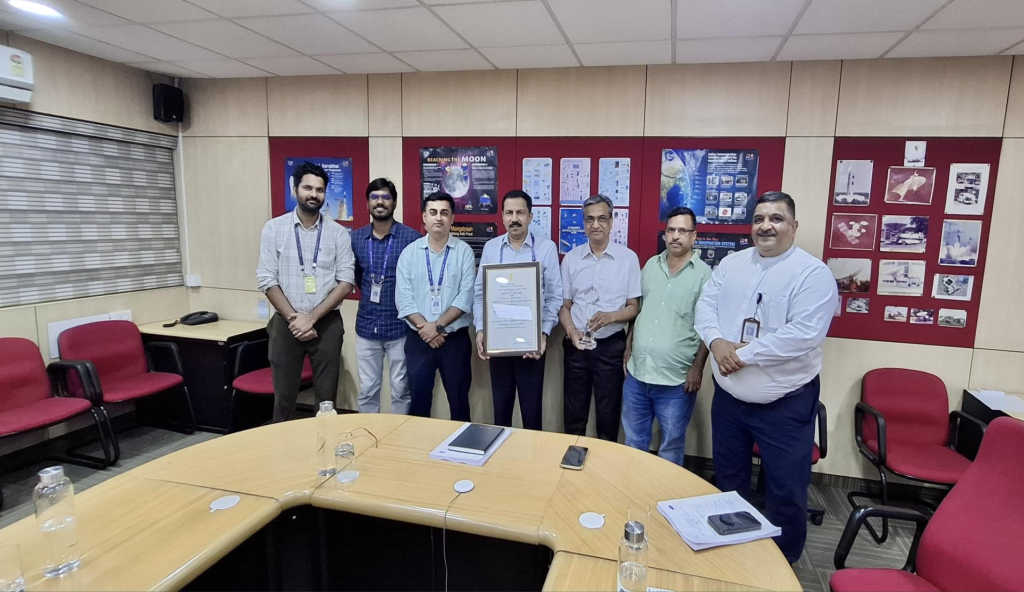
The project reflects the collaborative efforts of scientists and cybersecurity experts at the Space Applications Centre.
The core project team (CITA) includes:
- Yogesh Verma
- Rohit Tyagi
- Om Prakash Soni
- Ajay K. Sharma
Working in coordination with the Office of the Chief Information Security Officer, Department of Space, the team successfully built an indigenous platform capable of securing one of the country’s most critical technological ecosystems.
Why the Achievement Matters
Cybersecurity has become an essential pillar of national security.
As satellites increasingly support telecommunications, navigation, disaster management, defence, banking, weather forecasting, agriculture, and digital governance, protecting the infrastructure that powers these services is no longer optional—it is strategic.
The SAC platform demonstrates how indigenous innovation can reduce dependence on imported cybersecurity products while providing customised protection tailored specifically for India’s operational needs.
Its AI-driven architecture, automated threat intelligence capabilities, privacy-preserving DNS security, and nationwide deployment collectively establish a new benchmark for cybersecurity within government infrastructure.
Understanding the National Awards for e-Governance
The National Awards for e-Governance (NAeG) are among the Government of India’s most prestigious recognitions for excellence in digital governance.
Presented annually, the awards honour innovative projects that leverage digital technologies to improve governance, strengthen public service delivery, enhance transparency, and improve efficiency across government institutions.
The 2026 awards recognised excellence across seven categories, including cybersecurity, grassroots governance, and citizen-centric digital services.
The recognition received by SAC reflects how cybersecurity has become a critical component of India’s evolving digital governance framework.
India’s Journey Towards Digital Governance
India’s transformation into a digitally empowered nation has evolved over several decades.
The journey began in the 1970s with the computerisation of government offices, followed by the establishment of the National Informatics Centre (NIC) in 1976 to strengthen ICT adoption.
During the 1980s and 1990s, government departments increasingly adopted computerised workflows and interconnected networks.
A major milestone came in 2006 with the launch of the National e-Governance Plan (NeGP), shifting the focus from simple automation to citizen-centric digital governance.
The establishment of Common Service Centres (CSCs) expanded digital access to rural communities, while the Digital India Mission accelerated large-scale transformation through initiatives such as Aadhaar-enabled welfare delivery, the UMANG platform, Government e-Marketplace (GeM), e-Office, and e-Courts.
The SAC cybersecurity platform represents the next phase of this journey—where digital governance extends beyond service delivery to safeguarding the nation’s critical digital infrastructure itself.
Building a Secure Future for India’s Space Programme
The Gold Award-winning Security Product for Threat Intelligence Distribution and DNS Filtering Service is more than an award-winning technological innovation—it is a symbol of India’s growing capability to develop world-class cybersecurity solutions indigenously.
As cyber threats continue to evolve in complexity and scale, platforms like this will play an increasingly vital role in ensuring that India’s satellites, communication systems, research infrastructure, and future space missions remain secure against invisible digital adversaries.
By combining artificial intelligence, automated threat intelligence, real-time DNS protection, and indigenous engineering, the Space Applications Centre has not only strengthened India’s cyber resilience but has also demonstrated how home-grown innovation can safeguard one of the nation’s most strategic frontiers—space.