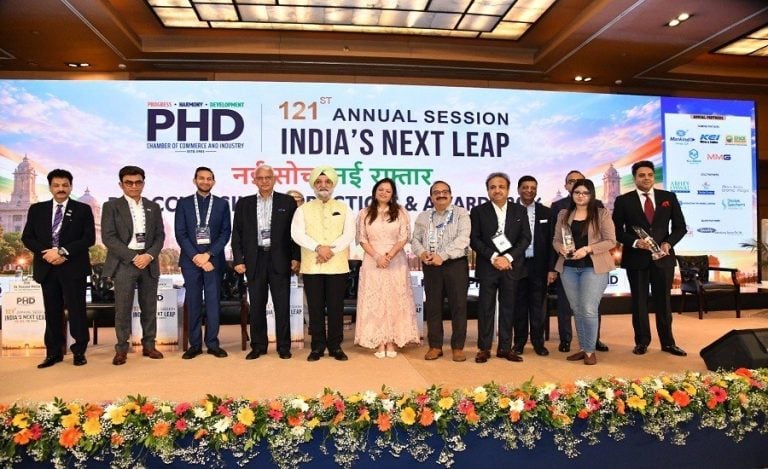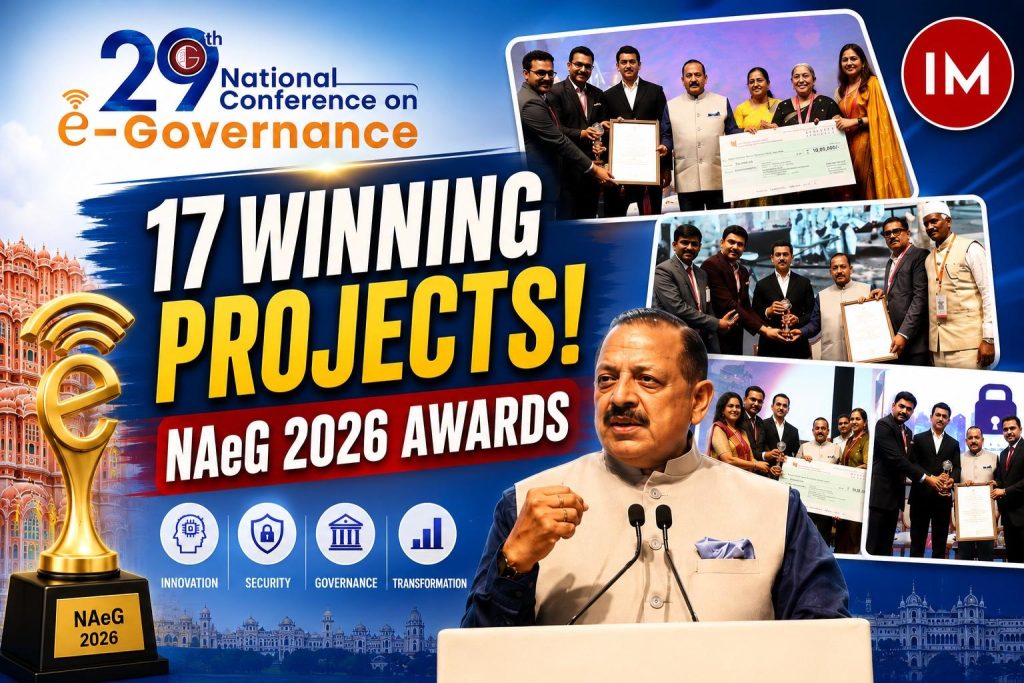
The 29th National Awards for e-Governance (NAeG) 2026 were conferred on July 2, 2026, during the 29th National Conference on e-Governance (NCeG 2026) held at the Rajasthan International Centre in Jaipur, Rajasthan. The awards were presented by Union Minister of State for Personnel, Public Grievances & Pensions Dr. Jitendra Singh, recognising 17 outstanding digital governance initiatives across India.
The two-day conference, held on July 1 and 2, 2026, was jointly organised by the Department of Administrative Reforms and Public Grievances (DARPG), the Ministry of Electronics and Information Technology (MeitY), and the Government of Rajasthan.
Speaking at the event, Dr. Jitendra Singh emphasised that technology must remain human-led and citizen-centric, stating that Artificial Intelligence should strengthen governance rather than replace human judgment. He underlined that India’s digital transformation is rooted in empowering institutions with transparency, accountability, and efficiency, aligned with the vision of “Viksit Bharat 2047: AI-Enabled, Data-Driven and Secure Digital Governance.”
About the National Conference on e-Governance (NCeG 2026)
The 29th National Conference on e-Governance served as a major platform for dialogue, innovation, and collaboration in digital governance. The event witnessed participation from around 2,700 delegates, including representatives from over 1,000 startups and more than 400 academic institutions.
A large-scale exhibition showcased over 40 digital governance initiatives, including AI-based solutions, cybersecurity frameworks, and award-winning e-governance projects from across India.
The conference featured:
- Three plenary sessions and six breakout sessions on Day 1
- Sessions covering AI, quantum computing, deep tech, voice-first technologies, and secure digital infrastructure
- Three plenary sessions on Day 2 followed by the awards ceremony
The conference concluded with the adoption of the Jaipur Declaration on e-Governance 2026, outlining a national roadmap for AI-enabled, secure, and citizen-focused governance systems.
About National Awards for e-Governance (NAeG)
The National Awards for e-Governance (NAeG) are presented annually to recognise excellence in implementing digital governance initiatives across India. The awards aim to promote innovation, citizen-centric service delivery, and technology-driven administrative reforms.
For 2026, awards were presented across seven categories, including grassroots governance, cybersecurity, AI-driven services, and digital transformation.
Award Categories (2026)
- Government Process Re-engineering using technology
- AI and new-age innovation for citizen services
- Cybersecurity in e-governance
- District-level initiatives
- Gram Panchayat-level digital governance
- Replication and scaling of successful models
- Data analytics-driven digital transformation
29th NAeG 2026: Awards Overview
A total of 17 projects were honoured:
- 🥇 10 Gold Awards
- 🥈 6 Silver Awards
- 🏆 1 Jury Award
Award Benefits
- Gold Award: Trophy + Certificate + ₹10 lakh incentive
- Silver Award: Trophy + Certificate + ₹5 lakh incentive
The incentives are directed toward strengthening project implementation or addressing public welfare gaps.
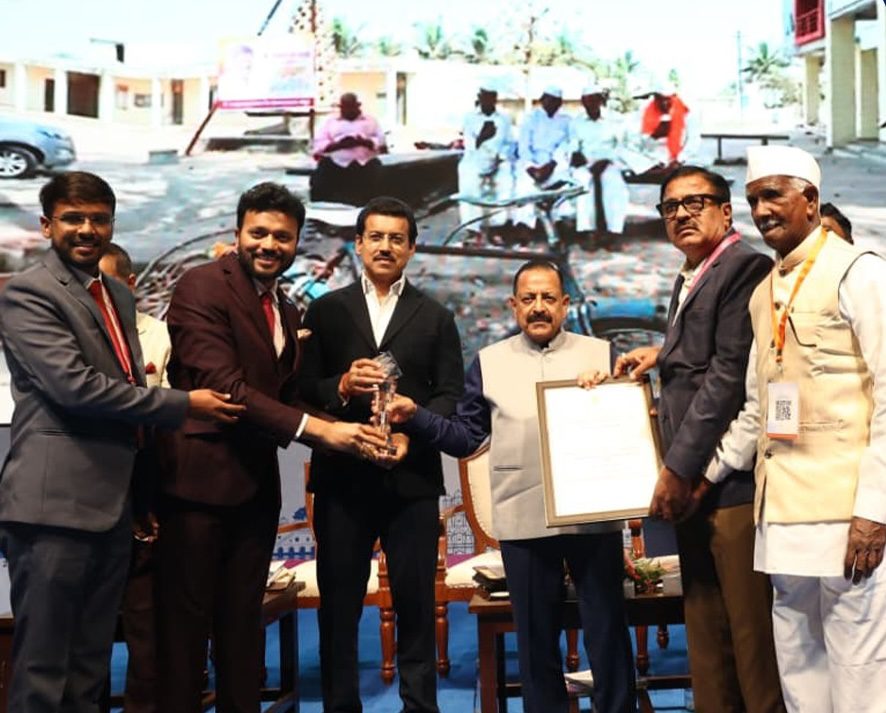
Complete List of Award-Winning Projects (NAeG 2026)
🥇 Gold Award Winners
1. Agri Stack – Ministry of Agriculture & Farmers Welfare
A digital agricultural ecosystem that builds verified farmer databases and enables access to crop advisory, credit, insurance, and welfare schemes.
2. e-Jagriti – Ministry of Consumer Affairs
An integrated consumer grievance platform enabling online complaint filing, tracking, and faster dispute resolution. The platform was recognized for completely modernizing consumer justice delivery by integrating four legacy applications – OCMS, e-Daakhil, NCDRC CMS, and CONFONET – into a unified, paperless ecosystem.
This transformation successfully accelerated case management, enabling consumers globally to file complaints and attend virtual hearings seamlessly.
3. Mahakumbh 2025 – Prayagraj Mela Authority
A large-scale digital crowd management system using AI, drones, GIS, and CCTV for efficient pilgrimage management.
4. Blood Bag Traceability Portal – Kerala Development and Innovation Strategic Council
A real-time tracking system ensuring safe, transparent, and efficient blood supply management.
This innovative platform leverages blockchain technology and advanced RFID tracking to monitor the complete lifecycles of blood bags from donation centers to recipient hospitals across Kerala.
5. AI-enabled Clinical Decision Support in eSanjeevani – Ministry of Health and Family Welfare
AI-powered clinical assistance tool supporting doctors in telemedicine diagnosis and treatment decisions.
The platform was recognised for integrating an AI-enabled Clinical Decision Support System (CDSS) into the eSanjeevani national telemedicine framework to enhance grassroots medical diagnoses.
6. District Court Case Management System – High Court of Kerala
Digital judiciary platform improving case tracking, scheduling, and court efficiency. The initiative was honored for revolutionizing judicial administration through advanced digital transformation, transforming sub-ordinate courts into paperless, highly efficient environments.
By integrating a centralised digital workflow, the platform streamlines the entire life cycle of a legal case, enabling real-time tracking of files, automated listing, and digital case file storage.
7. ICMR-MINDS – Indian Council of Medical Research
A centralised research data platform enabling medical collaboration and evidence-based public health decisions.
8. Security Product for Threat Intelligence & DNS Filtering – Space Applications Centre
Cybersecurity system blocking malicious domains and providing real-time threat intelligence. The center was honored for developing an in-house Security Product for Threat Intelligence Distribution and DNS Filtering Service.
This defence platform was recognised for pioneering a secure digital ecosystem that protects critical space sector systems, ground stations, and communication lines.
9. e-Nagar Palika with Cyber Security – Urban Development Department, MP
Secure municipal e-governance platform for online civic services and citizen engagement. Re-engineered using a “Security by Design” approach across 413 urban local bodies, it successfully integrates a Zero Trust Architecture and end-to-end encryption.
This robust cyber security framework guarantees safe data transactions for millions of citizens accessing online municipal services and utility payments.
10. Integrated Cyber Security for Digital Banking – Bank of Baroda
A cybersecurity framework protecting digital banking systems from evolving cyber threats. The bank was recognised for its pioneering initiative, Integrated Cyber Security for Digital Banking, which establishes a next-generation security framework to safeguard digital financial transactions.
By leveraging advanced Artificial Intelligence (AI) and Machine Learning (ML) models, the system continuously analyses transaction patterns in real time to detect, predict, and proactively block sophisticated fraudulent activities.
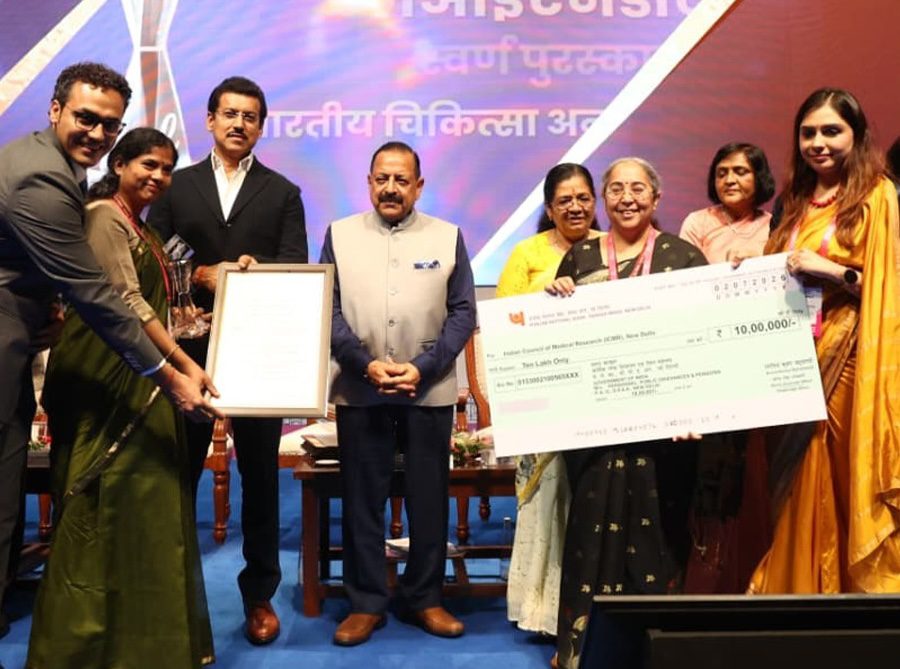
🥈 Silver Award Winners
11. e-Aarogya Dhamni – Zilla Parishad Nandurbar Health Department
Digital healthcare delivery system improving medical services in rural and tribal regions. This initiative built an Integrated Tribal Health Ecosystem that extends digital healthcare to nearly 70% of the district’s tribal population.
12. Pune 360 – Pune Municipal Commission
Integrated smart city platform providing unified access to municipal services. This comprehensive platform unifies urban administration by integrating AI-powered public grievance management and WhatsApp chatbots for direct service delivery.
13. Kadepur Gram Panchayat – Sangli District Administration
Model digital Gram Panchayat improving transparency and rural service delivery. It is the first Gram Panchayat in India to implement a completely paperless e-Office system, delivering over 1,355 online services to local beneficiaries.
The village utilizes blockchain-backed record management for tamper-proof documents, GIS mapping for property geo-tagging, and 8 distinct AI applications for administrative tasks.
14. Bijoy Nagar Gram Panchayat – West Tripura District Administration
Digitally empowered local governance model promoting citizen participation. As the first in Tripura to achieve 100% legacy data digitization, the panchayat secured a Grade-A score (88.55) on the Panchayat Advancement Index.
Key achievements include implementing a full e-Office for over 100 services, AI-based learning, the “Gram Barta” platform, 100% digital literacy for local women, and a 194% increase in own source revenue
15. TRINETRA AI Surveillance – Mahakaleshwar Temple Trust
AI-based surveillance system enhancing security and crowd monitoring in temple premises.
Operating as the digital “third eye” of the temple, this system integrates over 500 to 700 AI-enabled high-resolution cameras across the temple complex and the Mahakal Rudrasagar Integrated Development Area (MRIDA).
16. Panchayat Advancement Index – Ministry of Panchayati Raj
Performance evaluation framework measuring Gram Panchayat development and governance efficiency.
Recognised under the category Digital Transformation through the Use of Data Analytics in Digital Platforms, this indigenous framework operates as the world’s first nationwide, objective report card to evaluate and rank over 2.6 lakh Gram Panchayats.
By analysing 230 data points and 150 indicators, it maps local bodies against nine critical themes of the Localisation of Sustainable Development Goals (LSDGs)—including sanitation, health, and infrastructure—to eliminate subjective biases.
🏆 Jury Award
17. Real-Time Precise Positioning via CORS Network – Survey of India
A high-precision satellite-based positioning system supporting mapping, surveying, infrastructure development, and precision agriculture.
Key Ministerial Address: AI Must Serve People, Not Replace Them
Addressing the awards session, Dr. Jitendra Singh highlighted that Artificial Intelligence is now essential in governance, but its success depends on responsible and ethical deployment.
He stated, “The real question is not artificial intelligence alone; the question is how intelligent we are in using artificial intelligence.”
He emphasised that India’s governance model is not about replacing human decision-making but enhancing it through technology, ensuring:
- Transparency
- Accountability
- Efficiency
- Citizen-first service delivery
He further stressed that human-led AI will define India’s journey toward Viksit Bharat 2047, combining machine efficiency with constitutional values and democratic oversight.
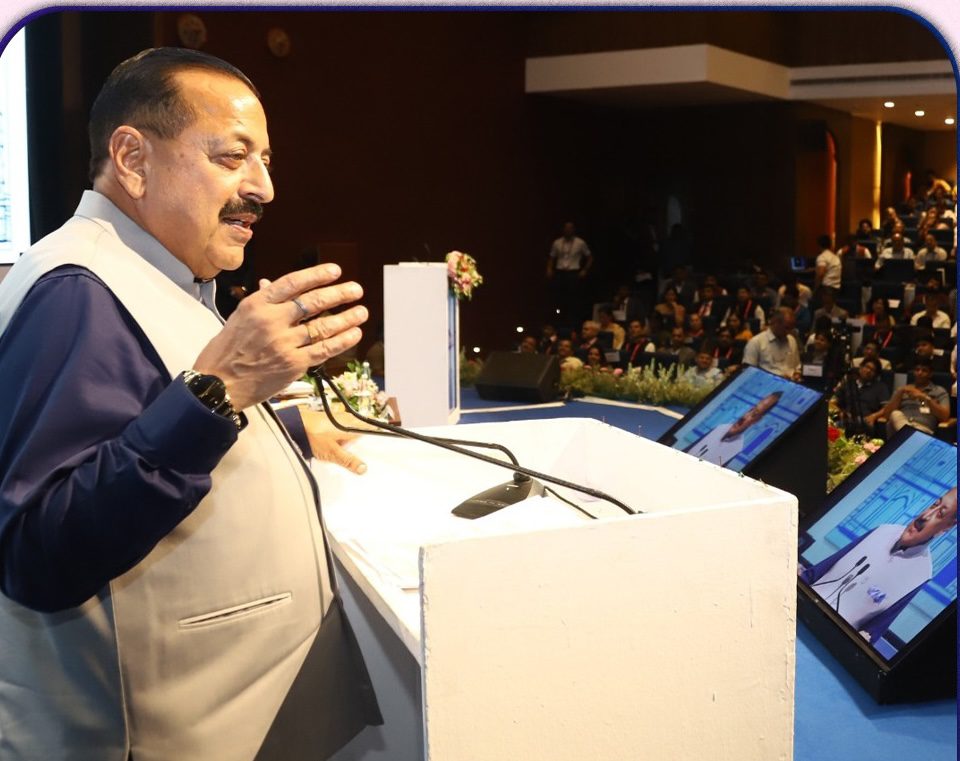
Dr. Singh said India’s digital governance ecosystem has been strengthened through initiatives such as the National e-Governance Service Delivery Assessment (NeSDA), Digital Public Infrastructure and the IndiaAI Mission, enabling faster, smarter and more transparent public services. He stressed that India’s AI approach is human-centric, using technology to complement people while advancing the vision of “Maximum Governance, Minimum Government.”
Highlighting citizen-centric reforms, he said platforms like CPGRAMS and the AI-powered multilingual chatbot SAMADHAN DIDI, developed with BHASHINI, have made grievance redressal and public services more accessible, efficient and inclusive. He also underscored the importance of administrative reforms through Special Campaign 5.0 and Mission Karmayogi, which are improving workplace efficiency and equipping civil servants with future-ready skills in AI, cybersecurity and digital governance.
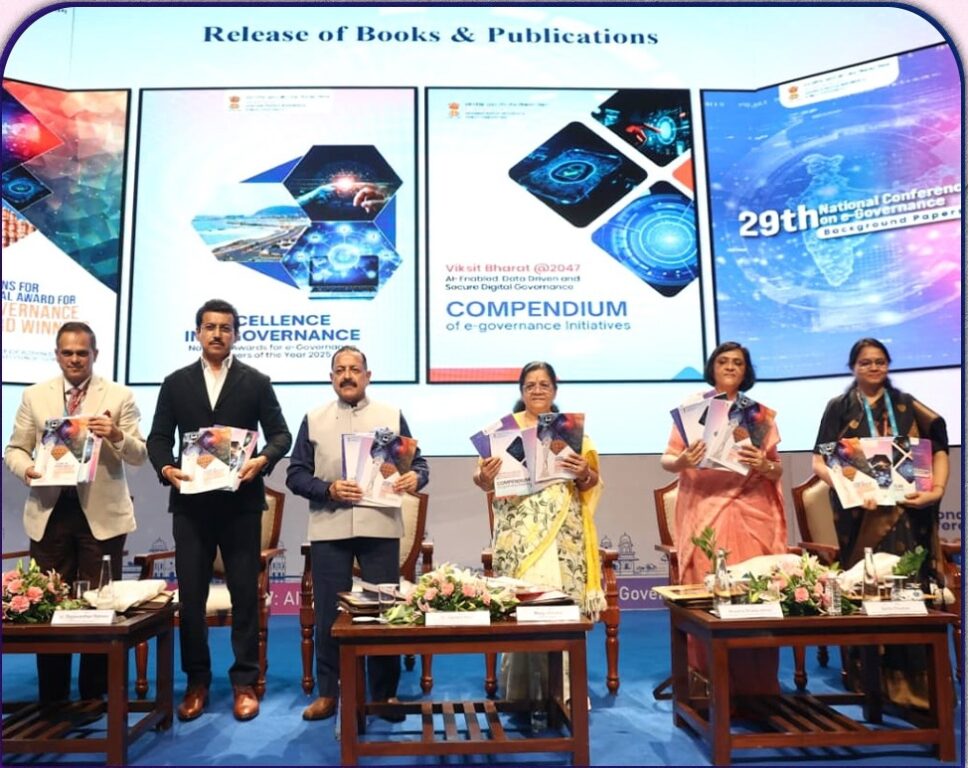
Initiatives and Publications Released
During the valedictory session, several key publications were released, including:
- Citations for NAeG 2026 Award Winners
- Background Papers of NCeG 2026
- Excellence in e-Governance (NAeG 2025 compendium)
- “Viksit Bharat @ 2047: AI-Enabled, Data-Driven and Secure Digital Governance” initiative compendium
These publications highlight best practices, governance reforms, and scalable digital models across India.
The Sessions at Conference
The conference, held from July 1 to July 2, featured six plenary sessions and six breakout sessions. More than 60 speakers from diverse backgrounds shared their insights and showcased best practices across a wide range of sub-themes, including:
Plenary Sessions:
- AI-Based Governance for All
- Bridging Digital Divide – Voice First Solutions in Important Public Services
- Deep Tech and Quantum Driven Digital Transformation
- AI for Smart Policing and Public Safety
- Citizen-Centric Governance: Inclusive Governance
- Digital Interventions to Enhance Access and Quality of School Education
Breakout Sessions:
- Driving Urban Transformation through Technology
- AI and Digital Infrastructure for Secure Public Services
- Grassroots Governance: Digital, Decentralized and Data-Driven
- Excellence in e-Governance Initiatives by Gold Awardees of NAeG 2026 – I
- Excellence in e-Governance Initiatives by Gold Awardees of NAeG 2026 – II
- Empowering Youth, Accelerating Innovation, Transforming Governance
Valedictory Session: Vision for Future Governance
At the valedictory session, Dr. Jitendra Singh reiterated that AI and emerging technologies are now integral to governance, but must be deployed with responsibility and citizen focus.
He called for:
- Greater innovation in governance systems
- Stronger digital capacity building
- Inclusive and secure digital ecosystems
- Technology aligned with public trust and constitutional values
He reaffirmed the government’s commitment to building a responsive, transparent, and future-ready governance framework under Viksit Bharat @ 2047.
Jaipur Declaration 2026: Roadmap for Digital India
The conference concluded with the adoption of the Jaipur Declaration on e-Governance 2026, which outlines a national roadmap for:
- AI-enabled governance systems
- Strengthening digital public infrastructure
- Cybersecurity and data governance
- Citizen-centric service delivery
- Innovation-driven administrative reforms
The declaration reflects a collective commitment by the Centre and States to accelerate India’s transformation into a secure, efficient, and digitally empowered nation.
Dignitaries and High-Level Presence
The awards ceremony and conference were attended by several senior leaders, including:
- Col. Rajyavardhan Rathore, Minister for IT & Communication, Rajasthan
- Mr V. Srinivas, a 1989 batch IAS officer and Chief Secretary, Rajasthan Government
- Ms Nivedita Shukla Verma, an IAS officer of 1991 batch and Secretary, DARPG and DoPPW
Rajasthan Chief Minister Bhajan Lal Sharma inaugurated the conference and accompanying exhibition showcasing state-led digital innovations.
A New Chapter in India’s Digital Governance Journey
The 29th National Awards for e-Governance 2026 in Jaipur marked a significant milestone in India’s digital governance journey. With 17 innovative projects recognized across diverse sectors, the event showcased how technology – especially AI – is reshaping governance at every level, from Gram Panchayats to national institutions.
Guided by the vision of Viksit Bharat 2047, the conference reinforced a central message: technology must empower people, not replace them – and governance must always remain human at its core.