For generations, the forests of Nagaland have been protected not only through formal conservation systems but also through community institutions and traditional knowledge. Among the state’s tribal communities, forests are closely linked with livelihoods, culture and everyday life.
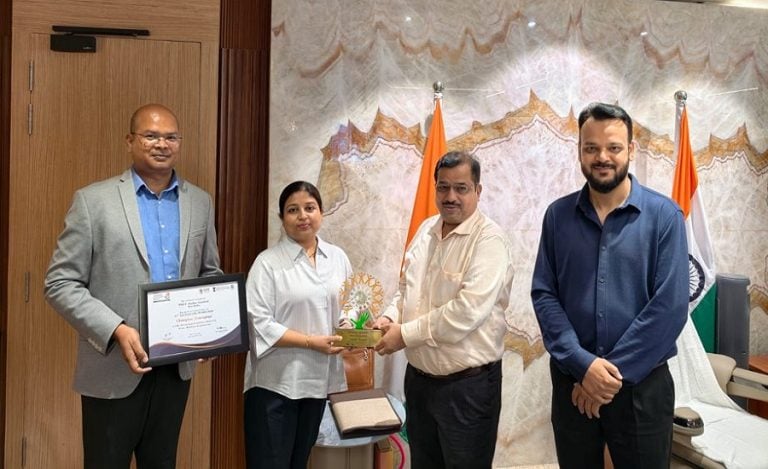
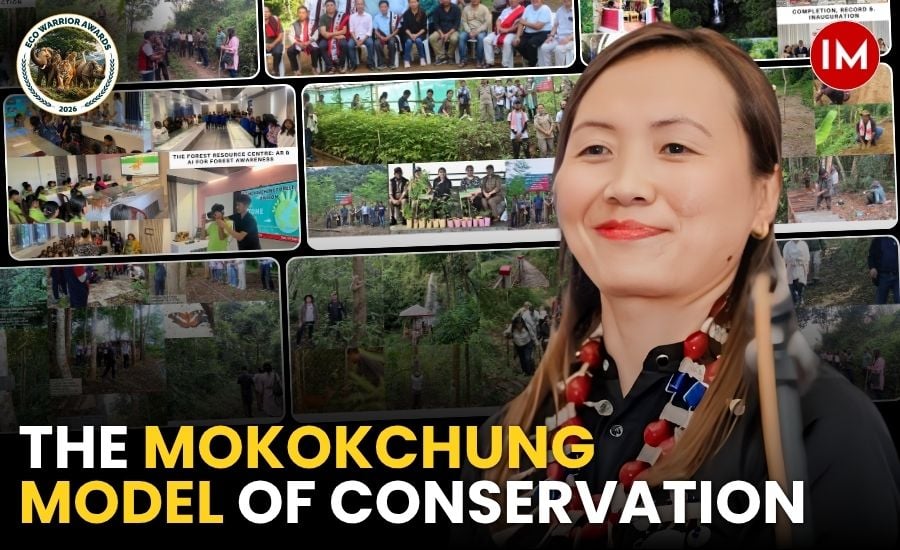
It was this relationship that shaped the Mokokchung Model of Community Conservation, pioneered by Dr Sentitula Pongen, IFS, a 2011-batch Nagaland cadre officer, during her tenure as Divisional Forest Officer and Head, Divisional Management Unit, Mokokchung Forest Division.
Today, Dr Pongen is posted as Director (Tourism & Industries), North Eastern Council Secretariat, Shillong, but her work in Mokokchung offers an important example of how forest restoration can work alongside traditional agricultural practices rather than replacing them.
The model was developed under the Ministry of Environment, Forest and Climate Change’s Nagar Van Yojana and NFMP–JICA, with an approach that placed village institutions and local communities at the centre of conservation planning.
For Dr Pongen, the starting point was simple: conservation in a tribal landscape cannot be separated from the people who have traditionally managed it.
“In a tribal area, the forest and the community cannot be separated. And the knowledge of conservation is always rooted in the community,” she shared in a conversation with Indian Masterminds.
Nagaland has a distinctive land ownership pattern, with more than 80% of its forests under community ownership and management through traditional village institutions. This meant that any attempt to restore degraded forests had to involve the communities from the beginning.
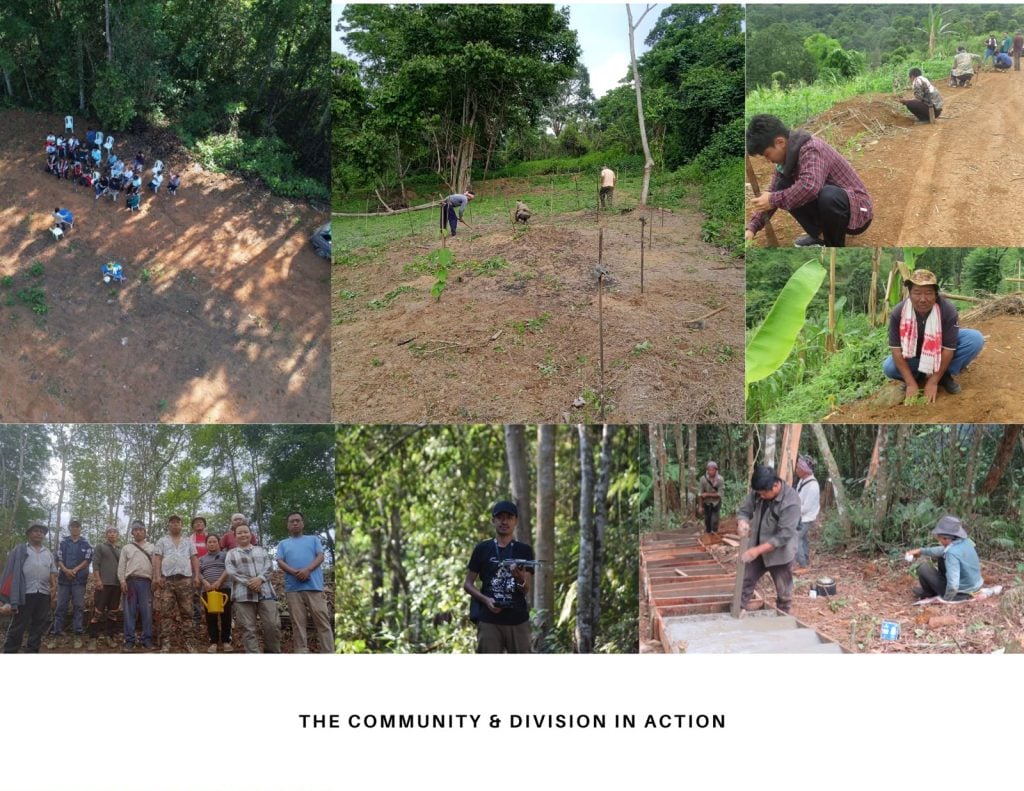
Rather than introducing conservation as a set of external rules, the Mokokchung approach sought to work with existing village systems. Community members participated in mapping, documentation, plantation, and forest management, while traditional knowledge was combined with modern scientific tools.
Working With Jhum, Not Against It
One of the biggest challenges was finding a way to balance forest restoration with jhum cultivation, the traditional shifting cultivation system that remains an important source of livelihood in Nagaland.
According to Dr Pongen, jhum is followed by around 60% of the population, covers nearly half of the state’s land area, and contributes approximately two-thirds of the food produced for local sustenance.
Instead of asking communities to abandon the practice, the Mokokchung model focused on improving it.
“The community should not abandon this jhum but rather choose to improve it,” says Dr Pongen.
Traditional jhum systems involve cultivating land for a limited period and then leaving it fallow so that the soil and vegetation can recover. Depending on land availability, fallow periods can range from around seven years to more than a decade.
The model worked with these fallow landscapes and explored ways to turn them into community-managed green spaces while allowing ecological regeneration to continue.
The approach included jhum agroforestry, jhum fallow forestry, conversion of selected jhum areas to forestry, conversion of jhum areas into community conservation areas, and protection and rejuvenation of existing community conservation areas.
This flexibility was important because every village had a different land-use pattern. Where active jhum was being practised, agroforestry could be introduced. Where existing community conservation areas were available, interventions focused on regeneration and management.
Technology became another component of the restoration programme. Communities were introduced to GPS mapping and drone-based documentation, enabling them to participate in documenting and monitoring their own landscapes.
At the same time, traditional practices such as stone-wall conservation were incorporated into restoration and agricultural planning.
The idea was not to replace indigenous knowledge with technology but to allow both systems to complement each other.
Making Communities Partners in Conservation
The success of any community conservation programme depends heavily on trust. For Dr Pongen, that trust cannot be created through instructions alone.
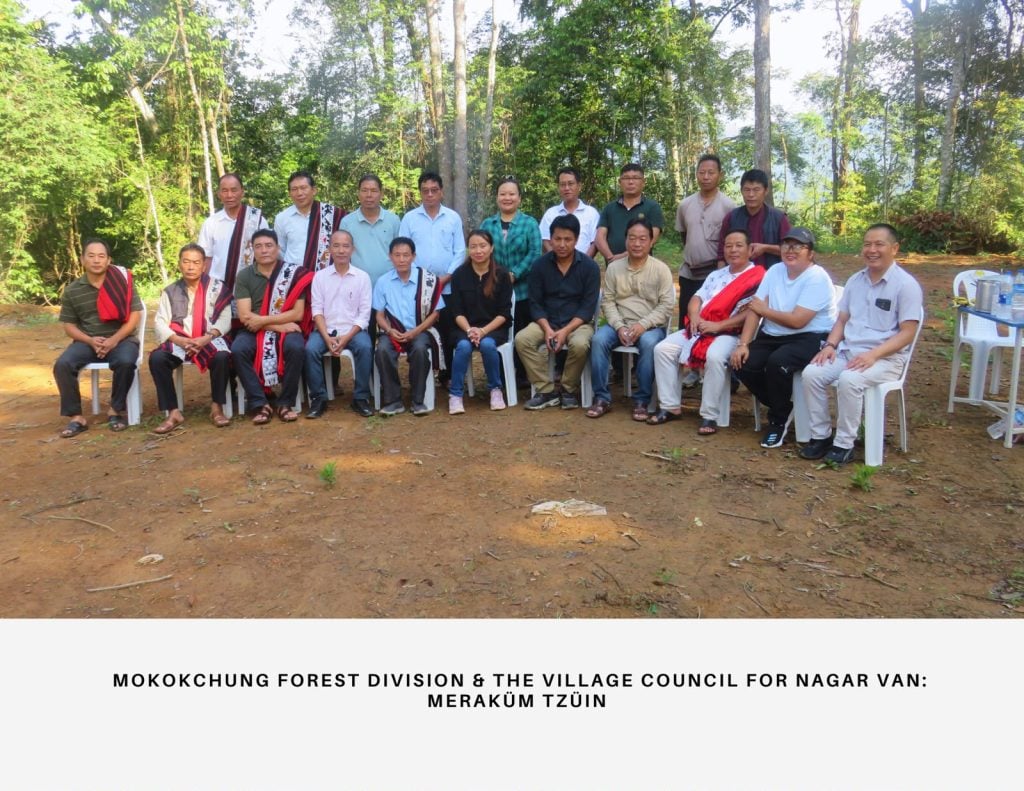
“It is they who conserve. We just help them, assist them, and consult them. In this way the communities were made the leaders in forest protection,” she says.
This participatory approach meant that conservation was presented not simply as a government programme but as something communities could claim ownership of.
Village institutions were brought into the process, with discussions around forests, land use, and restoration taking place alongside local knowledge and existing practices.
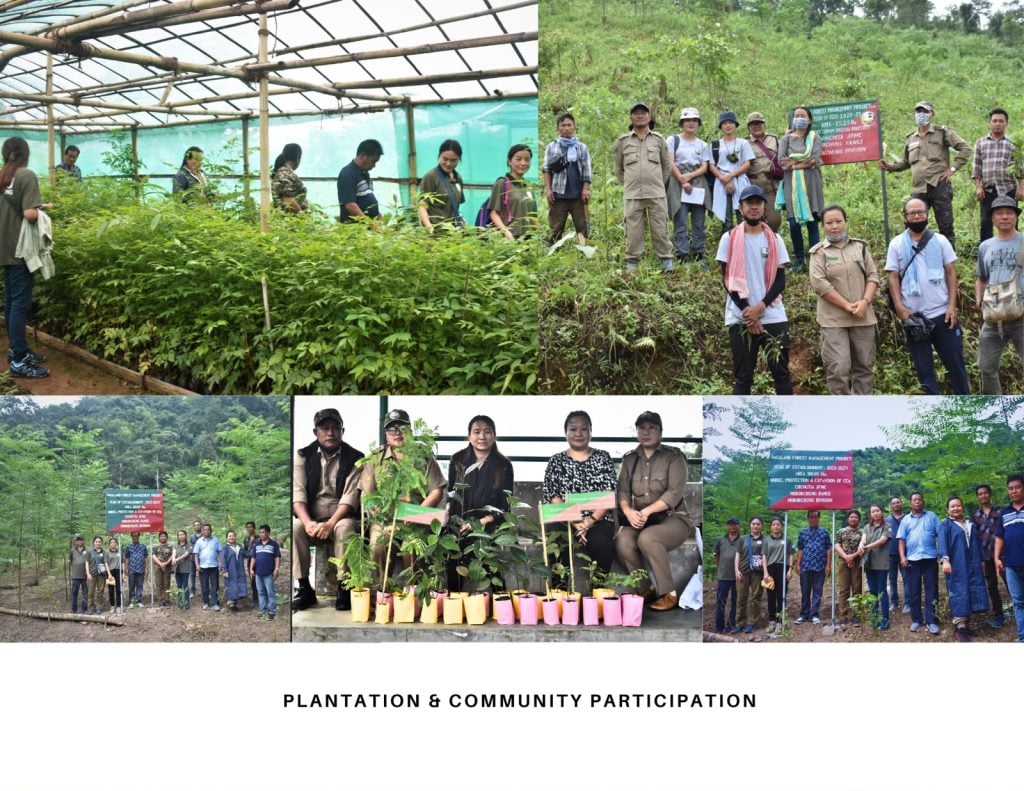
The approach also drew upon the traditional relationship between communities and forests, including the protection of sacred groves that have survived across generations without formal enforcement.
By strengthening this existing connection, the model sought to make conservation a shared responsibility rather than an externally imposed obligation.
Five Models, One Restoration Strategy
The Mokokchung model did not depend on a single method of afforestation. Instead, five different restoration models were used depending on the conditions in individual villages.
These included jhum agroforestry, jhum fallow forestry, jhum conversion to forestry, jhum conversion to community conservation areas, and protection of existing community conservation areas.
This village-specific approach allowed the Forest Department to adapt interventions according to local requirements.
Across 14 villages, around 4,968 hectares were restored between 2020 and 2024, while nearly 10 lakh saplings were planted during the same period. Forest cover in the area increased by 14.88 sq km, while 42 self-help groups were created to support livelihood opportunities linked to the broader programme.
The restoration effort therefore went beyond plantation. It attempted to connect ecological recovery with livelihood generation and community participation.
A Forest That Becomes a Classroom
The Mokokchung initiative also developed infrastructure aimed at making conservation more accessible and educational.
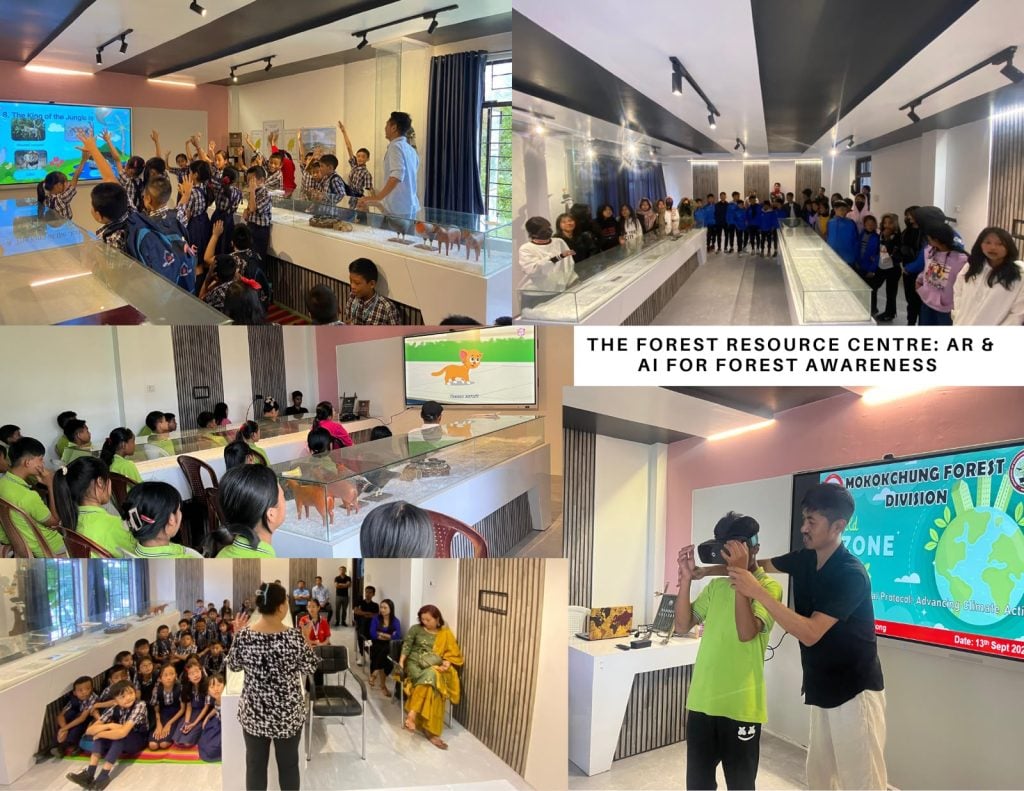
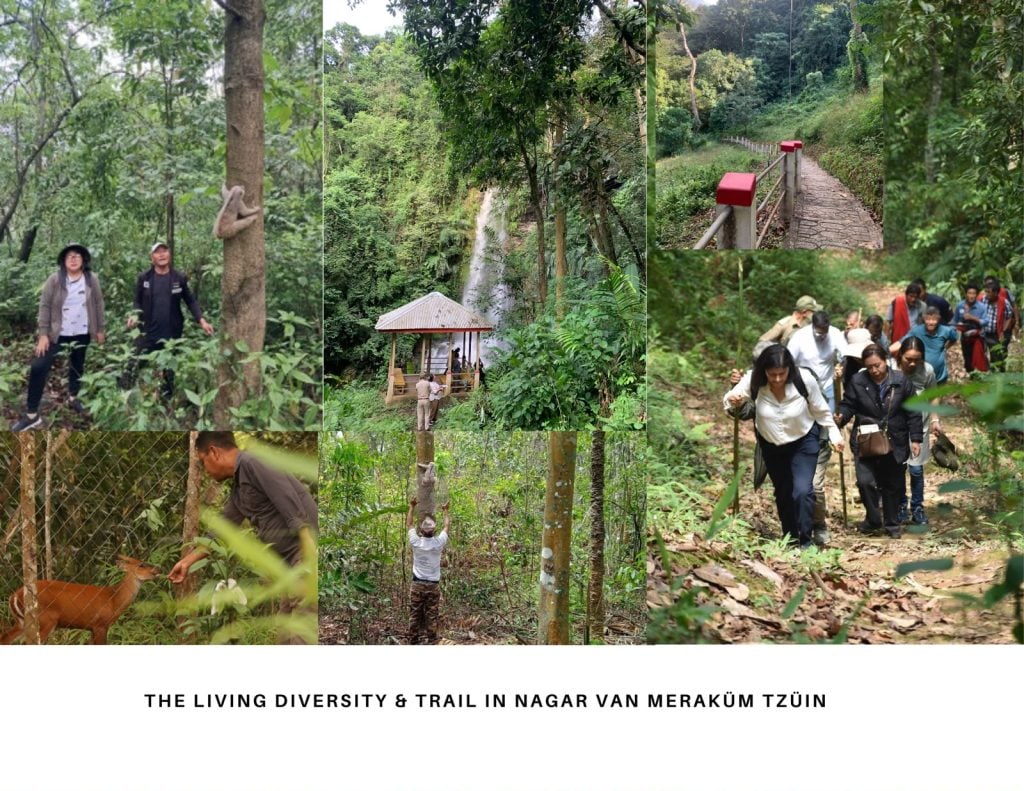
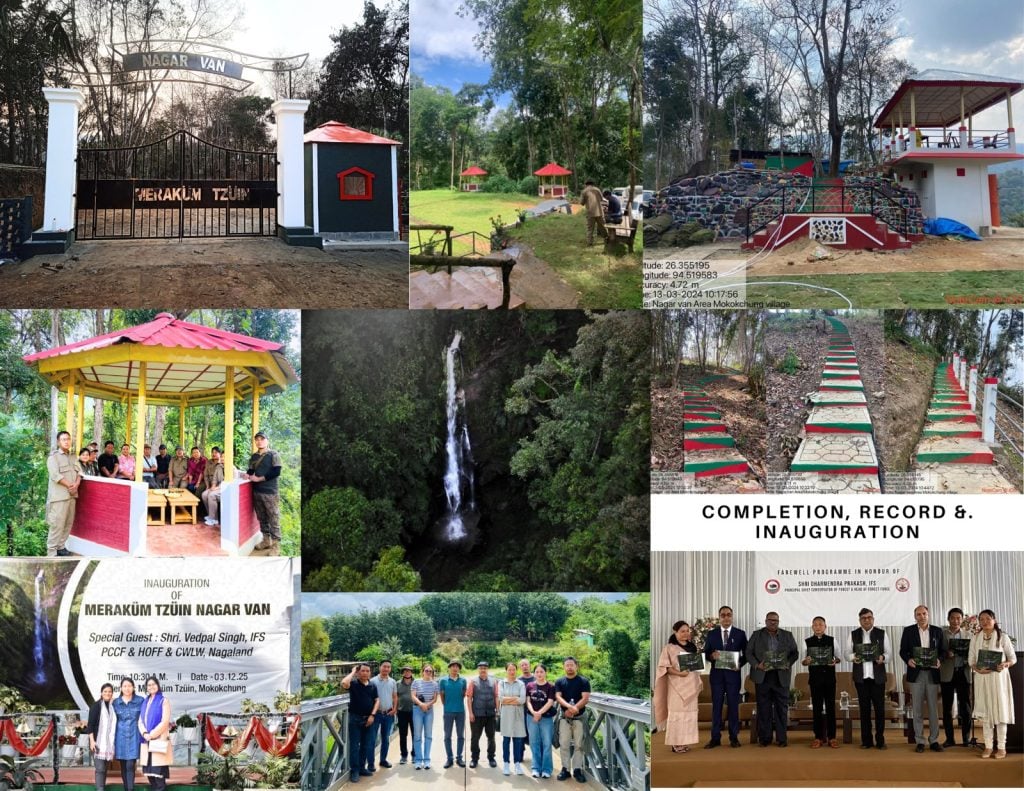
Around 50 hectares of degraded jhum fallow land were transformed into a community-managed Nagar Van. The site incorporates a living lab, designed as an open learning space where visitors, students, researchers, and communities can understand forest restoration on the ground.
The Nagar Van also features QR-coded tree interpretation, a Forest Resource Centre with quizzes, pamphlets and virtual forest experiences, and an Eco-Trail designed around hiking, biodiversity learning and forest-based experiences such as Shinrin-yoku, or forest bathing.
A Bio-Amphitheatre adds another space for environmental education, while a Coffee Table Chronicle documents the development and journey of the project.
The Living Lab concept is particularly significant because Dr Pongen sees the Mokokchung experience not as a template that every region must copy but as a field-based space where conservation practices can be observed, studied and improved.
A Living Laboratory for Future Conservation
For Dr Pongen, perhaps the biggest value of the Mokokchung Model lies in the questions it can help researchers explore.
“We can only say that this can be used as a living lab. Whatever findings that we had can be used as a living lab for conservation—as researchers and academicians—where community conservation is a lab where the science learns from the tradition.”
The model could provide a field setting for future research on carbon sequestration, soil revival, biodiversity recovery and ecological restoration.
Its broader lesson is not that one conservation model can be transplanted unchanged across India. Instead, it demonstrates the value of understanding local institutions, land-use systems and traditional ecological knowledge before designing restoration strategies.
The Mokokchung experience shows that forest restoration and traditional livelihoods do not necessarily have to exist in conflict. With the right planning, technology, community participation and scientific support, they can operate together.
As Dr Pongen puts it, “The jhum cultivation and forest conservation go hand in hand, mutually supporting each other.”
The Mokokchung Model thus offers a field-tested approach to community conservation where traditional knowledge is not treated as something from the past but as a resource that can inform modern ecological restoration.