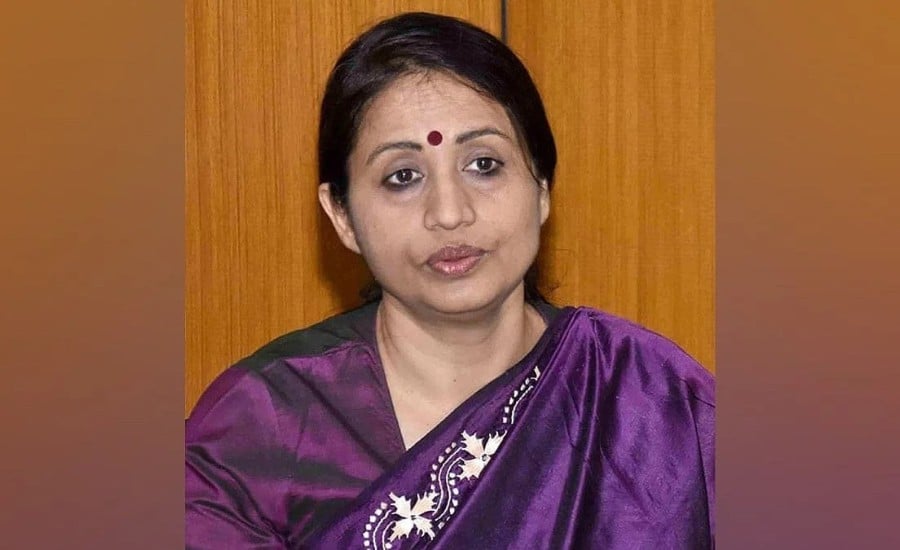
Bengaluru: Karnataka’s experience in digital governance and administrative reforms could offer useful lessons to other countries, with a high-level delegation from Africa visiting the state and meeting Chief Secretary Dr. Shalini Rajneesh, a 1989-batch IAS officer of the Karnataka cadre, to understand its e-governance practices and initiatives aimed at strengthening technology-led public administration.
During the interaction, Karnataka officials briefed the delegation on the state’s approach to digital governance, including measures to build computer literacy among government personnel and integrate technology into administrative processes.
The delegation comprised senior officials from Ethiopia, Malawi, Rwanda, Sierra Leone and Zambia, who visited Karnataka to gain insights into the state’s digital governance systems and administrative practices.
Karnataka’s Computer Literacy Requirement
A key initiative highlighted during the interaction was Karnataka’s Computer Literacy Test (CLT) for government employees.
Read Also: Karnataka KPSC Exam Scam: IAS Officer Gyanendra Gangwar Arrested After 20-Hour CID Grilling
Under the Karnataka Civil Services (Computer Literacy Test) Rules, 2012, eligible government employees are required to pass the test, with the rules linking successful completion to aspects of career progression. The Karnataka government’s official CLT portal states that the test is mandatory for government employees under the applicable rules.
The framework provides for:
- Computer literacy testing for eligible government employees.
- A minimum 50 per cent score for direct recruits covered by the rules.
- A minimum 35 per cent score for applicable in-service employees.
- Passing the test as a requirement for promotion under the prescribed conditions.
- Passing the test as a requirement for annual increments under the prescribed conditions.
- Exemptions for specified categories of posts under the rules.
Focus on Digital Capacity in Government
The interaction also highlighted Karnataka’s broader experience with technology-enabled governance. Dr. Shalini Rajneesh has previously been associated with the state’s e-governance and administrative reform initiatives, including work related to citizen-centric service delivery and business process re-engineering.
Karnataka has developed several digital governance platforms and systems over the years, with e-governance forming an important component of its administrative reform efforts.
Why Does Computer Literacy Matter in Public Administration?
The state’s approach links digital competency with the functioning of government offices, where officials increasingly rely on electronic systems for communication, records, service delivery and administrative decision-making.
Karnataka’s Computer Literacy Test framework was introduced to institutionalise computer skills among eligible civil servants, with the rules making the qualification relevant to promotion and increments for applicable employees.
Karnataka Shares Governance Experience With African Delegation
The visit provided an opportunity for the visiting delegation to examine Karnataka’s administrative practices and technology-led governance initiatives.
The engagement comes against the backdrop of growing international interest in India’s digital public administration experience, with Karnataka having developed a range of e-governance initiatives and institutional mechanisms for technology-enabled service delivery.
Who Is Shalini Rajneesh?
Dr. Shalini Rajneesh is a 1989-batch IAS officer of the Karnataka cadre and serves as the Chief Secretary of Karnataka. She holds an MBA in Business Administration and a Ph.D. in Political Science, along with degrees in Psychology.
Rajneesh is known for pioneering the Sakala Mission, Karnataka’s initiative for assured and time-bound delivery of government services to citizens. Her administrative work has also earned her several recognitions, including the Prime Minister’s Award for Excellence in Public Administration.
Over her career, she has held several senior administrative positions in Karnataka, with experience spanning governance, public service delivery and social-sector administration.