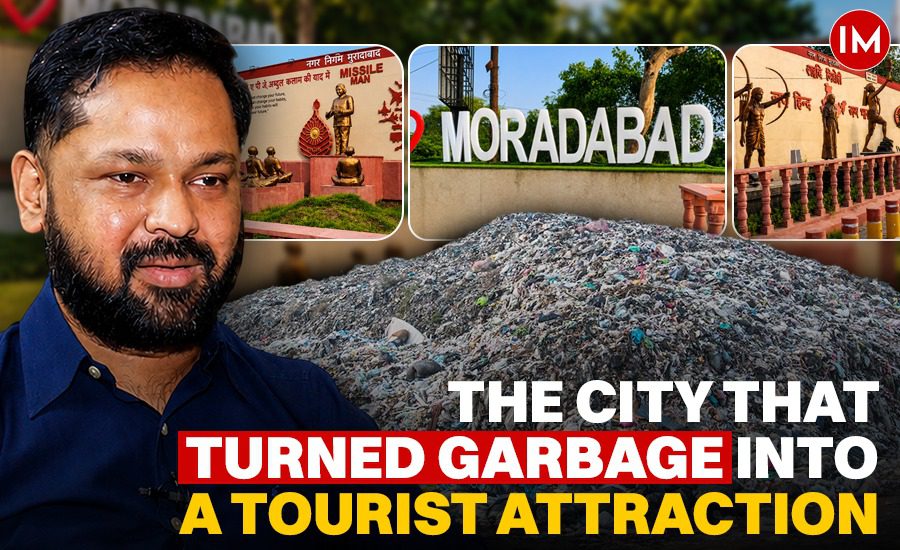
For decades, Moradabad was known across the world as the “Brass City” of India. But the city also grappled with challenges like poor sanitation, unplanned waste disposal, encroachments, frequent traffic snarls, neglected public spaces and inadequate civic infrastructure. Moradabad has however, witnessed a remarkable transformation during past two years, thanks to 2017-batch IAS officer Divyanshu Patel, the Municipal Commissioner of Moradabad, whose innovative and citizen-centric approach to urban governance has helped redefine the city’s image. He spoke to Indian Masterminds about how he transformed the city into a potential tourism hub.
Please watch the full interview by clicking on the link..
He got Moradabad first Tri-service War Museum, first ever Waste Awareness Museum, first museum of indigenous sports, India’s first Samvidhan Park (Constitution Park), Ram Vatika, Hanuman Vatika, Shakti Kendra, a feeding centre cum meeting place for women besides number of other projects. He also adorned city roads with flower pots and red sandstone carved into beautiful yet informative murals on country’s historical figures.
What distinguishes Patel’s style of administration is his belief that cleanliness is not merely a municipal function but a people’s movement. Rather than relying solely on government machinery, he sought to make citizens active stakeholders in the city’s transformation.
Another noteworthy initiative has been the beautification of public spaces. Walls that once bore advertisements and graffiti have been transformed into vibrant murals depicting local culture, heritage and themes of cleanliness. Parks, roadsides and important intersections have undergone extensive improvement, making the city aesthetically more appealing. Such interventions have not only enhanced Moradabad’s visual landscape but have also instilled a sense of civic pride among residents.
A pioneering step that attracted national attention was the establishment of the country’s first Waste Awareness Museum in Moradabad. The museum serves as an educational platform to sensitise citizens, especially children, about waste management, recycling and environmental sustainability. Through interactive exhibits and innovative displays, the museum demonstrates how waste can be converted into a resource. The initiative reflects Patel’s emphasis on long-term behavioural transformation rather than short-term cosmetic changes.
Also Read – From History to Heroism: How NDA’s First Women Cadets Changed the Academy Forever
The administration has also focused on environmental sustainability. Large-scale plantation drives, development of green spaces and initiatives aimed at reducing environmental degradation have contributed to improving the city’s ecological profile. Efforts have been made to revive and maintain public spaces so that citizens can enjoy a cleaner and healthier urban environment.
Technology, too, has played a crucial role in Moradabad‘s transformation. Digital monitoring systems, data-driven decision-making and regular performance reviews have improved service delivery. Citizen feedback mechanisms have been strengthened, ensuring that grievances are addressed more promptly and effectively.
The city’s journey demonstrates that urban transformation does not necessarily require massive financial resources alone. Visionary leadership, community participation and consistent implementation can together produce extraordinary results. Moradabad’s experience offers valuable lessons for other Indian cities aspiring to improve sanitation and urban living standards.
As India urbanises rapidly, stories such as Moradabad’s underscore the importance of innovative governance. They show that when administrators and citizens work together with a shared vision, cities can indeed reinvent themselves and emerge as models of good governance.
Also Read – The 5 am IAS Officer Who Transformed An Entire City