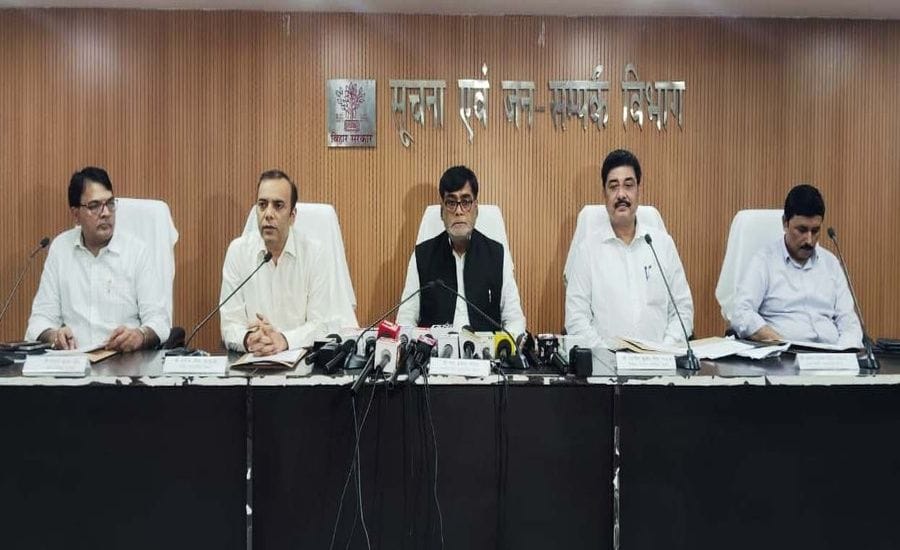
Patna: Bihar is expanding its cooperative network to strengthen the rural economy, create employment and improve market access for farmers. Cooperation Minister Ramkripal Yadav outlined several initiatives during a press conference on August 12.
The plans include new sugar projects, vegetable collection centres, wider banking services, crop insurance and diversification of PACS activities.
New Sugar Complexes Planned
Under the “Samriddh Udyog-Sashakt Bihar” vision of Saat Nischay-3, the state plans to revive closed sugar mills.
A new cooperative sugar mill will come up on the premises of the closed mill at Sakri in Madhubani, while a Model Sugar Complex will be developed at Raiyam in Darbhanga through India Potash Limited.
The complexes will also include:
- Power generation plants
- Distilleries
- Compressed biogas plants
Around 10,000–15,000 sugarcane farmers have already applied to join the cooperative sugar mill societies through the department’s portal.
Read Also: SJVN Commissions 75 MW Jamui Solar Power Project in Bihar, Expands Renewable Energy Portfolio
New Cooperative Policy Targets Jobs
The Bihar State Cooperative Policy 2026 aims to modernise the cooperative sector through technology, digital innovation, transparent administration and better management.
The policy will also encourage cooperatives in non-traditional sectors, with the government expecting them to generate new employment and entrepreneurship opportunities.
Vegetable Booths to Support Farmers
The department plans to establish vegetable collection centres in 350 panchayats and develop related infrastructure in 50 blocks.
Vegetable booths will also be opened through VegFed, following the model of Sudha dairy booths.
The initiative aims to give farmers better access to consumers while creating new local employment opportunities.
Crop Insurance and Farmer Support
The Pradhan Mantri Fasal Bima Yojana will be implemented in Bihar from the Rabi season of 2026-27.
During the Kharif Marketing Season 2025-26, cooperative societies procured 36.79 lakh metric tonnes of paddy from 5.40 lakh farmers through 6,902 societies.
The state has also completed 7,452 warehouses, creating 18.827 lakh metric tonnes of storage capacity.
PACS Expands Beyond Traditional Banking
Around 6,425 PACS have set up Common Service Centres, with 5,807 operational and generating over ₹8.81 crore. Jan Aushadhi Kendras have been approved in 373 PACS, with 36 already operational.
Micro-ATMs operated by rural cooperative societies are also expanding banking access.
100 FPOs Formed in 21 Districts
With support from the National Cooperative Development Corporation, 100 Farmer Producer Organisations (FPOs) have been formed across 100 selected panchayats in 21 districts.
The FPOs will help farmers access markets, secure better prices and obtain agricultural inputs. So far, 50 FPOs have started commercial activities.
Together, these measures aim to make cooperatives a stronger platform for farmer income, rural employment, market access and local economic development across Bihar.
Read Also: Rules Over Recommendations: Bihar Minister Assures Fair Teacher Transfers