In the forests of Madhya Pradesh, where medicinal plants have been part of tribal life for generations, a quiet transformation is underway. It is not just about herbs, oils, or Ayurvedic medicines. It is about livelihoods, women-led leadership, and taking traditional forest wisdom into modern markets.
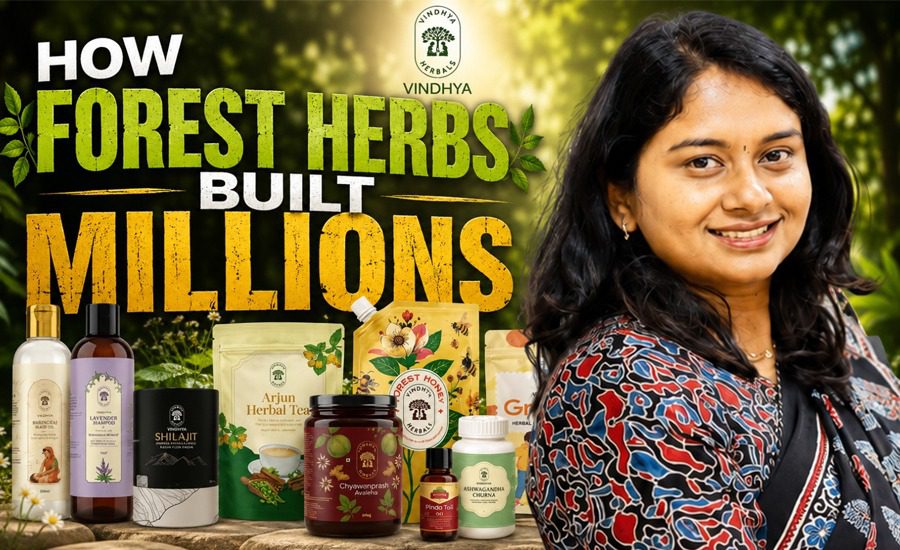
At the centre of this transformation is Gitanjali Janarthanan, a 2020-batch Indian Forest Service officer of the Madhya Pradesh cadre, currently serving as the CEO of MFP-PARC (Minor Forest Produce Processing & Research Centre), the institution behind Vindhya Herbals.
What was once a government-backed herbal brand with a turnover of ₹17 crore has now grown into a ₹42 crore enterprise under her leadership in less than two years.
And for Gitanjali, this is not just business.
“I call it the great Ayurvedic quantum leap,” she shared in an exclusive conversation with Indian Masterminds.
Also read: A Complaint, A Land Dispute, A Business Dream: How IAS Manjunath Bhajantari is Solving It All in Ranchi
THE GOVERNMENT BRAND BREAKING MARKET MYTHS
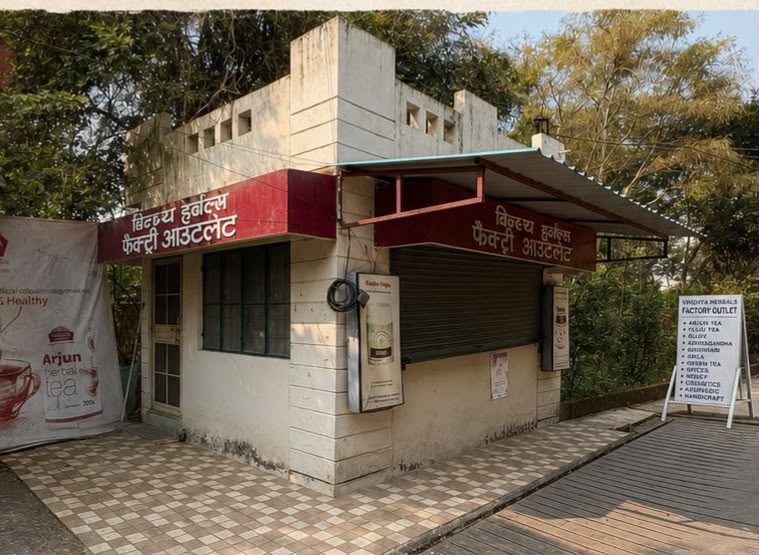
Vindhya Herbals operates under the Madhya Pradesh State Minor Forest Produce Federation, through MFP-PARC, where Gitanjali serves as CEO. Its largest business channel remains institutional—supplying Ayurvedic medicines listed under the essential drug list to the Ministry of AYUSH, contributing nearly ₹35-40 crore annually.
Its products are also sold through 28 Sanjeevani retail stores across Madhya Pradesh and one store at MP Bhavan, Delhi.
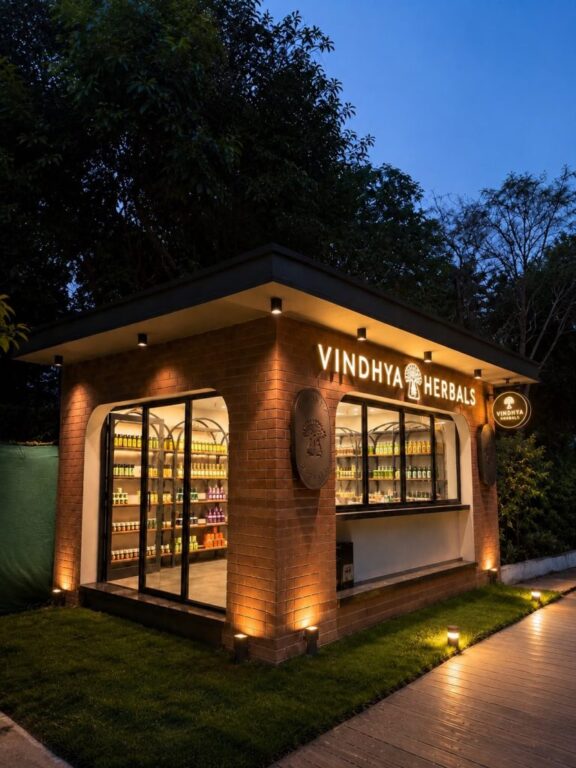
But what makes Vindhya different is where its products begin. In a market flooded with commercial herbal products, Vindhya sources its ingredients directly from forests.
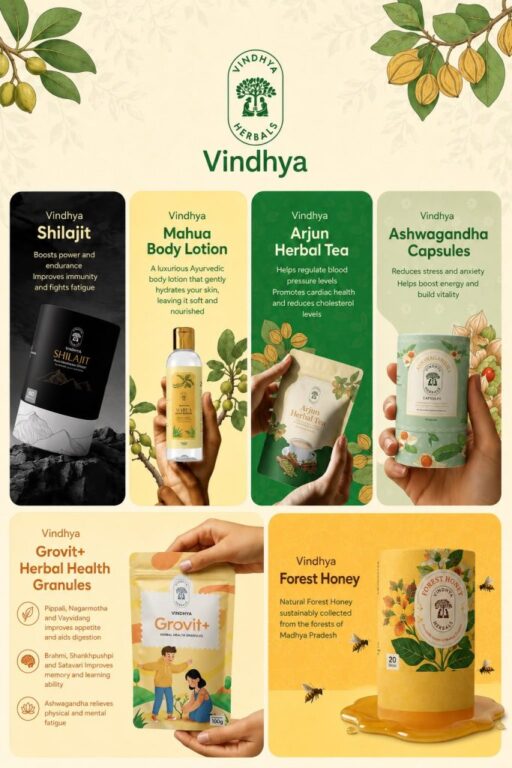
Its bestselling product, forest-collected honey, captures this difference. Unlike many brands that use apiary honey, Vindhya’s honey comes directly from the forests of Madhya Pradesh, collected by tribal communities. That authenticity has made it one of the brand’s strongest products.
“Here we use authentic minor forest produce from the forests of Madhya Pradesh, and then we process it. That’s how we are different,” Gitanjali explains.
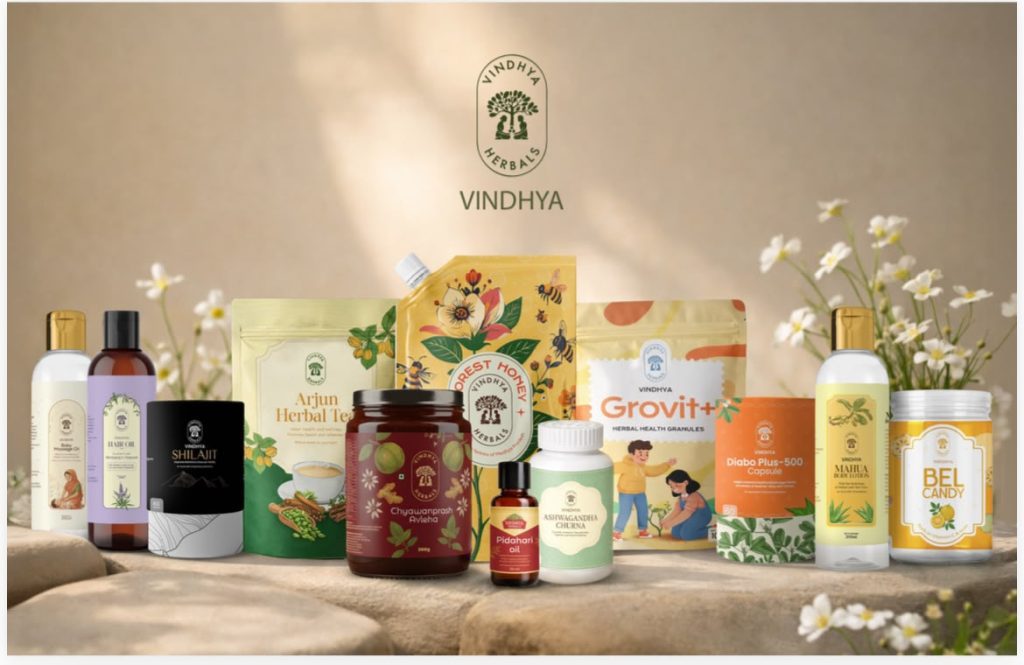
Alongside honey, Vindhya’s flagship products now include Arjun Herbal Tea, Grovit herbal drink, Pidahari Oil, Shilajit capsules, Ashwagandha capsules, hair shampoo, body massage oil, and pain balm.
These are products built on both forest knowledge and Ayurvedic science.
REBUILDING THE BRAND FROM THE GROUND UP
One of Gitanjali’s biggest moves was not in manufacturing but in branding. She led a complete facelift of Vindhya Herbals’ identity. From packaging to presentation, the brand was redesigned to feel modern, clean, and aligned with its forest-based philosophy.
The old packaging was replaced with eco-friendly packaging, reinforcing the idea that sustainability should not stop at ingredients.
A new range of wellness products was also introduced, especially mahua-based personal care products like body lotion, body butter, and lip balm, bringing an underused forest produce into the skincare space. For Gitanjali, this was about making Vindhya relevant for a younger audience.
“We are toxic-free, sulphur-free, paraben-free. We don’t use chemicals, thus ensuring the product’s quality,” she says.
The result was not just better shelf appeal; it changed how consumers looked at a government brand.
ANCIENT AYURVEDA, BACKED BY MODERN SCIENCE
Behind the products is a strict scientific process. Vindhya Herbals works with a team of Ayurvedic doctors and follows the standards of the Ayurvedic Pharmacopoeia of India. Every formulation goes through quality testing in its dedicated laboratory.
But Gitanjali is quick to say this journey is not hers alone. “It’s a team effort. With a great motivated team, anything is possible,” she says.
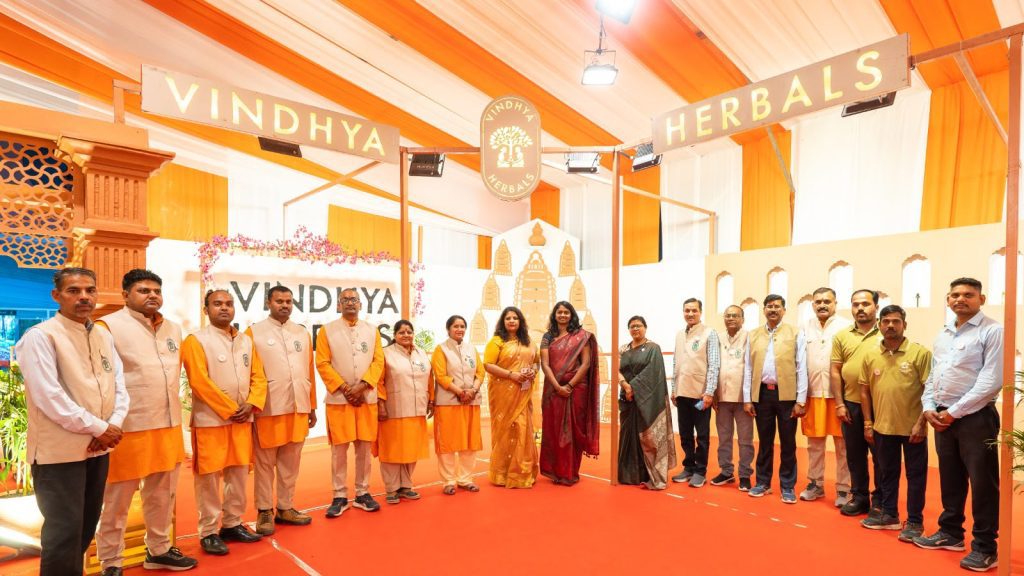
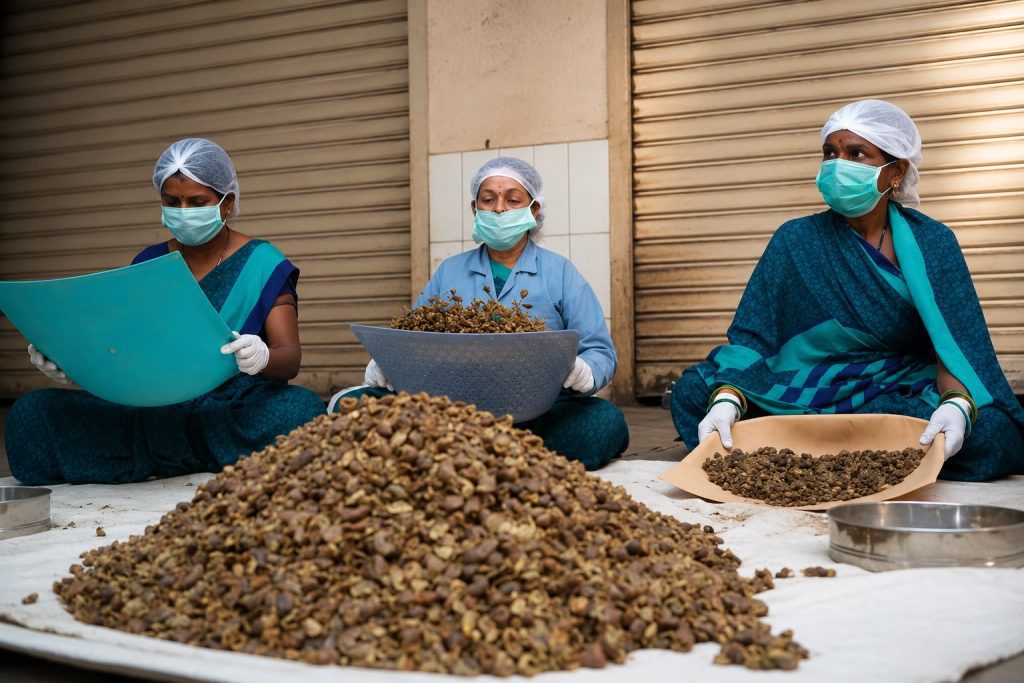
That team is also largely women-led. Nearly 70 percent of the workforce is women, from production units to management. And the larger ecosystem is even bigger. Through nearly 1,000 forest committees, the federation supports around 40 lakh tribal collectors, of whom 19 lakh are women.
For these families, every bottle sold means stronger livelihoods.
“It’s headed by a woman CEO, our production manager is a woman, and the federation itself is led by a woman. Across the system, women are at the centre,” Gitanjali told Indian Masterminds.
THE ANUBHUTI KIT: TAKING FOREST WELLNESS TO CHILDREN
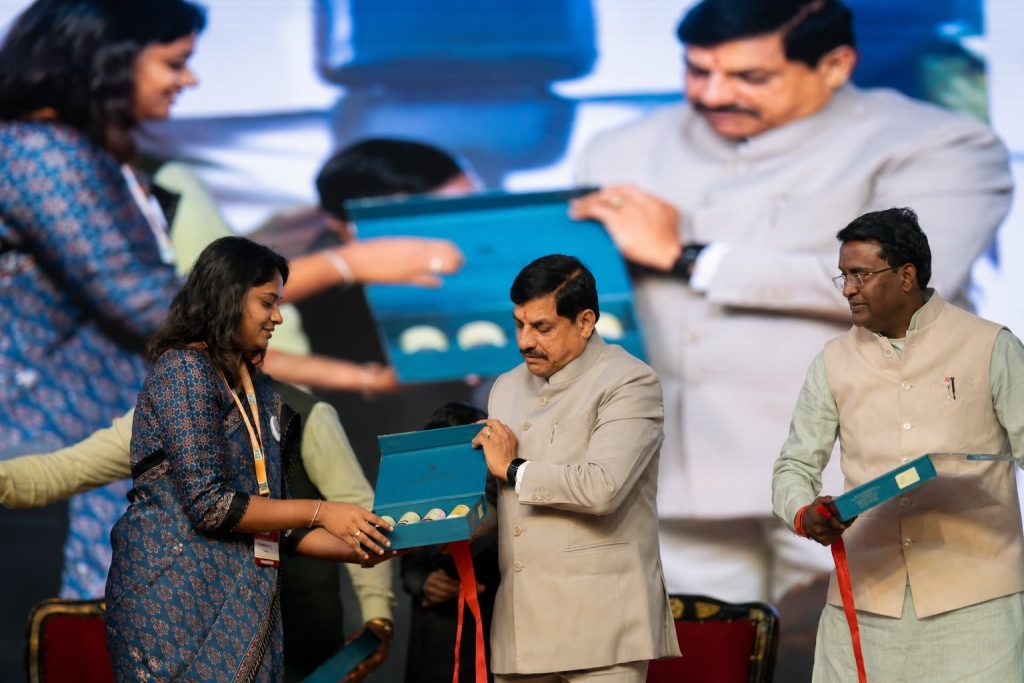
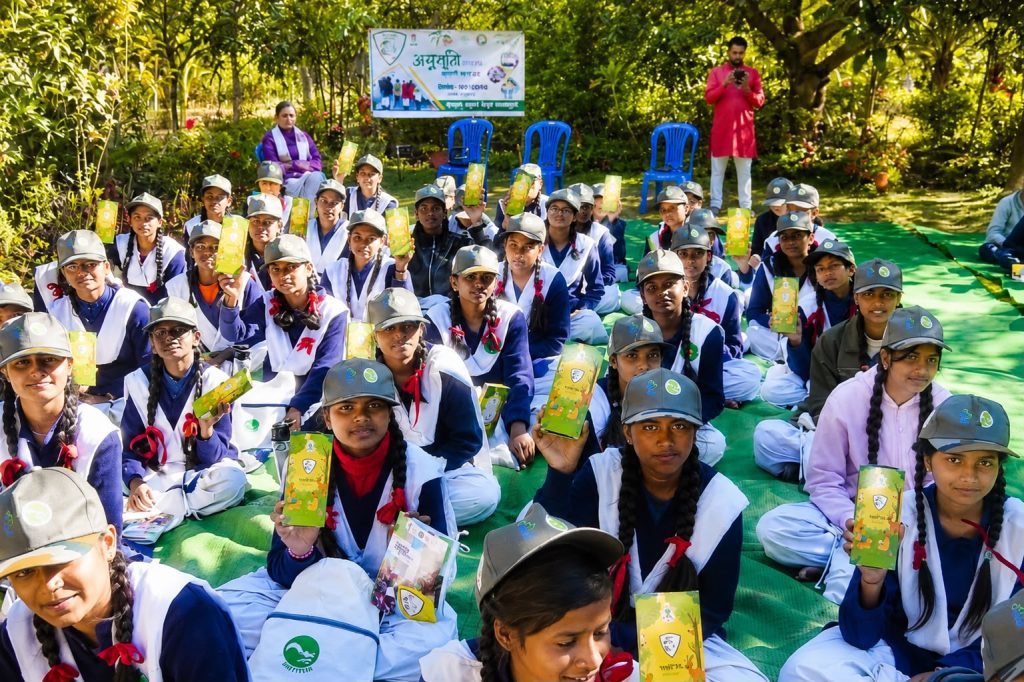
One of Vindhya Herbals’ most meaningful initiatives under Gitanjali’s leadership was the Anubhuti Kit, created for an environmental awareness programme in Madhya Pradesh. Prepared for 1.3 lakh students, the kit was packed inside an eco-friendly pencil box.
Inside it were simple but thoughtful products, Grovit herbal drink, amla candy, and honey sticks, all made from forest produce. The idea was simple: introduce children to healthier and more eco-conscious choices early.
“Seeing how happy the children were while receiving these kits made it very special for me,” she recalls.
For her, it was proof that wellness and environmental education could go hand in hand.
WELLNESS KITS, TEMPLE BOXES AND ECO CAMPAIGNS
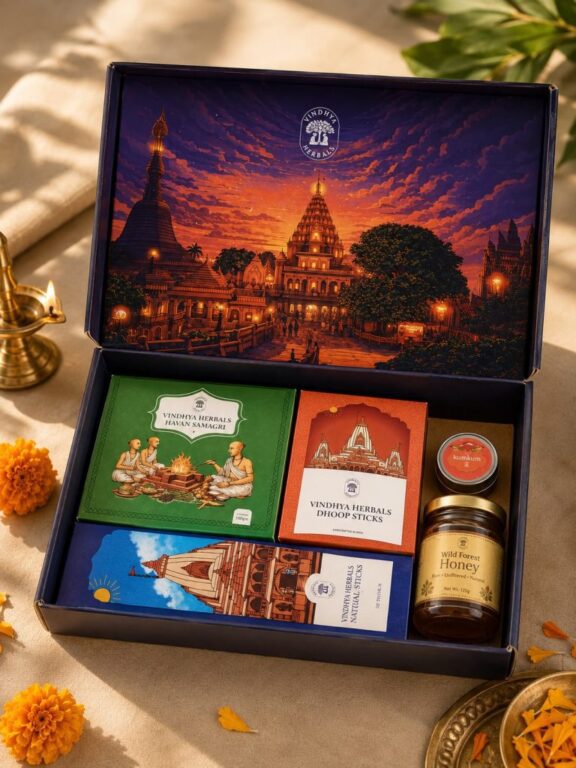
Gitanjali also pushed Vindhya Herbals into a new space: curated gifting. The brand launched three themed gift boxes, one inspired by Gond art of Madhya Pradesh, bringing together culture and wellness.
Another special spiritual kit was designed for the Mahakali Temple during the Ujjain mela, featuring organic agarbatti, dhoopbatti, and havan samagri made from minor forest produce.
Seasonal launches like organic Holi colours and Diwali gift boxes have further widened the brand’s presence. It was a shift from simply selling products to creating experiences around them.
FIGHTING SICKLE CELL WITH FOREST MEDICINE
Among Vindhya Herbals’ biggest healthcare interventions has been its work on sickle cell anaemia. Under a pilot project initiated in Madhya Pradesh, the centre developed three new Ayurvedic medicines aimed at reducing symptoms of the disease.
The medicines were first introduced in three districts. After positive results, the programme was expanded across sickle cell-affected districts of the state. For Gitanjali, the real measure of success was hearing directly from children.
“When they came and told us their haemoglobin levels had improved, their fatigue had reduced, and they were able to learn better, it was a proud moment for us,” she says.
For a forest-based enterprise, this was more than product success. It was healthcare changing lives.
BUILDING A NEW IDENTITY FOR FOREST PRODUCE
For years, minor forest produce was seen as raw material: something collected, sold, and forgotten. Under Gitanjali Janarthanan, that narrative is shifting.
Today, it is becoming medicine, skincare, wellness, livelihood, and public health. And in the middle of it all is a simple idea: that India’s forests already hold solutions; we just need to value them differently.
From pure forest honey to herbal medicines, from tribal livelihoods to children’s wellness kits, Vindhya Herbals is no longer just a government brand. It is becoming a new face of Ayurveda, one rooted in forests, shaped by science, and carried forward by people who believe in its future.