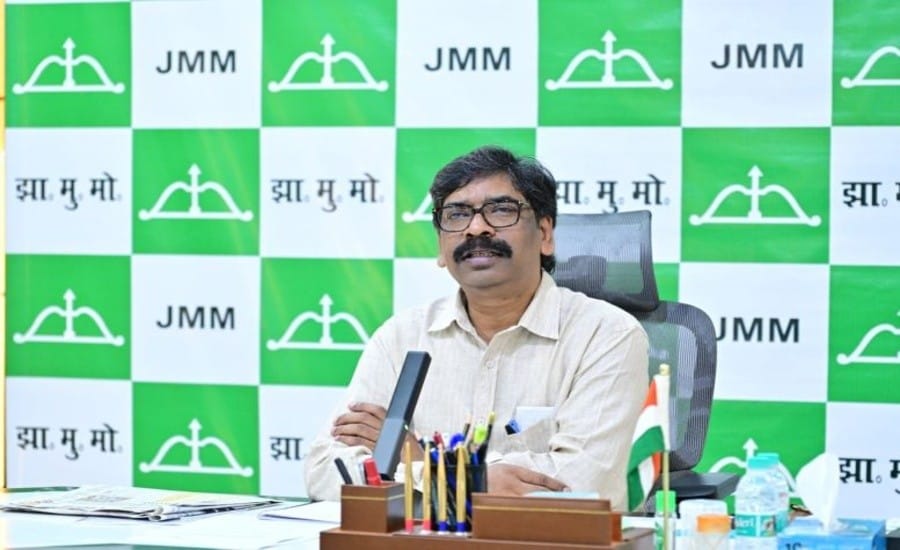
Ranchi: The Mines and Minerals (Development and Regulation) Amendment Bill, 2026, has triggered a political row in Jharkhand, with Chief Minister Hemant Soren warning of a major statewide protest against the legislation. Soren said the Bill could affect Jharkhand’s rights over its mineral resources and state revenues.
Hemant Soren Warns of Statewide Protest
In a post on X, Soren questioned why decisions concerning Jharkhand’s minerals and land should be taken by the Centre.
He described the legislation as unfair to Jharkhand and alleged that it could weaken the state’s financial position.
Soren warned that the JMM would organise protests across the state if the legislation is not withdrawn.
The proposed protest could extend to:
- Districts
- Blocks
- Panchayats
- Cities
He said Jharkhand would launch a movement whose impact would be felt beyond the state.
Read Also: Jharkhand Steps Up HIV Prevention, Targets Nine High-Infection Districts
Concern Over Welfare Schemes
Soren also linked the issue to the state’s ability to fund welfare and development programmes.
He claimed that reduced financial resources could put pressure on schemes covering social security, housing, education and healthcare.
Among the programmes he mentioned were Maiyan Samman Yojana, Abua Awas Yojana and pension schemes.
The Chief Minister argued that the state’s mineral resources should play a greater role in supporting Jharkhand’s development and its people.
What Does the Mines and Minerals Amendment Bill Propose?
The Bill was introduced in the Lok Sabha on August 12 and taken up by the Rajya Sabha on August 13. It proposes amendments to the Mines and Minerals (Development and Regulation) Act, 1957, including state powers to levy additional taxes or cess on mineral rights and mineral-bearing land.
New Section 9D
The amendment introduces Section 9D, which seeks to limit the ability of state governments to impose new taxes on mineral rights or mineral-bearing land.
Under the proposed framework, the states’ power would remain subject to the limits prescribed by the Centre.
The Centre’s position is that the change will help establish a more uniform taxation framework for the mining sector.
Jharkhand’s Mining Revenue and Centre-State Tussle
Mining is crucial to Jharkhand’s economy, making changes in mineral taxation important for the state’s revenue and development spending. The Bill has sparked a Centre-state dispute, with the Jharkhand government opposing it and the Centre seeking greater uniformity in mining rules.
Soren’s warning suggests the issue could intensify politically, with possible JMM protests making mineral rights, state revenues and federal powers key issues in Jharkhand.