New Delhi: India is dramatically enhancing its defence posture against modern drone threats by establishing a joint Counter-Unmanned Aerial System (CUAS) grid that will unify counter-drone technologies across its Army, Navy, and Air Force.
This strategic initiative comes amid rising concerns over hostile drone incursions and forms a central part of the government’s Mission Sudarshan Chakra, a comprehensive plan to build a layered and resilient air defence shield.
Background of CUAS Grid Drone Defence System
Drones — especially small, low-altitude unmanned aerial systems (UAS) — have rapidly become a core element of modern conflict. In the past year, India reported multiple drone incursions along its western borders, prompting heightened defence scrutiny and responses from its armed services.
Several incidents during Operation Sindoor — including attempts by Pakistan-linked drones to strike civilian and military sites — underscored the limitations of traditional air defence systems when dealing with nimble, low-flying aerial vehicles.
Indian forces successfully shot down numerous such drones, but the events also highlighted gaps in detection, tracking, and response that necessitated a dedicated counter-drone infrastructure.
What Is the CUAS Grid Drone Defence System
The Counter-Unmanned Aerial System (CUAS) grid is envisioned as a dedicated, unified network to detect, monitor, and neutralise hostile drones. Unlike conventional air defence assets tasked with tracking aircraft and missiles, this grid focuses specifically on low-altitude threats that traditional radar and integrated air defence networks struggle to manage effectively.
What are the Features of CUAS Grid Drone Defence System
Here are the major features of CUAS Grid Drone Defence System;
- Networked integration of Army, Navy and Air Force CUAS assets, enabling shared situational awareness and faster response times.
- Linkage to Joint Air Defence Centres (JADCs) to coordinate across services.
- Dedicated monitoring infrastructure that avoids overloading existing air defence systems such as the Indian Air Force’s Integrated Air Command and Control System (IACCS).
- Layered defence mechanisms combining detection, electronic warfare, jamming, and kinetic interceptors, tailored for drone and UAS threats.
Officials say this grid will enable real-time tracking and decision-making, vastly improving India’s ability to counter rogue or hostile drones, including swarming and autonomous attack formations.
What is Mission Sudarshan Chakra
The CUAS grid is part of Mission Sudarshan Chakra, a broad defence initiative revealed by Prime Minister Narendra Modi in his Independence Day address in 2025.
The mission aims to construct a nationwide aerial defence architecture capable of thwarting a spectrum of threats — from unmanned threats like drones to high-speed missiles and other aerial systems.
Under this mission:
- The Defence Research and Development Organisation (DRDO) has been tasked with ramping up indigenous defence tech.
- Vital installations will be equipped with advanced sensors and defensive systems over the next decade.
- Defence forces are extending counter-drone coverage to populated and strategic civilian centers to enhance national security.
Indian leadership sees Mission Sudarshan Chakra as essential to preparing for modern battlefield challenges, where aerial threats evolve quickly and often unpredictably.
Enhancing Indigenous Capabilities and Strategic Autonomy
India’s defence ecosystem is also prioritising self-reliance in drone defence technologies. Beyond the CUAS grid, the country has accelerated development and procurement of advanced systems like:
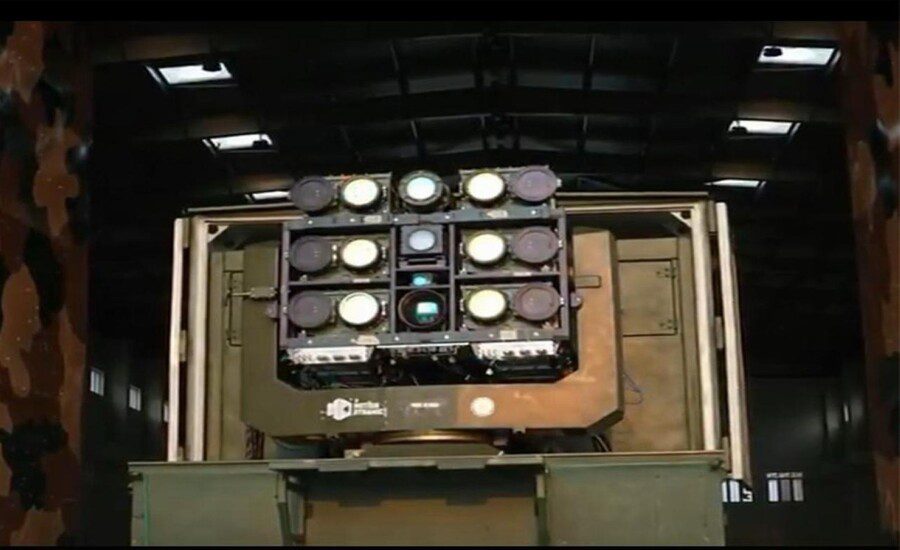
- Laser-based Integrated Drone Detection & Interdiction Systems (IDD&IS), capable of tracking and disabling hostile drones with laser weapons.
- ‘Bhargavastra’ micro-missile counter-drone systems, designed to defeat swarming UAS and loitering threats at lower costs than traditional surface-to-air missiles.
- Establishment of specialised units, such as the BSF Drone Warfare School, focusing on training personnel in UAS and counter-UAS tactics.
These efforts align with the government’s Atmanirbhar Bharat policy, which seeks to reduce reliance on imported systems and build a domestic defence manufacturing base.
Strategic Implications of CUAS Grid Drone Defence System
Experts say the CUAS grid will significantly enhance India’s deterrence and response capabilities amid a complex South Asian security environment. With drones being deployed for surveillance, smuggling, and direct attacks, the grid’s operationalisation sends a strong message to adversaries that India is prepared for multi-domain threats.
As investments in defence procurement surge — including a recent ₹79,000 crore package spanning counter-drone technologies and other next-generation systems — India’s aerial defence landscape is rapidly transforming in response to 21st-century threats.
Way Forward
With implementation underway, officials anticipate full integration of the CUAS grid across all theatre commands and Joint Air Defence Centres in the coming months. Field deployments, simulator trials, and cross-service exercises will test and refine the grid’s operational effectiveness.
The government’s continued focus on technological innovation, indigenous development, and jointness among defence services will be crucial to ensuring India’s airspace remains secure in an era where drones are no longer just tools of civilian use — but potent instruments of conflict.