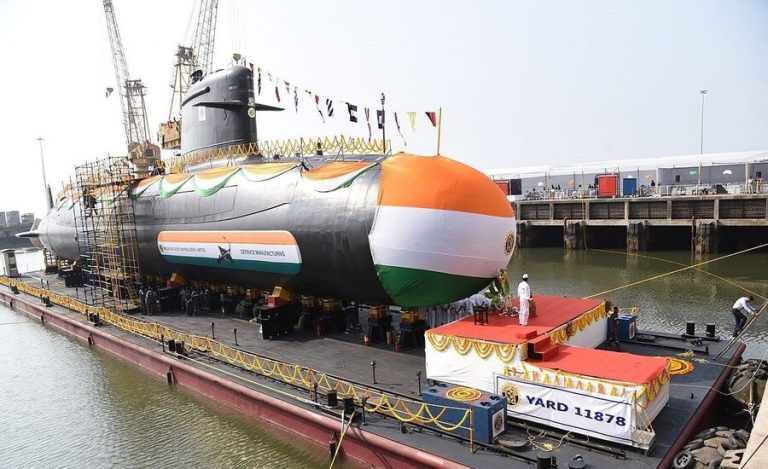
New Delhi: India maritime shipbuilding is poised for a transformative leap as Defence Minister Rajnath Singh invites global partners to collaborate in harnessing India’s rapidly growing shipbuilding capabilities.
At the Samudra Utkarsh seminar in New Delhi, the minister highlighted that India’s shipyards — public and private — are ready to co-develop next-generation maritime technologies, making the country a potential hub for shipbuilding, ship repair, and maritime innovation.
India Maritime Shipbuilding: From Domestic Strength to Global Hub
During his keynote at Samudra Utkarsh, which showcased India’s shipyard capabilities, Rajnath Singh made a compelling case for global alliances. He stated that India’s shipyards have the capacity to build everything from advanced research vessels and aircraft carriers to energy-efficient commercial ships.
Read also: From Imports to Innovation: India’s NETRA Mk-2 Gives ‘Made-in-India’ Wings to AWACS Power
Singh pointed to flagship platforms such as the indigenous aircraft carrier INS Vikrant, Kalvari-class submarines and advanced stealth frigates as evidence of India’s industrial maturity. The minister emphasised that these achievements reflect a deep-integrated maritime ecosystem capable of concept design, modular construction, outfitting, refit, repair, and full life-cycle support.
What are the Policies of India Maritime Shipbuilding
India’s maritime shipbuilding resurgence is backed by a series of strategic policy initiatives that prioritise self-reliance and growth:
- Maritime India Vision 2030
- Maritime Amrit Kaal Vision 2047
- Defence Production & Export Promotion Policy
- Defence Procurement Manual 2025
These reforms have organically strengthened local supply chains, expanded design excellence, and accelerated indigenous content — with several shipyards expected to achieve 100% domestic content by 2030.
Public & Private Sector Collaboration: A Dual Engine
India’s maritime shipbuilding ecosystem thrives on the synergy between public sector shipyards like Goa Shipyard Ltd and Hindustan Shipyard Limited, and agile private companies engaged in green fuel vessels, hybrid propulsion systems, LNG ships, roll-on/roll-off platforms, and high-efficiency commercial designs.
The Defence Minister also noted the role of thousands of MSMEs in expanding India’s maritime value chain — from steel fabrication to advanced combat system integration — making Indian shipyards robust and globally competitive.
What is the Importance of India Maritime Shipbuilding
Beyond defence, Indian shipyards are increasingly integral to the Blue Economy, contributing to marine research, environmental monitoring, fisheries management, and maritime law enforcement across India’s extensive coastline and Exclusive Economic Zone (EEZ).
Foreign vessels are now visiting Indian yards for complex refits and repairs, a clear sign of India’s rising global credibility in shipbuilding and maritime sustainability.
Global Call to Action: Partnerships for Next-Gen Capabilities
Rajnath Singh’s message to global players was clear: “India is ready to build not only ships, but trust; not only platforms, but partnerships.” He urged international defence and maritime majors to tap India’s shipbuilding potential to jointly develop resilient supply chains and sustainable maritime technologies that shape a secure future.
This call for collaboration aligns with India’s larger strategic goals of ensuring peace and stability across the Indo-Pacific region, where maritime security plays a pivotal role in global trade and geopolitical balance.