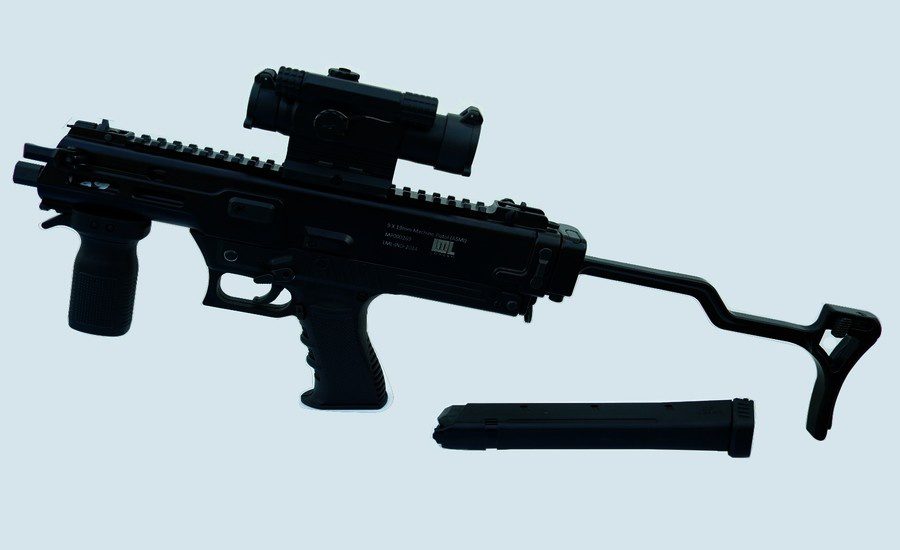
New Delhi: The Indian Army has initiated a major procurement programme to induct one lakh (100,000) indigenous 9mm pistols, marking a significant step toward strengthening its close-quarter battle (CQB) capabilities and accelerating the Atmanirbhar Bharat vision in defence manufacturing.
The Ministry of Defence (MoD) has issued a Request for Information (RFI) to identify capable domestic manufacturers, signalling a decisive move toward modernising infantry sidearms and reducing reliance on imported small arms.
Strategic Importance of the Indian army 9mm Pistol Induction
The 9mm pistol plays a critical role as a secondary weapon system for soldiers operating in high-risk environments such as:
- Urban warfare
- Counter-terrorism operations
- Counter-insurgency missions
- Special operations in confined spaces
The Indian Army 9mm pistol induction will significantly enhance individual soldier survivability, reaction time, and tactical flexibility during close-range engagements.
Indian Army 9mm pistol induction: Alignment with Make-in-India and Atmanirbhar Bharat
This large-scale procurement aligns seamlessly with the Indian government’s flagship initiatives:
- Make in India (Defence Sector)
- Atmanirbhar Bharat Abhiyan
- Defence Acquisition Procedure (DAP) focused on indigenisation
By prioritising domestic manufacturers, the Army aims to build a robust indigenous small-arms ecosystem, strengthening India’s long-term defence industrial base.
Indian Army 9mm pistol induction: Phasing Out
A key objective of the programme is to replace ageing 9mm semi-automatic pistols currently produced by the Rifle Factory Ishapore. While reliable, these legacy systems lack modern ergonomic and modular features required for contemporary battlefield conditions.
The new pistols will represent a quantum leap in technology, capability, and adaptability.
Key Technical and Operational Requirements
According to the RFI, the upcoming 9mm pistols must meet stringent operational specifications:
- Advanced Design Features
- Ambidextrous controls
- Modular architecture
- Accessory rails for optics and attachments
- Suppressor compatibility
- Lightweight, durable construction
Environmental Performance
- Operational capability from –30°C to +55°C
- Reliable functioning in deserts, plains, jungles, and high-altitude regions
- Performance tested up to 18,000 feet above sea level
All-Weather, Day-Night Operations
The pistols must perform flawlessly under all weather conditions and support both day and night combat scenarios, ensuring round-the-clock readiness.
Focus on Modularity and Future Upgrades
One of the most critical requirements outlined in the RFI is modular design.
This will allow:
- Easy upgrades without redesign
- Integration of future technologies
- Cost-effective lifecycle management
Such modularity ensures that the weapon system remains relevant for decades, adapting to evolving combat doctrines.
Indigenous Manufacturing and Technology Transfer
The RFI explicitly encourages:
- Transfer of Technology (ToT)
- Indigenous design and manufacturing
- Licensed production within India
Post-procurement, the Army plans to pursue long-term domestic production, fostering a sustainable defence manufacturing ecosystem and reducing import dependency.
Integration with Broader Infantry Modernisation
The pistol induction programme is part of a larger infantry modernisation drive, which includes:
- Induction of Light Machine Guns (LMGs)
- Rollout of CQB carbines
- Modernisation of individual soldier equipment
Recently, Sill Weapon Industries (IWI) delivered the first batch of 40,000 LMGs, while the Army is also finalising a major contract for nearly 1.7 lakh next-generation CQB carbines under the Buy (Indian) category.
Boost to India’s Defence R&D Ecosystem
The Defence Research and Development Organisation (DRDO) has already demonstrated expertise in small-arms development, including polymer-based components and high-rate-of-fire mechanisms. These innovations could significantly influence the final selection process.
By prioritising indigenous solutions, the Army aims to accelerate defence innovation, strengthen MSME participation, and enhance technological sovereignty.
Strategic and Operational Impact of Indian Army 9mm pistol induction
From a strategic perspective, the induction of one lakh modern 9mm pistols will:
- Improve squad-level firepower
- Enhance readiness for low-intensity conflicts
- Strengthen counter-terror and internal security operations
- Prepare troops for high-altitude and urban combat environments
This programme reflects India’s commitment to self-reliance, modern warfare preparedness, and rapid capability enhancement.
Read also: From Guns to Smart Guns: Indian Army Evaluates Oerlikon Skyshield for Modern Drone & Missile Threats