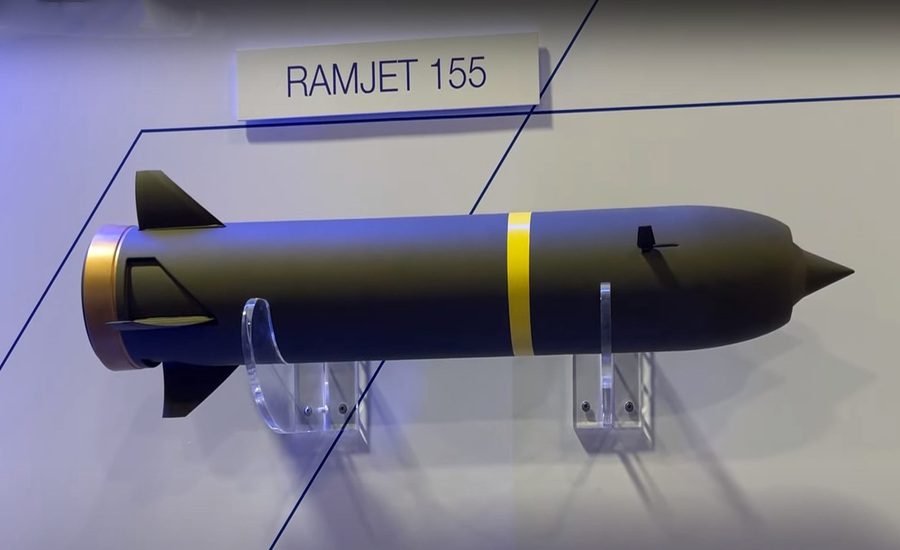
New Delhi: In a landmark achievement for India’s defence modernisation and Atmanirbharta bharat initiative, the Indian Army is poised to become the world’s first military to operationally deploy ramjet-powered 155 mm artillery shells — a major technological leap that significantly enhances artillery reach and battlefield lethality.
This breakthrough project, developed in partnership with IIT Madras under the Army Technology Board (ATB), promises a 30–50 % increase in range over conventional artillery munitions while maintaining precision and destructive effectiveness.
What Is Ramjet-Powered 155 mm Artillery Shells System
Unlike conventional artillery shells, which rely solely on the force of initial gunpowder discharge and ballistic trajectory, ramjet propulsion uses air breathing thrust to sustain acceleration after firing.
How Does Ramjet-Powered 155 mm Artillery Shells System Work
Launch Initiation: The shell is fired from a standard 155 mm artillery gun to reach supersonic velocity (above Mach 2).
Air Intake & Combustion: As the projectile travels, ambient air enters the inlet and is compressed by the shell’s forward speed, mixing with onboard fuel.
Sustained Thrust: Burning air-fuel mixture produces continuous propulsion, extending range far beyond what conventional rounds can reach.
This propulsion technique — common in advanced missile systems — is now being applied to artillery, redefining medium-calibre firepower.
Indigenous Collaboration: IIT-Madras & the Indian Army
The developmental journey began with a strategic partnership between IIT Madras’s Aerospace Engineering Department and the Indian Army’s Armament research wings. This academic-defence collaboration has rapidly advanced the ramjet artillery concept from design to live testing.
Key project highlights are as follows;
- Army Technology Board Approval: The ATB has formally approved the next-generation ramjet artillery project, validating its strategic importance.
- Field Tests: Initial trials at the Pokhran Field Firing Ranges in Rajasthan have shown promising range and stability performance.
- Compatibility: Once matured, the ramjet shells will integrate with existing 155 mm guns, including M777 ultra-light howitzers, ATAGS (Advanced Towed Artillery Gun System), Dhanush, and others in service.
What are the Importance of Ramjet-Powered 155 mm Artillery Shells
The Indian Army’s artillery roadmap has prioritised extended range, precision guidance, and firepower flexibility — areas where ramjet technology delivers compounding benefits.
Extended Strike Reach
Ramjet propulsion will allow 155 mm rounds to potentially strike targets at ranges approaching or surpassing 80 km, significantly outpacing conventional artillery limits near 45 km.
Battlefield Precision
Coupled with advanced guidance systems, future variants may reduce Circular Error Probable (CEP), enabling accurate strikes deep behind enemy lines without relying solely on rocket artillery.
Operational Flexibility
Unlike rockets or missiles, ramjet shells can be fired from any standard 155 mm platform, giving commanders flexible deployment options across terrains and theatres.