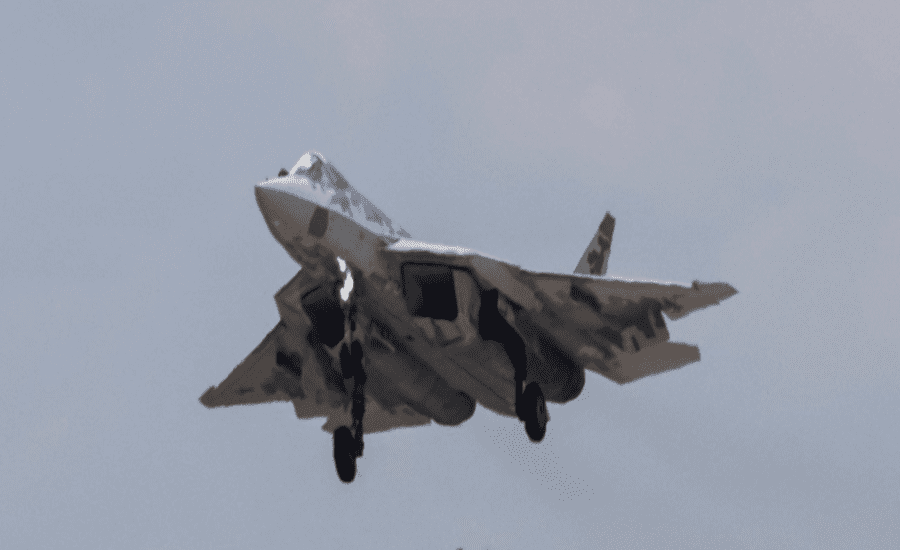
New Delhi: In a landmark development that could reshape India’s aerospace capabilities, Russia has approved Hindustan Aeronautics Limited (HAL) Koraput to locally manufacture the advanced Izdelie 177S engines for the Su-57E fifth-generation fighter jet.
This decision marks a defining moment in India’s pursuit of strategic autonomy in next-generation propulsion systems and places the country in an elite global club alongside Russia, the United States, and China—nations with indigenous fifth-generation engine technology.
The approval, granted during President Vladimir Putin’s visit to New Delhi, is tied to a comprehensive Transfer of Technology (ToT) agreement that enables India to build, test, and maintain the crucial 177S engine, a highly sophisticated turbofan powering the Su-57E platform.
Background of HAL Su-57E Engine Manufacturing
For decades, jet engine technology has been a critical bottleneck for India’s aerospace ambitions. While the country has made significant strides in airframes, avionics, and weapons systems, mastering high-performance turbofan engines has remained challenging due to the enormous technological complexity involved.
Read also: S-400 + Su-57E = Trouble for PAF? Inside India’s Lethal Air Defence Strategy
Engines for 5th-generation fighters face extreme performance requirements, including:
- High thermal thresholds
- Superior thrust-to-weight ratios
- Advanced thrust vectoring
- Low observability (stealth) compatibility
- Exceptional durability under combat conditions
The Russian decision to transfer manufacturing rights for the Izdelie 177S engine represents one of the most significant technological partnerships India has secured in decades.
What Is the Izdelie 177S Engine?
The 177S is a two-shaft, low-bypass turbofan equipped with 3D thrust vectoring control (TVC)—a key requirement for the super-maneuverability that defines fifth-generation fighters.
Key Capabilities
- Exceptional low-speed agility
- High angle-of-attack maneuverability
- Enhanced survivability in complex missions
- Improved fuel efficiency
- Suitability for deep-penetration strike profiles
The engine’s ability to support stealthy and high-performance operations is critical for modern air forces seeking air dominance.
Strategic Importance of HAL Su-57E Engine Manufacturing for the Indian Air Force
The Su-57E is positioned not just as a new fighter aircraft option but as a technology enabler for India’s broader aviation roadmap, particularly the Advanced Medium Combat Aircraft (AMCA) Mk-1 program.
1. Modernizing the Su-30MKI fleet: HAL will be able to integrate the 177S engine technology to upgrade existing Su-30MKI aircraft once lifecycle improvements mature.
2. Fleet-wide performance improvements: The 177S engines promise 15–18% higher thrust than the AL-31FP engines currently powering many IAF fighters.
3. Massive boost in combat effectiveness: Enhanced thrust, reliability, and reduced maintenance cycles can significantly improve India’s frontline readiness.
4. Reduced dependency on foreign suppliers: Local manufacturing cuts turnaround time for maintenance and upgrades.
Technology Transfer: The Most Critical Component
Unlike previous defence deals, this ToT is described as comprehensive and deep, covering:
1. High-value production technologies
- Single-crystal turbine blade manufacturing — vital for withstanding extreme temperatures
- Thermal barrier coatings — enabling engine inlets to perform above 1,800°C
- Such capabilities have been historically restricted to a handful of nations.
2. Digital FADEC integration (Full Authority Digital Engine Control)
Includes hydromechanical redundancy and full digital control systems, enhancing reliability.
3. Complete production documentation & test-bed methodologies
Ensures India can independently produce, certify, and refine engine designs.
4. Joint supervision by Russian and Indian teams
The first years of production at HAL Koraput will be tightly coordinated to ensure quality and performance.
HAL Koraput’s Role and HAL Su-57E Engine Manufacturing and Production Timeline
HAL’s Koraput division, long known for its expertise in Russian aero-engines, will now undergo significant upgrades to meet the exacting standards of fifth-generation engine production.
Planned Timeline
- 2026 – Facility modernization, prototype assembly, and joint engine integration begin
- 2028 – Full serial production capability expected
- 2029 – Alignment with Su-57E production & IAF’s testing roadmap
- 2030 onward – Integration with AMCA Mk-1 engine strategy
This collaboration gives India the ability to manufacture, test, maintain, and upgrade engines domestically—a crucial element for long-term sustainability.
Indigenous Weapons Integration: Another Major Advantage
Russia has reportedly agreed to support the integration of India’s homegrown arsenal into the Su-57E platform, including:
- Astra beyond-visual-range air-to-air missiles
- BrahMos cruise missiles (possible future variants)
This synergy enhances India’s ability to deploy customized strike packages tailored to regional threats.
Implications of HAL Su-57E Engine Manufacturing for the AMCA Program
The success of the AMCA—India’s first indigenous fifth-generation fighter—depends heavily on advanced propulsion technologies. This ToT lays a foundational framework for:
- Indigenous high-performance engine development
- Knowledge transfer for thermal, structural & digital engine controls
- Strengthening India’s long-term aerospace engineering ecosystem
This strategic deal may accelerate India’s capability to develop future engines independently.
Why This Deal Is a Geopolitical Milestone
The global landscape of advanced fighter jet engines is extremely restricted. By becoming one of the only four nations with licensed production of fifth-generation engines, India:
- Elevates its status in global defence manufacturing
- Strengthens its strategic autonomy
- Reduces reliance on Western suppliers
- Builds deeper military-industrial collaboration with Russia
As major powers pivot toward next-generation warfare, this move positions India favourably in future geopolitical and defence dynamics.
About Hindustan Aeronautics Limited
Hindustan Aeronautics Limited (HAL) is India’s premier state-owned aerospace and defence company, responsible for designing, manufacturing, and maintaining a wide range of military and civilian aircraft. With decades of expertise, HAL plays a central role in India’s aviation ecosystem, producing fighters, helicopters, engines, avionics, and space components. It is the backbone of the Indian Air Force’s fleet support and a key partner in indigenous programs like Tejas, Dhruv, and AMCA. HAL’s growing global collaborations highlight India’s rising capabilities in advanced aerospace engineering.