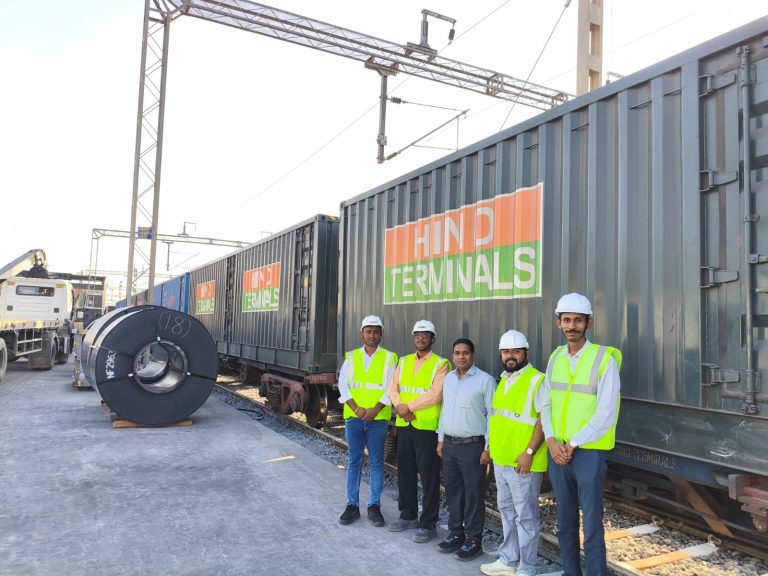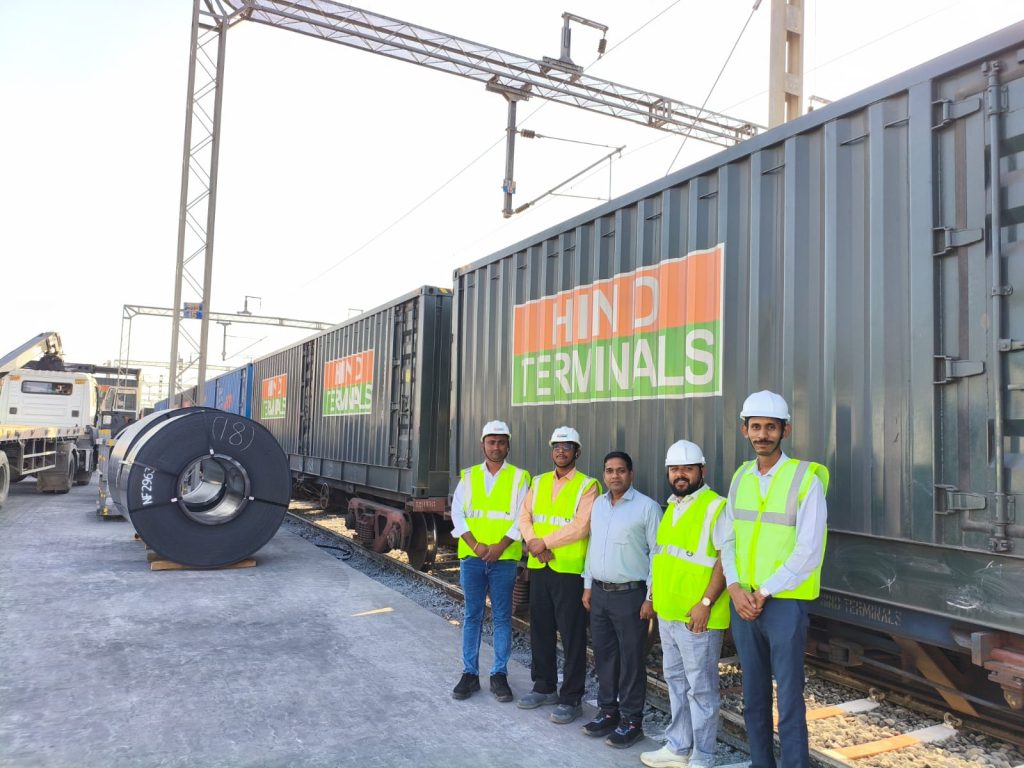
In a major advancement for India’s freight transportation infrastructure, Dedicated Freight Corridor Corporation of India Limited (DFCCIL) on Wednesday successfully flagged off its first 25-tonne axle load freight train, marking a significant leap in high-capacity rail logistics and strengthening India’s heavy-haul freight capability.
The operation represents a critical technological and infrastructural milestone for India’s dedicated freight network and is being seen as a strong push to the national logistics transformation agenda under PM Gati Shakti National Master Plan.
Train Operated on Western Dedicated Freight Corridor Covering 1,106 Km
The heavy-haul freight train was operated on the Western Dedicated Freight Corridor for transportation of steel coils.
The train originated from the Gati Shakti Cargo Terminal at New Gothangaon in Gujarat and travelled up to the HTPP siding at Palwal in Haryana, covering a total distance of 1,106 kilometres.
Palwal serves as an important industrial logistics destination, and the successful completion of this route under upgraded axle load conditions demonstrates the operational readiness of the freight corridor for heavier and faster cargo movement.
100 Kmph Freight Speed Marks Technological Advancement
Running at a speed of 100 kilometres per hour, the train demonstrated a major performance improvement over conventional freight services.
The rake consisted of 45 wagons carrying steel coils, with each wagon operating at higher freight capacity compared to traditional freight trains.
Ordinary freight trains on conventional rail routes generally operate at speeds between 60 and 70 kmph. In contrast, the new 25-tonne axle load train is designed to maintain speeds up to 100 kmph, reducing transit time while simultaneously increasing freight volume.
This combination of higher load and faster movement significantly improves freight efficiency across industrial corridors.
Why the 25-Tonne Axle Load Is a Breakthrough
In railway engineering terms, axle load refers to the maximum weight exerted by one axle—or one pair of wheels—on railway tracks.
Until now, most of the Indian Railways freight network has operated within an axle load range of 22.1 tonnes to 23.1 tonnes.
The successful operation of a 25-tonne axle load indicates that DFCCIL’s track systems, bridges, embankments and related infrastructure have now achieved substantially higher load-bearing capability.
This engineering upgrade means more cargo can be transported per wagon and per train, reducing the number of trips needed for equivalent freight movement.
Per Wagon Capacity Increases Significantly
Under the earlier freight system, wagons typically operated with an axle load of 22.9 tonnes.
With the new 25-tonne configuration, each wagon now gets an additional carrying advantage of approximately 8.4 tonnes.
This translates into an estimated 15 to 20 percent increase in carrying efficiency across a full rake.
For industrial cargo such as steel, cement, coal and bulk commodities, this higher payload can substantially improve turnaround time and reduce logistics bottlenecks.
Boost for PM Gati Shakti and National Logistics Efficiency
The success of the operation is expected to directly strengthen the implementation of PM Gati Shakti National Master Plan, which focuses on integrated infrastructure development and multimodal connectivity.
Higher-capacity freight movement enables faster industrial supply chains and more efficient cargo evacuation from ports, production centres and manufacturing clusters.
The dedicated freight corridor is increasingly emerging as a backbone for long-distance industrial cargo movement across northern and western India.
Lower Logistics Costs Expected Across Industries
A direct benefit of increased freight capacity is lower logistics expenditure.
When larger volumes of cargo can be moved in fewer trips, fuel efficiency improves, rake utilisation rises and freight economics become more favourable.
Lower transportation costs are expected to reduce production expenses for industries, which could eventually benefit end consumers through moderated pricing of goods.
This is particularly important for sectors dependent on bulk raw material movement such as steel, thermal power, cement and manufacturing.
Indian Products May Gain Greater Global Competitiveness
Reduced logistics costs also improve export competitiveness.
As freight movement becomes more economical and time-efficient, Indian products can become more competitive in international markets by lowering overall supply chain expenses.
This development aligns with India’s broader ambition of becoming a global manufacturing and logistics hub.
Gateway to Future 30-Tonne Axle Load Operations
The successful operation of the 25-tonne axle load freight train is also being viewed as a preparatory stage for future 30-tonne axle load freight systems.
Such an upgrade would bring India closer to global heavy-haul freight standards followed in major freight-intensive economies.
The latest achievement signals that India is steadily building the technical capability required for next-generation heavy freight rail operations.
A Global Signal from Indian Rail Freight
The operation is not merely a domestic railway milestone but a strategic signal that India is strengthening its position in the field of modern heavy-haul rail logistics.
With dedicated freight corridors increasingly handling faster, heavier and more reliable cargo movement, India’s freight rail network is entering a new phase of industrial relevance.
Read Also: DFCCIL Transports Fresh Chikoo from Gujarat to Delhi, Boosting Rail-Based Agri-Logistics