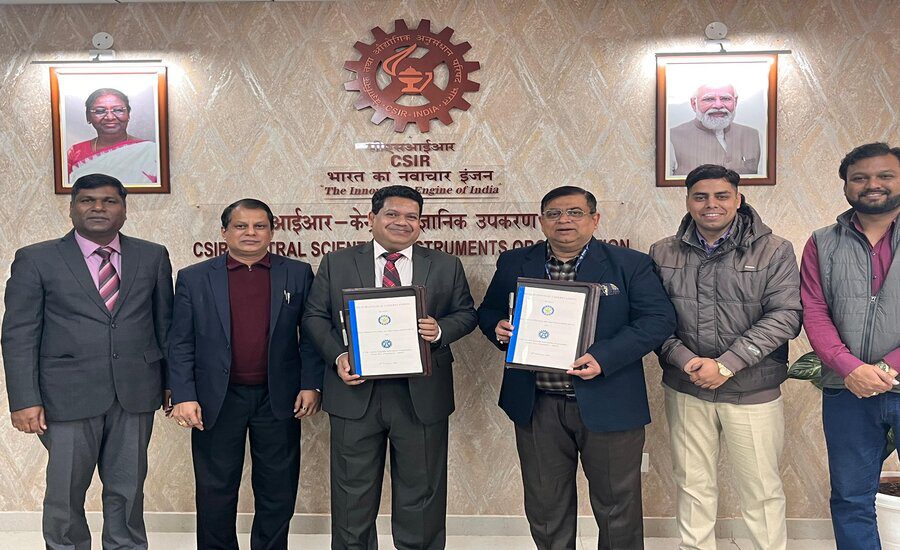
New Delhi: The DRDO and CSIR collaboration marks a major milestone in Indian defence science, focusing on developing survival technology for extreme environments in high altitude regions. This partnership will drive indigenous research, advanced human performance solutions, and sustainable energy technologies tailored to harsh terrains where Indian forces operate, such as the Himalayas and other remote high-elevation theatres.
The agreement supports India’s strategic defence preparedness and reinforces indigenous innovation aligned with national priorities.
Details of DRDO-CSIR Survival Technology Partnership
The Defence Research and Development Organisation (DRDO) has formalised a strategic agreement with the Council of Scientific and Industrial Research (CSIR) to co-develop technologies that enhance human survival and efficiency in extreme high-altitude environments faced by defence personnel.
DRDO, functioning under India’s Ministry of Defence, is the primary research body tasked with developing defence technologies, systems and solutions. CSIR is one of India’s largest scientific research networks, operating over 37 laboratories in diverse fields, including materials science, biotechnology and energy research. These complementary strengths will now be harnessed for defence-centric innovation.
Importance of DRDO-CSIR Survival Technology Partnership
High-altitude regions like Ladakh, Sikkim, Arunachal Pradesh and other Himalayan zones pose significant physiological and logistical challenges due to:
- Low oxygen levels (hypoxia)
- Sub-zero temperatures
- Harsh terrain and isolation
- Limited energy infrastructure
Indian troops deployed along contested borders such as the Line of Actual Control (LAC) regularly face these conditions, making tailored survival systems essential for sustained operations.
Key Focus Areas of the DRDO-CSIR Survival Technology Partnership
Here are the key focus areas of the DRDO-CSIR survival technology partnership;
1. High-Altitude Survival Instruments
The pact aims to design and develop specialised survival gear for extreme elevations. This includes advanced oxygen delivery systems, thermal insulation equipment, and personal protective technologies capable of functioning in unstable, freezing weather.
DIPAS, DRDO signs MoU with CSIR-Central Scientific Instruments Organisation (CSIR-CSIO) for collaborative research, technology development and resource sharing to advance human sustenance and performance in extreme environments. This strategic partnership will leverage… pic.twitter.com/5yGzCvMYjm
— DRDO (@DRDO_India) February 11, 2026
Such technologies will address issues like acute mountain sickness, joint pain, frostbite risks and overall troop resilience.
2. Human Performance Restoration and Monitoring
Collaborative research will extend into human physiological monitoring, especially under conditions like:
- Hypoxia
- Severe cold
- Cognitive stress
Institutes like the Defence Institute of Physiology and Allied Sciences (DIPAS) already focus on human performance in extreme environments, and this agreement strengthens efforts to produce wearable sensors and physiological monitoring tools to protect soldiers’ health in real time.
3. Off-Grid Sustainable Energy Systems
Remote frontier posts often lack reliable electricity, heavily depending on fuel supply lines that are lengthy and vulnerable.
The pact will prioritise off-grid energy solutions such as:
- Solar-hybrid power systems
- Compact fuel cells
- Kinetic energy harvesting devices
These innovations aim to power communications, heating and medical systems independently in remote areas.
4. Waste Management Solutions
Inaccessibility of high-altitude camps also complicates proper waste disposal. The collaboration will push forward technologies like compact incinerators, cold-adapted bio-digesters and recycling units designed for harsh terrains — improving environmental hygiene and living conditions.
Institutional Synergies and Research Integration
Beyond co-development, the agreement allows DRDO and CSIR to share:
- Laboratories and testing facilities
- Research personnel and scientific expertise
- Joint funding avenues
For example, DRDO’s high-altitude test facilities in Leh could integrate with CSIR’s environmental simulation chambers to accelerate prototype testing and deployment.