India is on the brink of a major breakthrough in indigenous air-defence capability as the Defence Research and Development Organisation (DRDO) moves closer to completing developmental trials of its Very Short-Range Air Defence System (VSHORADS). Designed to counter modern low-altitude aerial threats—including drones, UAVs, and fast-moving airborne targets—the system is expected to secure production clearance by 2026, marking a decisive leap toward self-reliance in tactical air-defence systems.
Background of DRDO VSHORADS Missile System
The need for an advanced MANPADS (Man-Portable Air Defence System) has grown significantly due to evolving battlefield dynamics. The rising use of:
- Low-flying UAVs,
- Loitering munitions,
- Miniature drones,
- High-speed close-range targets.
This has forced militaries worldwide to upgrade short-range interception systems.
India’s answer to this challenge is the VSHORADS, a fourth-generation, shoulder-fired missile system developed indigenously by DRDO. It adds a crucial layer to India’s multi-tier air-defence architecture, especially for protecting frontline units, strategic installations, and forward bases.
DRDO VSHORADS Missile System Development Journey and Technological Advancements
DRDO engineered VSHORADS to integrate cutting-edge technologies tailored for the Indian battlefield environment. Key features include:
1. Advanced Seeker Technology: The missile employs state-of-the-art dual-band imaging infrared seekers, improving accuracy against both high-signature and low-signature targets, including miniature drones.
2. Modern Guidance and Warhead Systems: It has following modern guidance and warhead systems;
- Enhanced lock-on and target discrimination ability
- A redesigned warhead providing high kill probability
- Effective performance even in complex terrains and harsh weather conditions
3. Lightweight and Portable: The system is specifically designed for infantry soldiers, providing:
- High mobility
- Rapid deployment
- Ease of use in mountainous and difficult terrains
Successful Trials at Chandipur: High Accuracy and Repeatability
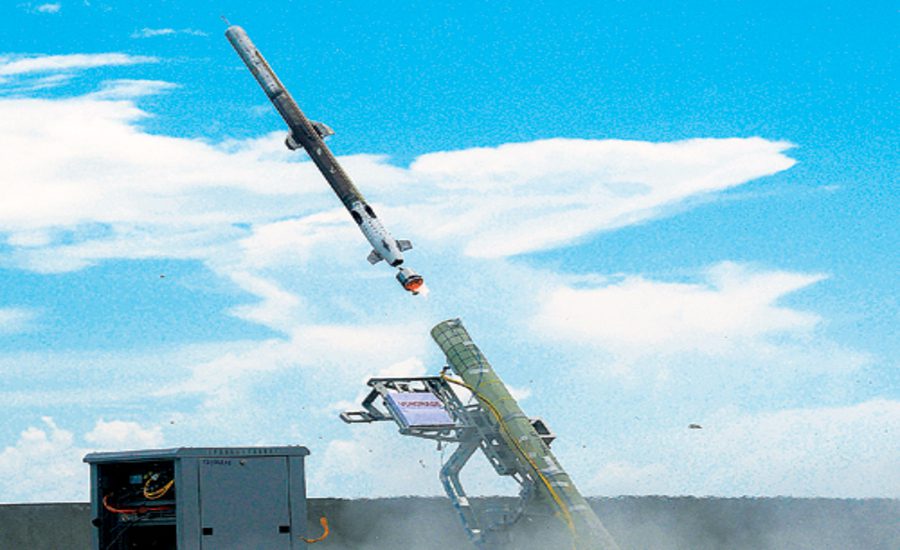
DRDO has conducted three major test flights at the Chandipur test range in Odisha, all in the final deployment configuration.
Key Observations From the Trials
- Missiles were tested against drone-like aerial targets, mimicking real combat conditions.
- All tests resulted in precise interception and destruction of targets.
- The system demonstrated repeatability, fast reaction time, and efficient target acquisition.
- Two operators completed the entire firing sequence, reflecting actual field operation conditions. The impressive results confirm VSHORADS’ readiness for battlefield induction.
Operational Importance for the Indian Armed Forces
Addressing Critical Modern Threats: The Indian Army and Air Force have consistently highlighted gaps in the very-short-range air defence segment, especially due to:
- Global proliferation of drones
- Increasing use of low-cost aerial intrusion
- Importance of protecting high-value forward assets
Boost to Atmanirbhar Bharat: The VSHORADS program significantly reduces dependence on foreign systems, many of which faced delays and cost escalations.
- Potential Deployment Scenarios
- Frontline mountain sectors
- Airfields and strategic bases
- Mechanised and armoured columns
- Naval assets during amphibious operations
- Anti-drone protection perimeters
Path Ahead: User Trials and Production Clearance
With developmental evaluations nearing completion, DRDO will soon hand the system over for user trials by the Indian Army and Air Force. If successful, the weapon is projected to receive Limited Series Production (LSP) approval by 2026.
This transition will allow Indian industry partners to begin manufacturing, strengthening the domestic defence ecosystem.
Strategic Significance for India
The induction of VSHORADS will:
- Strengthen India’s multi-layered air defence shield
- Enhance frontline self-protection capabilities
- Position India as a global supplier of advanced MANPADS
- Address urgent vulnerabilities exposed by drone-based threats in global conflicts