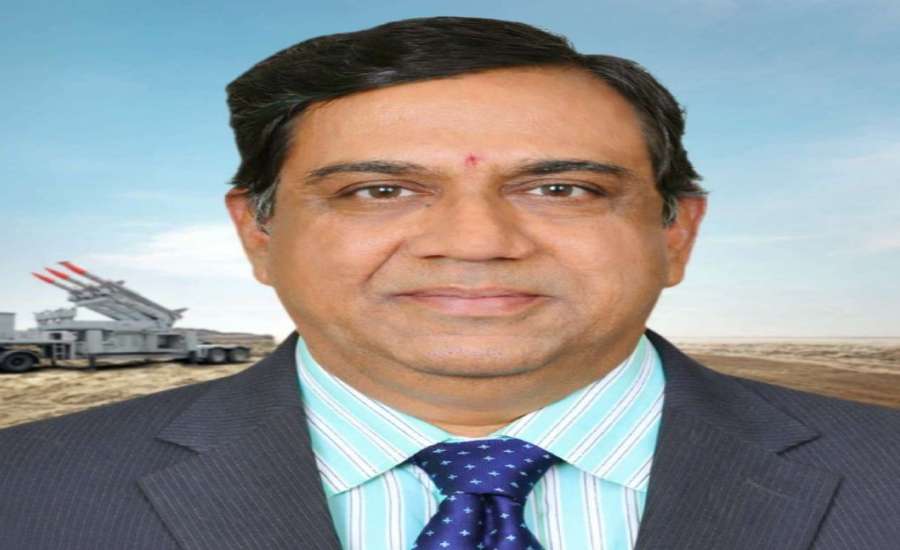
New Delhi: Gaddamanugu Chandramouli received Padma Shri award for his long-term investment in indigenous defence technology and scientific self-reliance.
A former DRDO scientist, Chandramouli dedicated more than three decades to building the Akash air defence missile programme, one of India’s most successful surface-to-air weapon systems.
Padma Shri 2026: Recognition of a Lifetime in Defence Research
The Padma Shri is one of India’s highest civilian honours, awarded for distinguished service in various fields including science and engineering.
Read also: DRDO Surya Laser Weapon Explained: Range, Technology, Capabilities, and Strategic Impact
In 2026, this honour is conferred on Gaddamanugu Chandramouli for his exceptional contribution to India’s defence research ecosystem.
His recognition reflects the growing national focus on:
- Indigenous defence development
- Long-term scientific commitment
- Strategic self-reliance under Make in India
Who Is Gaddamanugu Chandramouli?
Gaddamanugu Chandramouli is a former senior scientist at (DRDO). He spent nearly 34 years working on India’s air defence capabilities, with a primary focus on the Akash missile programme.
Throughout his career, he remained largely away from the public spotlight, concentrating on system development, testing, and operational readiness. His work helped transform Akash from a conceptual project into a fully deployed and battle-ready missile system used by the Indian Armed Forces.
What is Akash Missile Programme
The Akash missile programme is one of India’s most important indigenous defence projects. It was developed to provide short- to medium-range air defence against enemy aircraft, drones, and cruise missiles.
Key Features of the Akash System
- Fully indigenous design
- All-weather, multi-target capability
- High mobility and rapid deployment
- Integrated radar and command systems
Chandramouli’s contribution spanned multiple phases of the programme, including system integration, performance validation, and operational deployment readiness.
34 Years of Dedication to a Single Mission
Spending 34 years on one defence programme is rare in modern scientific careers. Chandramouli’s long association with Akash ensured:
- Technical continuity
- Deep system-level expertise
- Incremental improvements across generations
This continuity played a major role in making Akash a reliable and cost-effective air defence solution for India.
Strengthening India’s Indigenous Air Defence
The successful induction of Akash significantly reduced India’s dependence on imported air defence systems. It also laid the foundation for future missile programmes and export opportunities.
Today, Akash stands as a symbol of:
- Indian scientific capability
- Long-term defence planning
- Successful public-sector R&D execution
Read also: DRDO’s Microwave Weapon Explained: Technology, Range, and Strategic Impact on India’s Defence