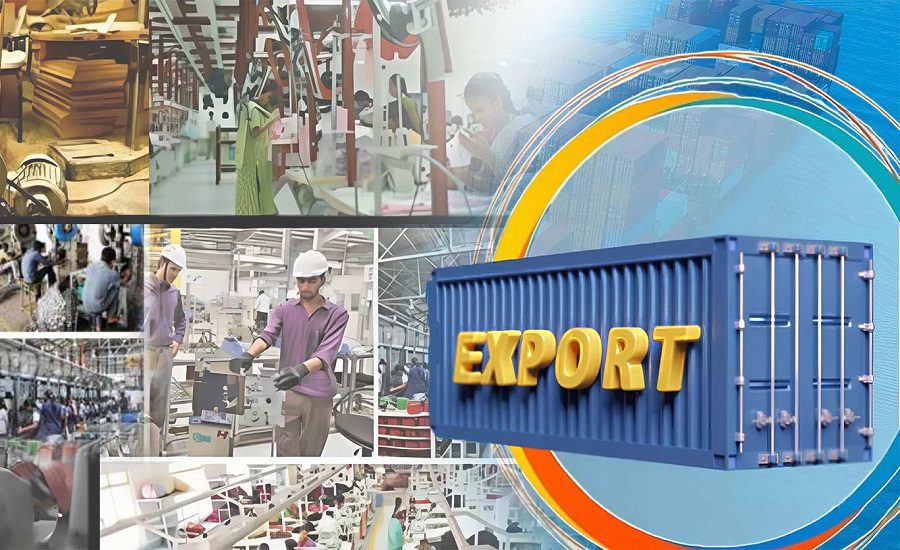
New Delhi: The Government on Tuesday announced that it is undertaking a series of measures—including an upcoming export promotion mission—to cushion Indian exporters from the impact of steep tariffs imposed by the United States on a wide range of domestic goods.
In a written reply to the Lok Sabha, Minister of State for Commerce and Industry Jitin Prasada said the initiatives are aimed at strengthening diversification and enhancing resilience in India’s trade relationships. “The government continues to work to mitigate the impact of the U.S. tariff measures on Indian exports through a comprehensive multi-pronged strategy, encompassing intensive engagement with the U.S. government for a mutually beneficial India–U.S. Bilateral Trade Agreement,” he stated.
Relief Measures and Support for Exporters
Prasada informed Parliament that immediate relief has already been extended through several mechanisms. These include trade relief measures issued by the Reserve Bank of India (RBI), the newly announced Credit Guarantee Scheme for Exporters, and steps to boost domestic demand through GST reforms. India is also pushing forward negotiations on new Free Trade Agreements (FTAs) to widen export opportunities.
The RBI’s relief measures offer eligible exporters a moratorium on debt repayment and an extension of export credit tenors to ease financial stress following tariff shocks.
Read also: Gujarat Adds 7.5 GW Renewable Capacity in 2025, Total Reaches 40.7 GW on Path to 100 GW by 2030
Sharp U.S. Tariffs Hit Key Indian Sectors
The minister outlined the chronology of the tariff actions: on July 31, the U.S. issued an executive order applying reciprocal, country-specific tariff rates ranging between 15% and 41%. India was assigned a rate of 25%, which became effective from August 7. The next day, the U.S. announced an additional 25% tariff on India, citing New Delhi’s purchase of Russian crude oil—these measures took effect from August 27.
The tariffs affect a broad range of India’s export sectors, including textiles, handicrafts, leather, certain agricultural commodities, marine products, and engineering goods.
Export Promotion Mission with ₹25,060 Crore Outlay
Prasada said the planned export promotion mission will offer a comprehensive, flexible and digitally enabled framework for export growth. The mission will have an outlay of ₹25,060 crore, covering the period from 2025–26 to 2030–31. It is expected to help Indian exporters diversify product lines, reduce over-dependence on specific markets, and strengthen global competitiveness.
India Expands FTA Network and Enhances Engagement with Stakeholders
Highlighting India’s growing trade diplomacy, Prasada noted that India has so far signed 15 Free Trade Agreements (FTAs) and six Preferential Trade Agreements (PTAs). The government is working to maximize the benefits of FTAs with Japan, South Korea, and the UAE while also negotiating new agreements with the EU, Peru, Chile, New Zealand, and Oman.
He added that the government remains in continuous consultation with exporters, Export Promotion Councils, state governments, and industry bodies. These consultations aim to evaluate sector-specific stress, gather real-time feedback, and chart out both immediate and long-term interventions to protect India’s trade interests.
Impact Assessment Still Evolving
In a separate written reply, the minister said that given the short window since the tariffs were imposed—less than three months—and multiple global factors influencing trade outcomes, it is “difficult to exactly isolate the impact of the U.S. tariffs” on India’s export performance.
Despite these challenges, India’s exports to the U.S. grew to USD 52.12 billion in April–October of the current fiscal year, up from USD 47.32 billion in the same period last year.