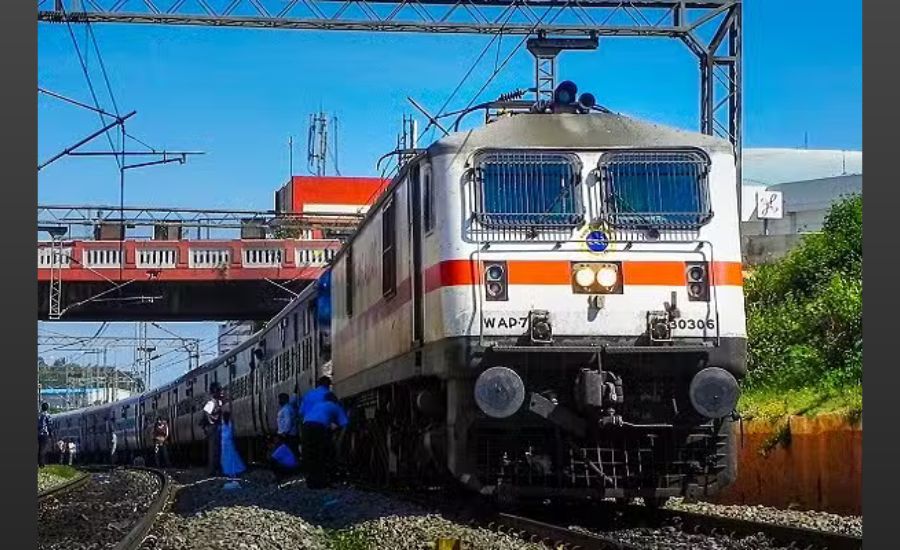
The Cabinet Committee on Economic Affairs (CCEA), chaired by Prime Minister Narendra Modi, has approved two major multi-tracking railway projects in West Bengal and Jharkhand, aimed at increasing line capacity, improving operational efficiency, and enhancing service reliability for Indian Railways.
The total estimated cost of the projects is ₹4,474 crore, and they are expected to be completed by 2030-31, significantly strengthening the region’s transportation infrastructure.
Projects Overview: Sainthia–Pakur and Santragachi–Kharagpur 4th Lines
The approved projects include:
- Sainthia – Pakur 4th line
- Santragachi – Kharagpur 4th line
Together, these projects will cover five districts across West Bengal and Jharkhand, adding approximately 192 km to the existing railway network. This expansion will directly enhance connectivity for 5,652 villages with a combined population of about 1.47 crore people.
Boosting Operational Efficiency and Reducing Congestion
The multi-tracking initiative is expected to streamline rail operations, alleviate congestion, and provide seamless movement of passengers and freight. The projects are part of the PM-Gati Shakti National Master Plan, which emphasizes multi-modal connectivity, integrated logistics, and stakeholder-driven planning.
Enhanced line capacity will improve transport of essential commodities, including coal, cement, dolomite, slag, gypsum, iron and steel, foodgrains, and petroleum products, supporting regional economic development.
Enhancing Freight and Passenger Connectivity
The capacity augmentation is projected to result in an additional 31 million tonnes per annum (MTPA) of freight traffic. By improving connectivity to key tourist destinations such as Bolpur-Shantiniketan, Nandikeshwari Temple, Tarapith, Patachitra Gram, Dhadika Forest, Bhimbandh Wildlife Sanctuary, and Rameshwar Kund, the projects will also promote tourism and local employment opportunities.
The initiatives aim to make the region more self-reliant (Atmanirbhar) by creating employment and self-employment opportunities through improved logistics and infrastructure.
Environmentally Friendly and Energy-Efficient Rail Expansion
Railways being a low-emission and energy-efficient mode of transportation, the projects will help reduce India’s oil imports by 6 crore litres and lower CO2 emissions by 28 crore kg, equivalent to the plantation of 1 crore trees. This aligns with national climate goals and supports sustainable infrastructure development.